
Reviewed · COOKING CLASSES
Taste of Georgia. Cooking-Class Khinkali, Khachapuri and more
Georgian cooking makes a fine evening lesson because the food is both hands-on and wonderfully forgiving. You’ll shape khinkali, the famous soup-filled dumplings, then prepare Adjarian khachapuri with stretchy cheese and egg yolk in a small family setting.
I like the small maximum of eight people, which should give you room to work rather than watch from the back. I also like that the class includes the meal and alcoholic drinks, so the two-hour price of $98 covers more than a quick demonstration. The main consideration is the short running time: you’ll learn two dishes, but this is an introduction, not a full Georgian cooking course.
In This Review
- Key points at a glance
- Why khinkali makes the perfect first lesson
- Adjarian khachapuri and the cheese-filled center
- Cooking in a Georgian family home
- What the two-hour schedule means for you
- The meal, the wine, and the value of $98
- Who will enjoy this Tbilisi cooking class
- Practical details before you book
- Is the $98 class worth booking?
- FAQ
- Where does the cooking class take place?
- How long does the experience last?
- What dishes will I prepare?
- What can the khinkali contain?
- What is included in the price?
- Is transportation included?
- Is the class offered in English?
- How many people can join the class?
- Can I cancel for a full refund?
Key points at a glance
- Two Georgian staples: Make khinkali first, then Adjarian khachapuri.
- Family-style setting: Cook in a cozy Georgian home with an experienced culinary host.
- Useful dough lessons: Learn how to mix soft, elastic dough for both dishes.
- Small group size: The class accepts no more than eight people.
- Food and drinks included: Eat the dishes you prepare, with alcoholic beverages provided.
- Flexible menu detail: A request for Imeruli khachapuri was accepted for one booking, so you can ask about variations in advance.
Why khinkali makes the perfect first lesson
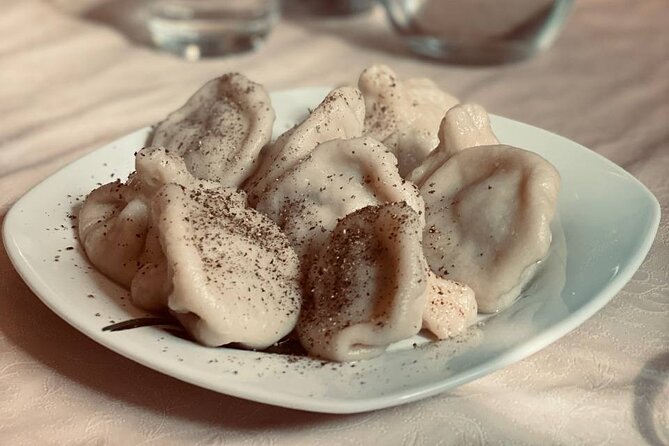
Khinkali is more than a dumpling. Its pleasure comes from the broth trapped inside, the seasoned filling, and the careful fold at the top. If you have only eaten it in restaurants, this class gives you a practical look at why the shape matters.
The lesson begins with the dough. You’ll work on the quantities and mixing technique needed to make it soft yet elastic. That balance is important: dough that is too stiff can be hard to fold, while dough that lacks strength may split in the pot.
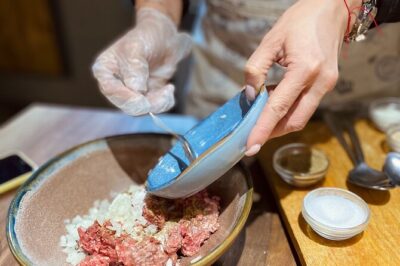
The filling can be made with meat, cheese, or mushrooms in their sauce, according to the sample menu. The key point is the liquid. The filling must hold the broth that makes khinkali so distinctive, rather than leaving you with a dry dumpling.
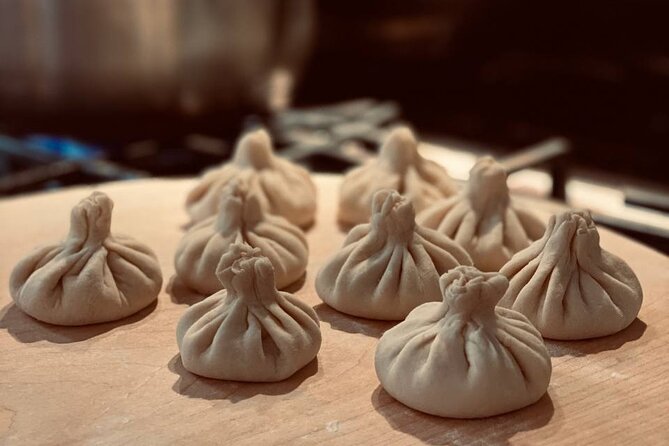
You’ll also learn how to turn and close the dumplings correctly so they hold together during cooking. This is the part where a short class can be especially useful. The folds are not just decoration. They help contain the filling and its broth.
At home, khinkali can look intimidating because the finished dumpling has a tightly gathered top. The class breaks that task into manageable steps. You may not leave with restaurant-perfect folds on your first attempt, but you should understand the method and have a recipe you can repeat.
When the dumplings are ready, the important eating lesson is simple: handle them carefully so the broth stays inside. That makes the dish feel like a meal and a small piece of Georgian food culture at the same time.
A few more Tbilisi trips to weigh up
- Small-Group Khinkali and Khachapuri Cooking Class in Tbilisi
★ 4.5 · 224 reviews - Nana’s Kitchen – traditional Georgian cooking class at real Georgian family home
★ 5.0 · 37 reviews - Join a Local for a Market Tour, Cooking Class and Meal in her Tbilisi Home
★ 5.0 · 15 reviews
Adjarian khachapuri and the cheese-filled center
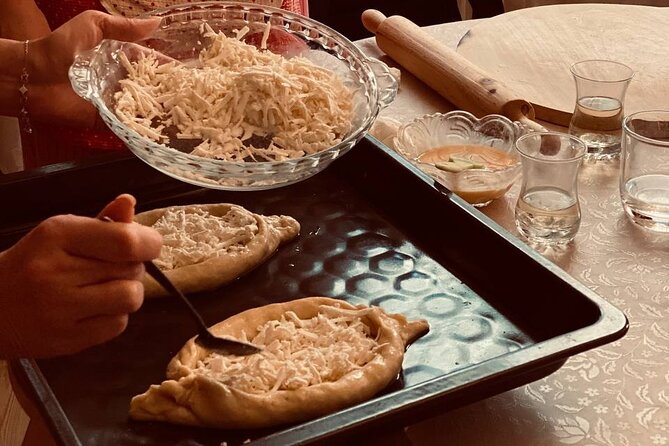
The second dish is Adjarian khachapuri, the boat-shaped bread associated with Georgia’s Black Sea region. Here, the dough is formed around a center of sticky cheese, with an egg yolk added as part of the finished dish.
The cooking host shows you how to prepare a tender khachapuri dough and which cheese to use for a stretchy, melting result. That cheese lesson matters. Khachapuri depends on texture as much as flavor, and the wrong cheese can leave the filling greasy, stiff, or lacking the pull you want.
You’ll also learn different ways to arrange this Georgian specialty. The shape gives the dish its character, but it also creates a useful cooking challenge: the dough must hold the cheese while still baking into a tender base.
The egg yolk is placed in the cheese-filled center. The sample menu describes the finished dish as sticky cheese in dough with egg yolk, so expect a rich, filling main course rather than a light snack.
One useful detail is that a request for Imeruli khachapuri was accepted for a previous booking. That does not mean every variation is guaranteed, but it does suggest you should make a specific request when booking. If you prefer the round, cheese-filled Imeruli style to the Adjarian version, ask early and wait for confirmation.
Cooking in a Georgian family home
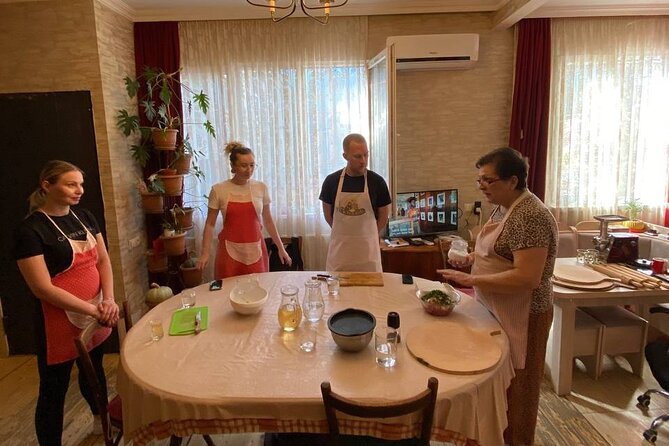
The setting is part of the appeal. This is held in a Georgian family environment rather than a large commercial teaching kitchen. You’ll be cooking in a cozy, homely space with an experienced culinary host, which should make the lesson feel more like being welcomed to dinner than attending a formal school.
That style suits Georgian food. The dishes are built for sharing, and a family kitchen gives you a closer connection to the way the food is presented and enjoyed. You can ask about ingredients, recipes, and preparation as you work.
Chef Grisha is named in the available feedback as the table-side chef for one successful booking. If Grisha is leading your session, you can expect a personal cooking presence rather than a guide who simply talks through a fixed script. The class is offered in English, so you can follow the instructions and ask questions without relying on translation.
The small group limit is eight people. That is a useful number for a practical class because you should have a place at the table and a chance to handle the dough yourself. Still, group size alone does not guarantee equal attention. If this matters to you, ask how the work is divided when you book.
What the two-hour schedule means for you
Two hours is enough for a focused introduction to two dishes, but you should keep your expectations realistic. Dough needs mixing, shaping, filling, and cooking. Trying to cover both khinkali and khachapuri in one session means the class must move at a steady pace.
The likely flow begins with an introduction to ingredients and Georgian recipes, followed by khinkali dough and filling. You then shape the dumplings and learn how to close them securely. The khachapuri lesson follows, covering dough, cheese, arrangement, and the egg yolk.
The meal is not separate from the lesson. You eat the homemade dishes you have helped prepare, which makes the final part more satisfying than watching food disappear into a kitchen. Alcoholic drinks are included as well, so Georgian wine can accompany the meal.
A two-hour session also works well for your Tbilisi schedule. It does not take up an entire afternoon, and the meeting point is near public transportation. You arrange your own way there because private transportation is not included. The activity ends back at the same meeting point.
Same mountains, a completely different kind of day:
- Day Trip to Kakheti Wine Region Including 9 Wine Tastings
★ 5.0 · 2,774 reviews - Highlights of Caucasus Mountains-Jinvali,Ananuri,Gudauri,Kazbegi(Group tour)
★ 5.0 · 2,682 reviews - Day Trip to Kazbegi and Gudauri
★ 5.0 · 2,009 reviews - Day Trip to Mtskheta Gori and Uplistsikhe
★ 5.0 · 1,801 reviews
The meal, the wine, and the value of $98
At $98 per person, this is not the cheapest way to eat khinkali and khachapuri in Tbilisi. Local restaurants can provide both dishes for much less. You are paying for the instruction, the small setting, the ingredients, the meal, and the chance to repeat the recipes at home.
The value is strongest if you enjoy cooking or want an activity that gives you more than a plate of food. The dough and folding techniques are practical skills. Once you understand the basic method, you can try different khinkali fillings or adjust the khachapuri style in your own kitchen.
The included alcoholic drinks also make the price easier to assess. You are not paying $98 for a short demonstration followed by an additional restaurant bill. Lunch and homemade dishes are part of the class, though the information does not specify the exact number or size of drinks.
The value is less convincing if you want a long, detailed culinary workshop. Two hours will not cover every Georgian dish, regional variation, or advanced technique. You also may prefer a market tour, a larger menu, or a class centered on several small dishes.
For a special evening in Tbilisi, though, the combination makes sense. You receive instruction, a meal, and a social setting in one booking. A past booking also included a requested change to Imeruli khachapuri, which is a helpful sign for people with a clear food interest, but confirm any request before relying on it.
Who will enjoy this Tbilisi cooking class
I would recommend this class most strongly to you if you fit one of these profiles:
- You want to learn two dishes you can try again at home.
- You enjoy food activities more than standard sightseeing.
- You are visiting Tbilisi with friends and want a shared evening.
- You prefer a small group to a large cooking demonstration.
- You want to taste Georgian wine alongside food you helped prepare.
- You are curious about dough, dumpling folding, and cheese selection.
It also suits first-time cooking-class participants. The available feedback describes one person’s first cooking class as a trip highlight, with thorough communication and a request for a different khachapuri style accepted. That points to a friendly format for beginners, although the class still moves through two recipes in a limited time.
Families should check the age policy before booking because no age information is provided. The same applies to dietary needs. Meat, cheese, and mushroom fillings are listed for khinkali, but the information does not state how vegetarian, vegan, gluten-free, or other dietary requests are handled.
Practical details before you book
The meeting point is Georgian Cooking Classes Chakandrila8 on Merab Kostava Street in Tbilisi, Georgia. The activity ends at that same meeting point.
Your ticket is mobile, and confirmation is provided at the time of booking. The class is offered in English and accepts a maximum of eight people. Public transportation is nearby, but private transport is not included, so you should plan your route before the start time.
If you want a particular dish variation, mention it during booking. The successful Imeruli khachapuri request is useful precedent, but it is not a promise that every menu change will be available.
The cancellation terms are straightforward. You can receive a full refund if you cancel at least 24 hours before the local start time. Cancellations or changes made less than 24 hours before the start are not accepted for a refund.
Is the $98 class worth booking?
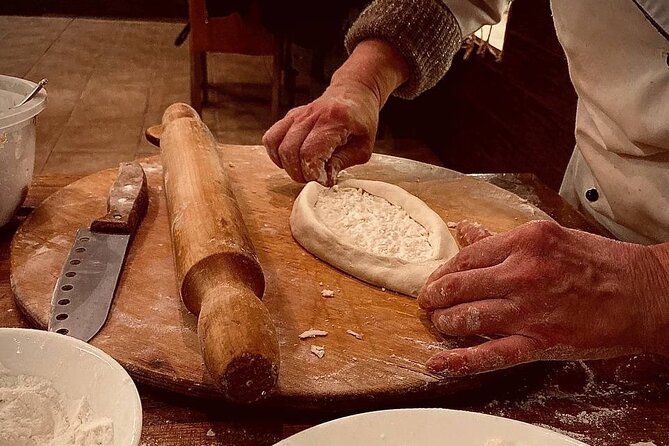
Book it if you want an intimate food activity with real participation, not just a tasting. The best reasons are the small group, the family setting, and the chance to learn the dough and folding methods behind two famous Georgian dishes. Having the meal and alcoholic drinks included adds practical value.
Think twice if your main goal is simply to eat khinkali and khachapuri cheaply, or if you want a long course with several recipes. For everyone else, this is a well-focused introduction to Georgian home cooking, especially good for friends, couples, and curious first-time cooks.
FAQ
Where does the cooking class take place?
It takes place at Georgian Cooking Classes Chakandrila8 on Merab Kostava Street in Tbilisi, Georgia.
How long does the experience last?
The cooking class lasts approximately two hours.
What dishes will I prepare?
You will prepare Georgian khinkali first and Adjarian khachapuri second.
What can the khinkali contain?
The listed khinkali fillings include meat, cheese, or mushrooms in their sauce.
What is included in the price?
The experience includes the cooking master class, lunch, tasting of homemade dishes, and alcoholic beverages.
Is transportation included?
No. Private transportation is not included, but the meeting point is near public transportation.
Is the class offered in English?
Yes. The experience is offered in English.
How many people can join the class?
The activity accepts a maximum of eight people.
Can I cancel for a full refund?
Yes, if you cancel at least 24 hours before the experience start time. Cancellations or changes made less than 24 hours before the start time are not accepted for a refund.
Just added around Tbilisi
- Private Adorable City Tour of Tbilisi★ 5.0 · 3 reviews
- Old tbilisi walking tour & wine tasting★ 5.0 · 9 reviews
- Tbilisi Airport to Gudauri, Bakuriani, Batumi, Tbilisi★ 5.0 · 3 reviews
- Your unique photo session in Tblisi, Georgia★ 3.5 · 4 reviews
- full day Kazbegi-Gudauri-jvari -from Tbilisi★ 5.0 · 6 reviews
- Vardzia. Lake Paravani, Khertvisi & Lomisa castle, Rabati★ 4.5 · 12 reviews
- Wine promenade in hospitable Tbilisi★ 5.0 · 17 reviews
- Wine Tasting Tour in Georgia’s Cradle of Wine★ 5.0 · 12 reviews
Cooking Classes, compared.
Small-Group Khinkali and Khachapuri Cooking Class in Tbilisi
Read our review →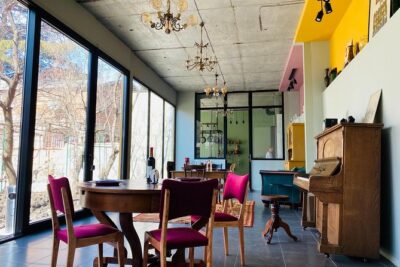
Nana’s Kitchen – traditional Georgian cooking class at real Georgian family home
Read our review →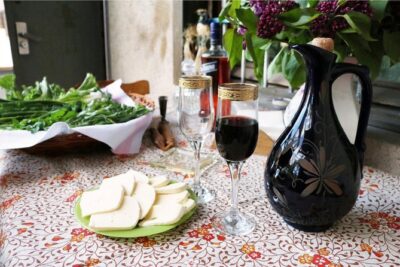
Join a Local for a Market Tour, Cooking Class and Meal in her Tbilisi Home
Read our review →
Exploring Heritage and Cuisine through Cooking Classes
Read our review →
Private Cooking Class with a Tbilisi Food and City Expert Dinara
Read our review →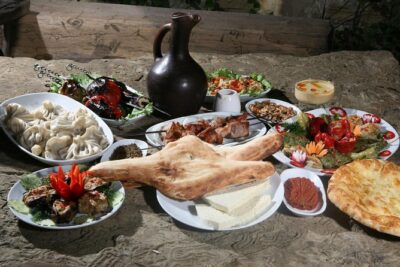
7-Day Georgian Wine and Culinary Private Tour with Cooking Class
Read our review →
Enjoy a Traditional Georgian Cooking Class and Meal with a Local in Tbilisi
Read our review →Browse the lists this tour appears in