

Reviewed · CITY TOURS
Walking City Tour in Tbilisi
Tbilisi reveals itself in layers: sulfur baths below, fortress walls above, Orthodox churches on the hillside, and 19th-century streets opening toward Liberty Square. This private walk with Alesia Aliakseichyk links those layers in about two hours, giving you a quick but meaningful first look at Georgia’s capital.
I like the flexible route, especially the choice between walking and taking the cable car toward Narikala Fortress. I also like the cultural mix: Persian influence, Georgian Christianity, Russian imperial rule, and modern city life all appear in one compact outing. The main drawback is pace. Ten stops in two hours means some places receive a short explanation rather than a long visit.
In This Review
- Key points to know before booking
- Why this short Tbilisi walk works
- Starting among the sulfur baths
- Old Town lanes and carved balconies
- Choosing the cable car or the uphill walk
- Narikala Fortress and the city below
- Betlemi churches and Georgian Christianity
- Kartlis Deda and a symbol of Georgia
- The Ateshgah temple and Persian connections
- Liberty Square and the Russian imperial period
- The Rezo Gabriadze clock tower
- The guide, language, and personal touch
- Timing, price, and who gets the best value
- What to know before you go
- Should you book this Tbilisi walking tour?
- FAQ
- How long is the Walking City Tour in Tbilisi?
- What is the price of the tour?
- Is this a private tour?
- Who is the guide?
- Where does the tour start?
- Where does the tour end?
- Is the Tbilisi Cable Car included?
- Are the sights included in the price?
- Can I cancel for a full refund?
Key points to know before booking
- Private guide Alesia Aliakseichyk: Your group gets a personal walk rather than a large shared tour.
- Ten central sights in two hours: The route covers the baths, Old Town, Narikala Fortress, churches, Liberty Square, and more.
- Narikala gives you the big Tbilisi view: You reach one of the city’s highest historic points.
- Cable car is optional: The ride costs 2 euros per person, or you can walk uphill.
- A useful culture lesson: The route connects Georgian traditions with Persian, Orthodox Christian, and Russian imperial influences.
- Good value at $23.27: The price includes the guide and free entry to the listed sights, but not snacks or the cable car.
Why this short Tbilisi walk works
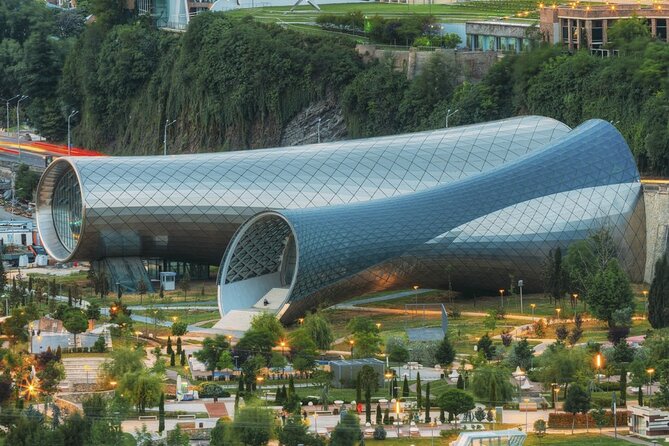
This is a city orientation tour, not a slow museum visit. You move through the oldest central quarters, hear the basic story of Tbilisi, and finish at Liberty Square. For a first morning or afternoon in town, that format makes sense because you can use the rest of your stay to return to the places that catch your eye.
The route also has a useful shape. It begins in Abanotubani, the sulfur bath district, climbs toward Narikala Fortress and Kartlis Deda, then works back through historic religious sites and central streets. You get both the uphill view and the street-level details.
The private format matters here. Tbilisi’s old lanes can be confusing, and the difference between a bathhouse, church, fortress, and courtyard is easier to understand when you can ask questions as you go. The guide can also adjust the route, including the end point if needed.
At $23.27 per person, the value is strongest for couples, families, and small groups. You are paying for a private guide, not admission to expensive attractions. Since the major stops are free, the fee mainly buys local explanation, route planning, and flexibility.
A few more Tbilisi trips to weigh up
- Tbilisi Walking Tour Including Cable Car and Traditional Bakery
★ 5.0 · 1,310 reviews - Tbilisi:Evening Walking & Talking Tour with Wine & Boat Ride
★ 5.0 · 572 reviews - Old Tbilisi Highlights walking tour with wine & 10 tastings
★ 5.0 · 276 reviews
Starting among the sulfur baths
Meet at Orbeliani Baths on Abano Street. The bath district is one of the best places to begin because it gives Tbilisi an immediate sense of place. The city’s name is tied to warm water, and the neighborhood’s domed bathhouses still make that connection visible.
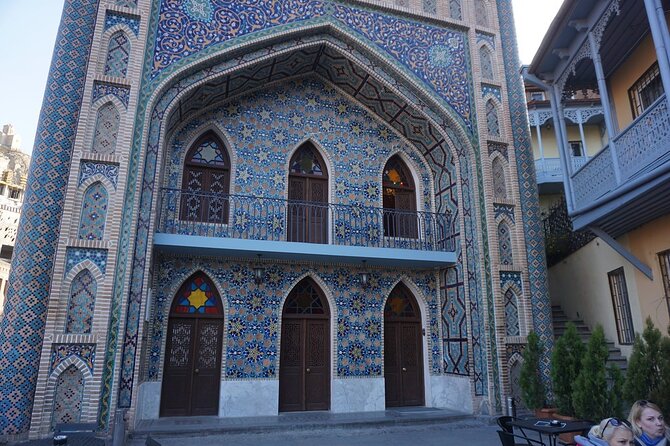
You then continue through Abanotubani, the old sulfur bath quarter. Its oriental-style bathhouses reflect Tbilisi’s position between Europe and Asia. Alesia can offer recommendations if you want to return later for a bath, which is a practical bonus. This stop is brief, so treat it as an introduction rather than a bathing visit.
Admission is free for the sightseeing portion. If you choose to use a bath later, that would be a separate expense and activity. The tour itself does not include snacks, so plan to eat before you start or after you finish.
Old Town lanes and carved balconies
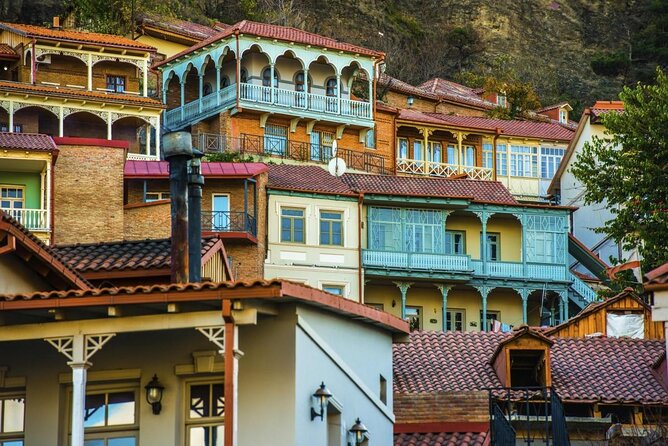
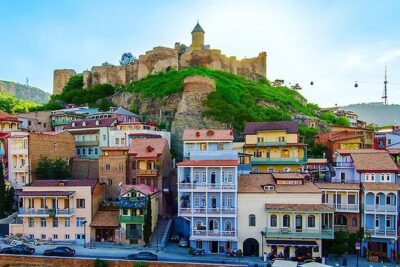
The Old Town section lasts about 20 minutes, making it one of the longer stops. This is where the tour shifts from broad history to the small details that make Tbilisi enjoyable: narrow streets, carved wooden balconies, uneven lanes, and tucked-away corners.
You may also see Frida’s Cafe and other photo-friendly spots. That can be useful if you want a few good pictures without spending your whole day hunting for locations. Still, the photo stops are part of the walk, not a dedicated photography session.
I would pay attention to the balconies. They are not just decoration. They show how much of daily life in old Tbilisi once took place outdoors, above the street, in shared view of neighbors and passersby. A guide can help you read these buildings instead of treating the Old Town as a collection of pretty facades.
The short timing has a tradeoff. You will see a good range of the quarter, but you probably will not stop inside every church, cafe, or courtyard. If Old Tbilisi becomes your favorite part of the tour, return later with your camera and more time.
Choosing the cable car or the uphill walk
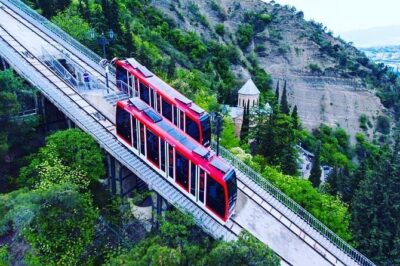
The Tbilisi Cable Car offers the easiest way to gain height. The tour can use it going up, coming down, or not at all. The ticket is not included and costs 2 euros per person.
That choice gives this private tour useful flexibility. If your group prefers to save energy, the cable car reduces the physical effort. If you want more walking and do not mind the climb, you can continue on foot through the old streets.
The experience requires moderate physical fitness. Even with the cable car, expect walking on historic streets and some uphill movement. Wear firm shoes and avoid treating this as a flat city stroll. The listing does not promise a fully accessible route, so anyone with mobility concerns should ask before booking.
Same mountains, a completely different kind of day:
- Day Trip to Kakheti Wine Region Including 9 Wine Tastings
★ 5.0 · 2,774 reviews - Highlights of Caucasus Mountains-Jinvali,Ananuri,Gudauri,Kazbegi(Group tour)
★ 5.0 · 2,682 reviews - Day Trip to Kazbegi and Gudauri
★ 5.0 · 2,009 reviews - Day Trip to Mtskheta Gori and Uplistsikhe
★ 5.0 · 1,801 reviews
Narikala Fortress and the city below
Narikala Fortress is the visual high point of the route. From here, you can take in much of Tbilisi from above, including the dense old quarters and the broad spread of the city. The stop lasts about ten minutes, so the visit focuses on the view and the main historical setting rather than a long exploration of the walls.
This is a smart place for the guide to explain why Tbilisi grew where it did. The fortress position makes the city’s geography easier to understand. After seeing the baths below and the hills around you, the old center feels less like a maze and more like a city shaped by its river, slopes, and defensive points.
The fortress itself is free to enter. The possible cost comes from the cable car, not the site. Bring a phone or camera, but also take a moment to look without a screen. The point of this stop is the full view.
Betlemi churches and Georgian Christianity
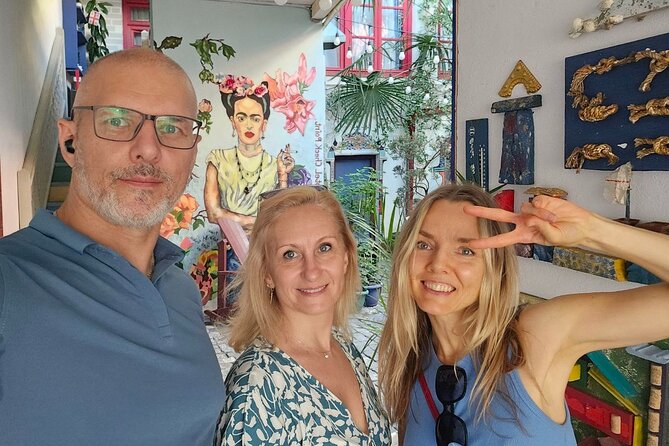
The Lower and Upper Betlemi churches add a religious layer to the tour. These old Orthodox churches help explain Georgia’s Christian identity, and Alesia discusses when Georgia became a Christian country.
Five minutes is enough for a brief introduction, but not for a full architectural study or a long service visit. Dress and behave respectfully when entering religious spaces. The churches are free to enter, according to the tour details.
This is one of the places where a private guide is more useful than a map. Dates, traditions, and religious terms can blur together when you read about them on your own. A short explanation in the setting itself gives the facts a stronger connection to the city around you.
Kartlis Deda and a symbol of Georgia
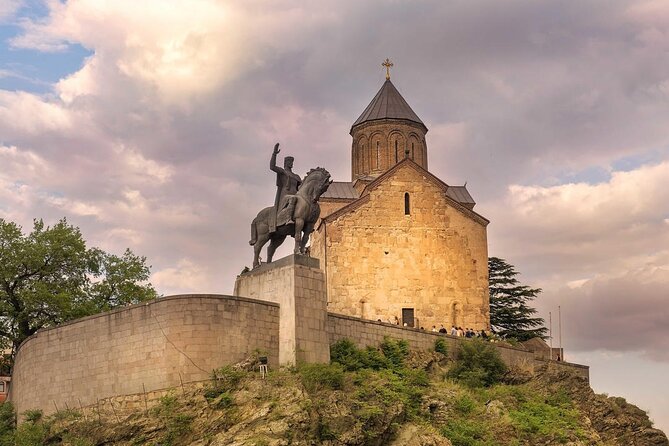
Kartlis Deda, the giant Mother of Georgia monument, appears near the fortress area. The statue is one of the city’s most recognizable symbols. Its traditional image combines welcome for friends with readiness to defend the country, an idea that fits Georgia’s long position at a crossroads.
The stop is only about five minutes, so expect a quick look and explanation rather than an extended visit. Its value is symbolic and visual. You see the monument, connect it with the city below, and move on with a better sense of how Georgians present their national identity.
The Ateshgah temple and Persian connections
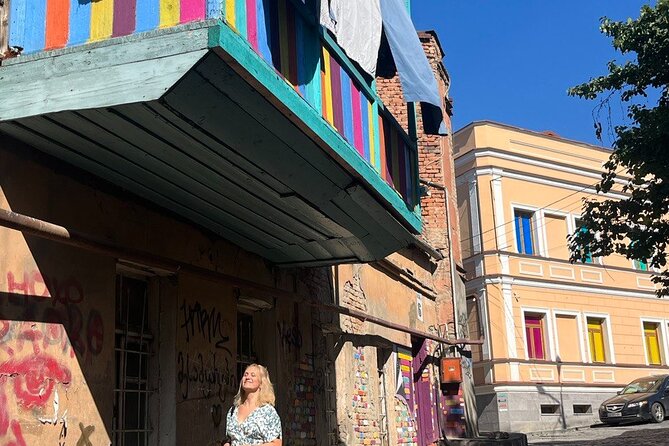
The Ateshgah Zoroastrian Temple offers a sharp change from the Orthodox churches. It preserves a trace of Persian imperial influence and shows that Tbilisi’s past was never limited to one culture or faith.
This may be one of the easiest stops to miss if you explore alone. It is not the kind of place that defines the standard postcard view of Tbilisi, yet it adds useful context. The old city was shaped by movement, trade, conquest, and competing religious traditions.
Again, the five-minute stop is an introduction. You should not book this tour expecting a long archaeological visit. You should book it if you want the major sights connected by a clear story.
Liberty Square and the Russian imperial period
The route ends at Liberty Square, a practical central finish with good links to public transportation. This is where the guide discusses the Russian Empire in Georgia and explains why the square matters.
The contrast is useful. You begin with bathhouses and medieval lanes, then pass through churches and old Persian traces before reaching a more formal central space tied to later political history. The square helps you see that Tbilisi is not only an ancient city. It has also been shaped by imperial power, modern nationalism, and changing public symbols.
The listed end point is Liberty Square, though the tour can finish somewhere else by arrangement. That flexibility helps if you want to continue to a nearby meal, hotel, or another central sight.
The Rezo Gabriadze clock tower
The Rezo Gabriadze Marionette Theater and its clock tower provide a lighter final stop. The theater is famous for Georgian puppetry, and the tower has a small performance every hour.
The stop lasts about ten minutes. Check the timing with Alesia if seeing the hourly performance matters to you, since the tour schedule and the clock performance need to line up. The theater adds a creative, modern note after the heavier subjects of empire, religion, and fortification.
It is also a good reminder that Tbilisi’s character is not only found in grand monuments. Small theaters, odd buildings, cafes, and street corners give the center much of its personality.
The guide, language, and personal touch
Alesia Aliakseichyk is the named guide for this experience. The tour includes a certified guide, and the private setup means your group is the only group taking part.
A particularly useful part of the guiding style is the willingness to discuss Georgian food. A German-speaking participant described receiving help with Georgian dishes that sounded unfamiliar and might otherwise have been skipped. That tells me you can ask for practical cultural help, not only dates and monument names.
I would use that opportunity. Georgian food can be unfamiliar by name, and a guide who can explain what to order may make your first meal less cautious. The food advice is not listed as a formal tasting, though, so do not expect snacks or a meal to be included.
Timing, price, and who gets the best value
Two hours is enough to get your bearings fast, but it is not enough for long visits at ten locations. You will spend much of the time walking between stops, listening, taking a few pictures, and making short visits.
The $23.27 price is reasonable for a private city introduction. It becomes an especially good deal when divided among two or more people, since the same guide is serving your whole group. You also avoid paying admission at the listed sights.
The extra cost is simple: the cable car is 2 euros per person, and snacks are not included. You can skip the cable car and walk uphill, but that makes the moderate fitness requirement more important.
This tour suits you best if:
- You are visiting Tbilisi for the first time.
- You want a private guide rather than a fixed large group.
- You prefer a broad introduction to detailed museum time.
- You want both Old Town streets and a high city view.
- You enjoy history that connects Georgia with Europe, Asia, Persia, Christianity, and Russia.
- You have only a short time in central Tbilisi.
It may not suit you if you want a relaxed pace, extended church visits, or a full fortress exploration. In that case, a longer walking tour or a self-guided return visit would be a better match.
What to know before you go
Confirmation arrives at booking, and the experience is near public transportation. The starting point is Orbeliani Baths, 31 Abano Street, in Tbilisi. The listed finish is Liberty Square, 2 Freedom Square, with another end point possible by arrangement.
The tour has free cancellation up to 24 hours before the start time for a full refund. If you cancel or request changes less than 24 hours before the local start time, the payment is not refunded.
The route calls for moderate physical fitness. Comfortable shoes are the most sensible choice, especially if you decide to walk instead of taking the cable car. Since the group is private, tell Alesia at the start if you want to adjust the pace or spend more time at a particular stop.
Should you book this Tbilisi walking tour?
Book it if you want a compact introduction with real historical range. In two hours, you move from sulfur baths to fortress views, Orthodox churches, a Zoroastrian temple, a national monument, an imperial-era square, and a puppet theater. That is a lot of Tbilisi in a small package.
The strongest reasons to book are the private format, flexible cable car choice, free major sights, and Alesia’s personal cultural guidance. The main caution is the brisk schedule. Think of it as your first map of the city, not the final word on every stop.
If you arrive early in your Tbilisi stay, this tour can help you decide where to return, what to eat, and which hills or lanes deserve more time. At $23.27 per person, it offers a practical way to turn a confusing first walk through the old center into a connected story.
FAQ
How long is the Walking City Tour in Tbilisi?
The tour lasts approximately two hours.
What is the price of the tour?
The listed price is $23.27 per person.
Is this a private tour?
Yes. Only your group participates in the activity.
Who is the guide?
The experience provider and named guide is Alesia Aliakseichyk. A certified guide is included.
Where does the tour start?
It starts at Orbeliani Baths, 31 Abano Street, Tbilisi, Georgia.
Where does the tour end?
The listed end point is Liberty Square, 2 Freedom Square, Tbilisi, Georgia. The tour can end somewhere else by arrangement.
Is the Tbilisi Cable Car included?
No. The cable car costs 2 euros per person. You can also walk to the fortress instead.
Are the sights included in the price?
The listed sights are free to enter. Snacks are not included.
Can I cancel for a full refund?
Yes. You must cancel at least 24 hours before the experience start time for a full refund. Changes or cancellations made less than 24 hours before the start are not accepted for a refund.
Just added around Tbilisi
- Private Adorable City Tour of Tbilisi★ 5.0 · 3 reviews
- Old tbilisi walking tour & wine tasting★ 5.0 · 9 reviews
- Tbilisi Airport to Gudauri, Bakuriani, Batumi, Tbilisi★ 5.0 · 3 reviews
- Your unique photo session in Tblisi, Georgia★ 3.5 · 4 reviews
- full day Kazbegi-Gudauri-jvari -from Tbilisi★ 5.0 · 6 reviews
- Wine promenade in hospitable Tbilisi★ 5.0 · 17 reviews
- Vardzia. Lake Paravani, Khertvisi & Lomisa castle, Rabati★ 4.5 · 12 reviews
- Wine Tasting Tour in Georgia’s Cradle of Wine★ 5.0 · 12 reviews
City Tours, compared.
City of Love Sighnaghi, Bodbe. KTW. Wine House Group tour
Read our review →
Day tour to Chronicles of Georgia, Gori city, Uplistsikhe cave
Read our review →
Tbilisi city tour PRIVATE excursion Airport and hotel pickup INCL
Read our review →
Tbilisi City Tour, Most Popular Tourists Destinations In The Capital Of Georgia
Read our review →
Browse the lists this tour appears in