
Reviewed · GORI & UPLISTSIKHE TOURS
Day tour to Chronicles of Georgia, Gori city, Uplistsikhe cave
The most unusual part of this day is Uplistsikhe, an ancient town cut into a rocky ridge above the Mtkvari River. You walk past pagan shrines, royal rooms, a rock-carved theater, old wine vessels, and a Christian church, all in one stark site. Add Gori’s Stalin Museum and the giant Chronicles of Georgia memorial, and you get three very different views of the country.
I like the low $34 price and the fact that transport, a guide, live commentary, and taxes are covered. I also like the route’s variety: ancient Georgia at Uplistsikhe, 20th-century political history in Gori, and modern monumental art outside Tbilisi.
The main concern is pacing. Eight hours sounds reasonable, but the cave town needs walking time, and museum visits can feel short. Past departures have also included both English and Russian commentary, despite English being the stated language, so ask about the language arrangement before you leave.
In This Review
- Key points to know before booking
- Three very different sides of Georgia in one day
- Uplistsikhe: ancient rooms carved into the rock
- Gori and the complicated Stalin Museum
- The Chronicles of Georgia memorial near Tbilisi
- Transport, guiding, and the pace of the day
- Food, extra costs, and what to carry
- Who will get the most from this excursion?
- Should you book the $34 day tour?
- FAQ
- How long does the tour last?
- Where does the tour start?
- Is transport included?
- Are admission tickets included?
- Is food included?
- Is the tour offered in English?
- Is Uplistsikhe suitable for people with limited mobility?
- Can I cancel for a refund?
Key points to know before booking
- Uplistsikhe is the main event: Allow for uneven ground, steps, and open-air walking across a rocky site.
- Gori is more than a quick photo stop: The Stalin Museum includes his birthplace hut, railway carriage, personal objects, photographs, and documents.
- The Chronicles of Georgia is huge and quiet: This unfinished memorial offers broad views and striking carved figures near Tbilisi.
- The price is attractive: The $34 fare covers transport and guiding, but entrance fees and food are extra.
- Timing can shape the day: The planned stops total about three hours, leaving travel time and possible waiting between visits.
- A guide makes a difference: Guides such as Levani have been praised for clear English and lively explanations, though some departures have felt rushed.
Three very different sides of Georgia in one day
This excursion links places that do not naturally tell the same story. Uplistsikhe reaches back to the second or first millennium BC. Gori brings you into the difficult story of Joseph Stalin, who was born in Georgia and later ruled the Soviet Union. The Chronicles of Georgia, created by sculptor Zurab Tsereteli, is a modern monument built over two decades and still not finished.
That contrast is the tour’s greatest strength. You are not spending eight hours looking at similar churches or ruins. Instead, you move from an ancient rock settlement to a museum devoted to one of the 20th century’s most powerful dictators, then to a monumental sculpture overlooking Tbilisi.
The day begins at 9:00 am from 44 Kote Afkhazi Street in central Tbilisi. The experience ends back at the same meeting point. Bus travel removes the need to arrange separate taxis or figure out rural transport, and live commentary gives the road time a purpose.
At $34 per person, the basic fare is hard to dismiss. You still need to budget for 15 GEL at the Stalin Museum and 15 GEL at Uplistsikhe, plus your own food and drinks. That makes the known entrance costs 30 GEL per person before lunch, but the total remains modest for a full-day outing with transport and a guide.
More gori & uplistsikhe tours in Tbilisi:
- Day Trip to Mtskheta Gori and Uplistsikhe
★ 5.0 · 1,801 reviews - Mtskheta-Gori-Uplistsikhe
★ 5.0 · 112 reviews - Mtskheta, Jvari, gori, uflistsikhe, history and panorama (group tours)
★ 4.5 · 107 reviews
Uplistsikhe: ancient rooms carved into the rock
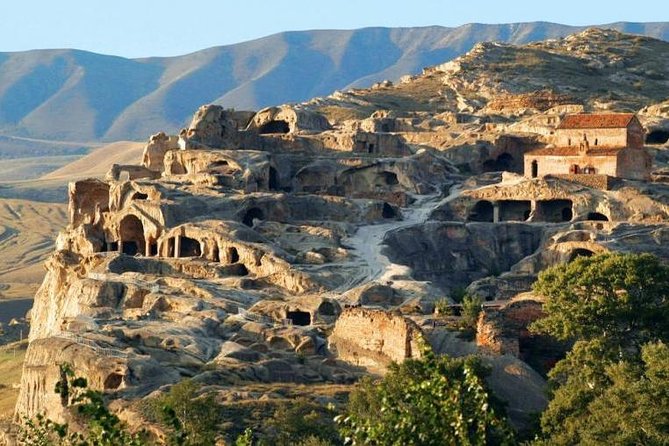
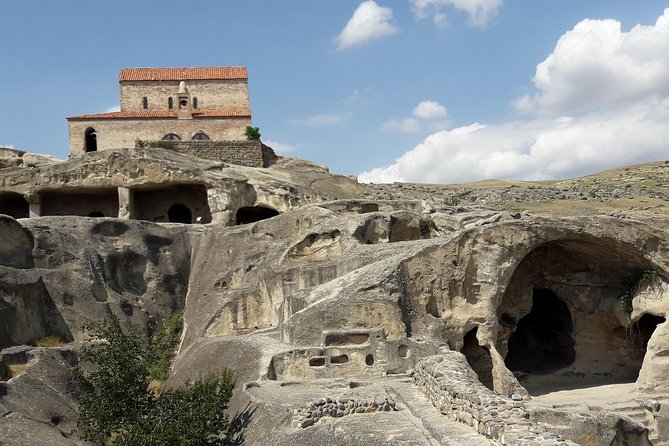
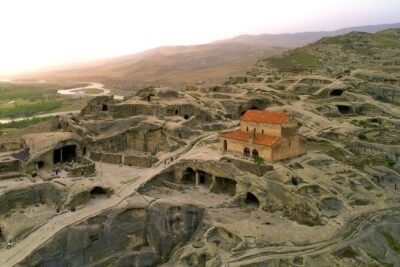
Uplistsikhe translates as Fortress of the Lord. It sits on a rocky massif on the left bank of the Mtkvari River and was once an important religious, political, and cultural center during the Hellenistic and late antique periods.
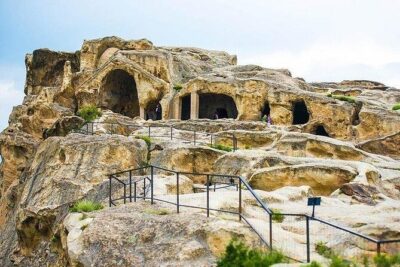
You do not experience it as a conventional archaeological museum. The site is a walk through open rock, with ancient streets connecting chambers and carved spaces. You can see a theater cut into the stone, royal halls, pagan temples, a pharmacy, Christian churches, granaries, and large clay vessels once used for wine.
That mixture makes Uplistsikhe particularly memorable. The site shows daily life as well as grand public spaces. Wine storage and grain rooms help you picture the practical work that supported the settlement, while the theater and ceremonial rooms suggest its public and religious role.
The tour allows about two hours here, with admission paid separately. Two hours can work if you move steadily, but it is not a great deal of time for slow exploration, photography, and a detailed explanation at every feature. Some departures have included an initial explanation from the guide followed by independent walking, so do not expect a private lecture beside every carved room.
Wear shoes with a firm sole. The ground is uneven, and the route includes steps and modest climbs. One particularly useful point from the experience itself is that Uplistsikhe is not a good match for anyone who cannot comfortably walk over rough ground and climb steps.
The setting is part of the reward. From the rocky site, you get open views across the surrounding area, and the exposed stone gives the visit a severe, almost otherworldly feel. In colder months, it can also be bracing, so bring an extra layer even if Tbilisi feels mild when you leave.
Gori and the complicated Stalin Museum
Gori is described as a 12th-century town, but this stop is centered on Stalin’s Museum. Joseph Stalin was born in Georgia and went on to become secretary general of the Communist Party and one of the most influential dictators of the Second World War era.
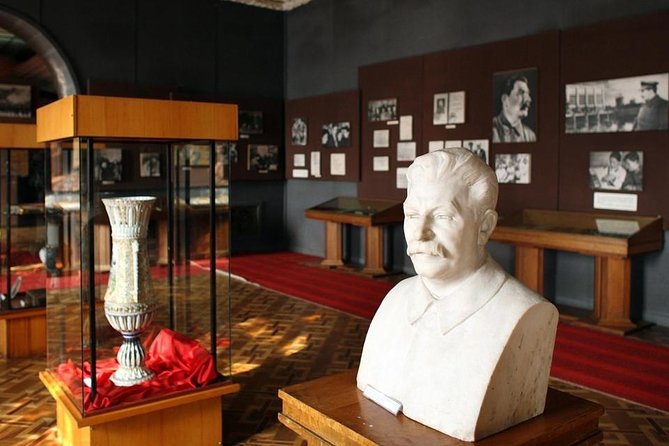
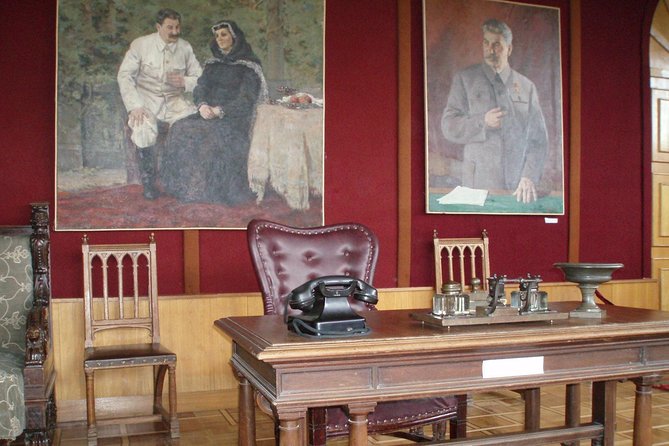
The museum presents his birthplace, a small hut, along with an armored railway carriage, office furniture, personal belongings, gifts, photographs, newspaper articles, paintings, and other documents. A statue of Stalin once stood in Gori’s main square until it was removed in 2010, another reminder that this is not a simple hero’s museum.
The museum can be emotionally awkward, which is precisely why it matters. It presents the objects and official story in a way that requires you to think about how political memory is shaped. One of the strongest parts of the visit is the tension between the ordinary details of Stalin’s early life and the enormous power he later held.
The planned stop is about 40 minutes, and the museum entrance costs 15 GEL. That is a tight window. You may need to buy your ticket, find the English tour, and move through the rooms quickly. On some departures, the group has joined an English museum explanation already in progress, meaning the first rooms were missed.
Group size also matters here. A large cluster can make it hard to hear the museum guide, especially in smaller rooms. If the tour is being conducted in English and Russian, the guide may also repeat information in both languages. That can be useful for mixed-language groups, but it takes time and can make the bus commentary feel long.
If you want a more relaxed look at Gori, this tour may leave you wanting more. There is little time for the town itself, including the fortress, because the schedule focuses on the museum. I would choose this excursion for the museum collection and its difficult questions, not for a full visit to Gori.
The Chronicles of Georgia memorial near Tbilisi
The final listed stop is the Chronicles of Georgia, also called the History of Georgia memorial. It is a large unfinished work by Zurab Tsereteli, a Georgian sculptor and artist whose monuments can be found in several countries.
The site is made up of tall monumental sculptures arranged on a broad rise above Tbilisi. The carved panels refer to Georgian history and religious subjects, and the scale is difficult to grasp from photographs. You need to walk around the pillars to appreciate the figures and scenes properly.
The memorial took 20 years to create but remains incomplete. Several elements are missing, and the sculptor’s tools are said to remain at the site awaiting a final stage that has not yet happened. That unfinished quality gives the place a particular character. It feels less like a polished civic monument and more like a vast work still waiting for its last chapter.
The stop lasts about 40 minutes and admission is free. That is enough to see the main sculptures, take in the views, and listen to an explanation, though you will not have a long time for quiet wandering.
I like this stop because it is less predictable than Tbilisi’s better-known sights. The city is famous for Narikala Fortress, the Mother of Kartli, and Tsminda Sameba Cathedral, but the Chronicles of Georgia receives fewer visits. It adds a modern artistic note to a day otherwise focused on ancient ruins and Soviet-era memory.
More chronicles of georgia tours in Tbilisi:
- Tbilisi:Mtskheta,Jvari,Bazaar,wine tasting,Chronicles of Georgia
★ 5.0 · 730 reviews - Mtskheta-Jvari-Uplistsike-Chronicle of Georgia, PRIVATE Trip
★ 5.0 · 105 reviews - Ancient Mtskheta and Chronicle of Georgia half day tour
★ 5.0 · 66 reviews - Mtskheta – Jvari Private Tour + Chronicles of Georgia
★ 5.0 · 31 reviews
Transport, guiding, and the pace of the day
The tour uses bus transport and includes a professional guide, live commentary, taxes, and handling charges. That is useful for a route that is awkward to piece together by ordinary public transport in one day.
The experience is described as a private activity for your group, yet it also has minimum-number rules and a group-tour price. Confirm the exact transport setup and language before booking, especially if you want a fully private outing. The supplied information says English is offered, but some departures have included Russian as well.
The guide can add real value during the drives. Levani, who has led some departures, is described as speaking good English and sharing plenty of information on the road. Another positive feature is the friendly, entertaining style reported from strong departures. Good guiding is especially useful on a long drive because it connects the three stops instead of leaving you to decode them alone.
The weak point is organization. Set meeting times after each stop are essential on a route like this. If people return late to the bus, a 40-minute museum visit can turn into an hour or more, and an eight-hour plan can stretch far beyond that.
Past versions of the route have also included Borjomi, with a brief stop in its park. Borjomi is not part of the three-stop itinerary described here, so confirm that it is not being added to your departure. A Borjomi detour can make the day much longer, and a one-hour visit gives you little time beyond a short park walk. The attraction of this current route is its tighter focus on Uplistsikhe, Gori, and the memorial.
Food, extra costs, and what to carry
Food and drinks are not included. You should plan for lunch separately, and the exact restaurant arrangement is not specified. Some departures have included a meal near the cave complex, with mixed impressions of the food, while an Adjarian khachapuri in Gori has been singled out as a good choice.
The required entrance fees are clear:
- Stalin Museum: 15 GEL per person
- Uplistsikhe Cave Town: 15 GEL per person
- Chronicles of Georgia: free
- Borjomi Park, only if included in a different route: 2 GEL
Bring water and a little Georgian cash for tickets, food, and small purchases. Since the tour is mobile-ticketed, keep your booking confirmation accessible on your phone. The meeting point is near public transportation, which makes the early start easier to reach from central Tbilisi.
I would also carry sun protection and a light jacket. Uplistsikhe is exposed, and the weather can feel different from the city. Comfortable shoes matter more than dressed-up clothing.
Who will get the most from this excursion?
I would recommend this tour to you if you have one full day in Tbilisi and want to see beyond the capital without renting a car. It works especially well if Uplistsikhe is high on your list and you also want a guided introduction to Stalin’s birthplace and the country’s modern monumental art.
It is a good fit for history-minded visitors who enjoy contrasts and do not need every stop to be polished or easy. The Stalin Museum can be unsettling, Uplistsikhe is physically uneven, and the unfinished memorial has a rough, open-air quality.
I would hesitate if you want a slow day with long museum visits and plenty of free time. The stated schedule gives 40 minutes in Gori and 40 minutes at the memorial. Those limits leave little room for delays, extended photography, or a separate visit to Gori Fortress.
Families and most generally mobile adults should be able to participate, since no health restrictions are stated. Still, the cave town requires climbing and walking on uneven ground. If that is difficult for you, ask for a detailed route description before paying.
Should you book the $34 day tour?
I would book it for the price, the unusual mix of sights, and the chance to reach Uplistsikhe without arranging your own transport. The 4.8 rating and 94 percent recommendation support the idea that the core experience can be very good, especially when the guide keeps the day moving and explains the context clearly.
I would not book it blindly. Confirm that the departure is English-led, ask whether the route includes only the three listed stops, and check how much time is guaranteed at Uplistsikhe and the Stalin Museum. If you want Gori Fortress, a long museum visit, or a relaxed Borjomi stop, choose a more specialized tour instead.
For a compact introduction to three unusual sites at a low base price, this is a sensible choice. Go in expecting a brisk day, budget for admission and lunch, and treat Uplistsikhe as the priority.
FAQ
How long does the tour last?
The planned duration is approximately eight hours. The tour begins at 9:00 am and ends back at the meeting point in Tbilisi, though delays or added stops can make the day longer.
Where does the tour start?
The meeting point is 44 Kote Afkhazi Street in Tbilisi, Georgia.
Is transport included?
Yes. Bus transportation, a professional guide, live commentary, taxes, fees, and handling charges are included.
Are admission tickets included?
No. Uplistsikhe costs 15 GEL per person, and the Stalin Museum costs 15 GEL per person. The Chronicles of Georgia memorial has no admission charge.
Is food included?
No. Food and drinks are not included unless specifically stated for your departure.
Is the tour offered in English?
English is the stated tour language. Some departures have also used Russian, so confirm the language arrangement before booking if that matters to you.
Is Uplistsikhe suitable for people with limited mobility?
The site involves uneven ground and steps. Most people can participate, but the tour is not suitable for anyone unable to manage this type of walking.
Can I cancel for a refund?
You can cancel at least 24 hours before the start time for a full refund. Cancellations or changes made less than 24 hours before departure are not accepted for a refund. If the operator cancels because minimum numbers are not met, you will be offered another option or a full refund.
Just added around Tbilisi
- Private Adorable City Tour of Tbilisi★ 5.0 · 3 reviews
- Old tbilisi walking tour & wine tasting★ 5.0 · 9 reviews
- Tbilisi Airport to Gudauri, Bakuriani, Batumi, Tbilisi★ 5.0 · 3 reviews
- Your unique photo session in Tblisi, Georgia★ 3.5 · 4 reviews
- full day Kazbegi-Gudauri-jvari -from Tbilisi★ 5.0 · 6 reviews
- Wine promenade in hospitable Tbilisi★ 5.0 · 17 reviews
- Vardzia. Lake Paravani, Khertvisi & Lomisa castle, Rabati★ 4.5 · 12 reviews
- Wine Tasting Tour in Georgia’s Cradle of Wine★ 5.0 · 12 reviews
Gori & Uplistsikhe Tours, compared.
Mtskheta, Jvari, gori, uflistsikhe, history and panorama (group tours)
Read our review →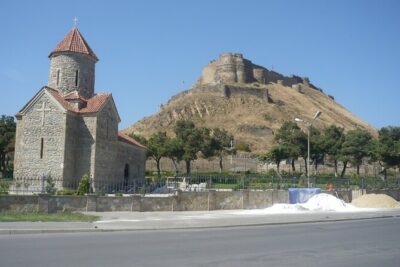
Ancient Georgia Group Tour: Mtskheta,Jvari, Gori, Uplistsikhe
Read our review →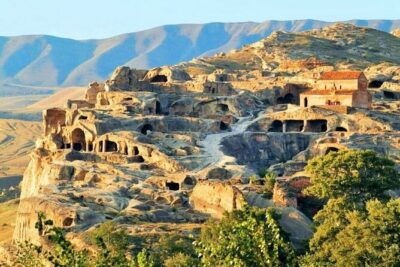
Mtskheta, Gori & Uplistsikhe Private Day Tour from Tbilisi
Read our review →
Private Tour to Mtskheta Stalin Museum Uplistsikhe Caves
Read our review →Browse the lists this tour appears in