
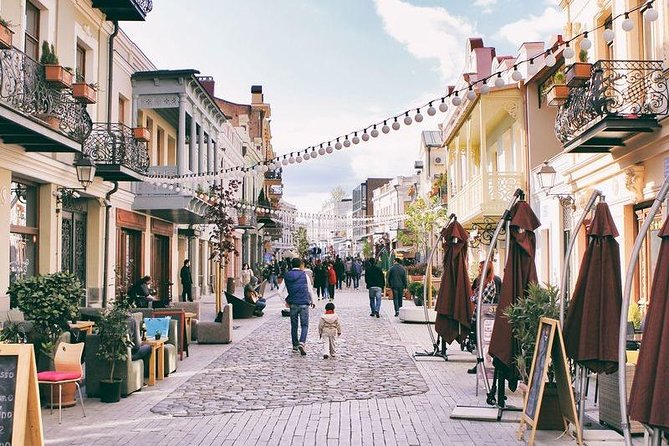
Reviewed · WALKING TOURS
Tbilisi with all its glory and originality. (group walking tour)
Tbilisi reveals itself in layers on this small-group walk: old churches, fortress views, sulfur steam, crooked balconies, modern glass, and a wine cellar hidden in the Old Town. The route also adds a cable-car ride to Kartlis Deda, the Mother of Georgia, for one of the city’s best high viewpoints.
I like the small maximum of 15 people, which should make questions and conversation easier than on a large city walk. I also like the free cellar tasting, with wine poured and explained by a winemaker rather than treated as a quick sample at the end.
The main caution is practical: the cable car is not included, and one customer reported a same-day cancellation that led to taxi costs and frustration. The provider refunded that booking, but I would avoid booking at the last minute and keep your plans flexible if weather or minimum numbers become an issue.
In This Review
- Key points before you book
- Metekhi Plateau puts Tbilisi in context
- Ride up to Kartlis Deda for the big view
- Sulfur Bath No. 5 explains Tbilisi’s name
- The Fig Valley walk reaches a real waterfall
- Peace Bridge brings modern Tbilisi into the conversation
- Old Town courtyards show everyday Tbilisi
- The cellar tasting is the tour’s strongest extra
- What the $20 price really buys you
- Who will get the most from this walk
- Should you book Tbilisi with all its glory and originality?
- FAQ
- How much does the tour cost?
- How long does the tour last?
- What time does the tour begin?
- Where does the tour start?
- Where does the tour end?
- Is the cable car included in the price?
- Is wine tasting included?
Key points before you book
- Four hours through Tbilisi’s most useful first sights: You cover Metekhi, the baths, the Old Town, Peace Bridge, Rike Park, and major viewpoints in one morning.
- Cable-car views come at your own expense: Budget about $2 for the cable car, as stated for the experience.
- A 17th-century cellar tasting is included: The wine stop is described as an hour with no tasting limit and comments from the winemaker.
- The group is capped at 15 people: That is a good size for a walking tour without the feel of a crowd.
- The route mixes old and new Tbilisi: You see ancient foundations and sulfur baths alongside the Peace Bridge and Rike Park.
- Start and finish are central: Meet at Alani1, Vakhtang Gorgasali Street, at 10:00 a.m., and return there at the end.
Metekhi Plateau puts Tbilisi in context
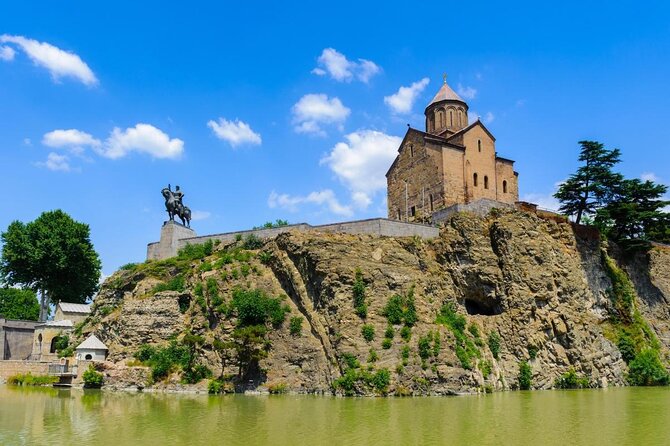
Begin at Alani1 on Vakhtang Gorgasali Street at 10:00 a.m. The opening section takes place around Metekhi Cathedral and the Metekhi Plateau, where you can look across the Old Town toward Narikala Fortress.
This is a smart place to begin. Tbilisi can feel confusing at street level, with lanes, courtyards, hills, and river crossings pulling you in different directions. From the plateau, the city’s shape becomes easier to understand. The guide explains the early settlement here, the origins of Tbilisi, and the role of King Vakhtang Gorgasali in the city’s story.
The stop lasts about 30 minutes and admission is included. The value is not in entering a long list of buildings. It is in getting a clear picture of where the Old Town sits, how the fortress watches over it, and why this river valley mattered.
The wording used for this part promises colorful stories about temples, wine, and the beginnings of the city. That suggests a conversational approach rather than a lecture, though the guide’s name is not provided. Since the tour is offered in English, you should be able to ask for clarification as the historical story unfolds.
A few more Tbilisi trips to weigh up
- Tbilisi Walking Tour Including Cable Car and Traditional Bakery
★ 5.0 · 1,310 reviews - Tbilisi:Evening Walking & Talking Tour with Wine & Boat Ride
★ 5.0 · 572 reviews - Old Tbilisi Highlights walking tour with wine & 10 tastings
★ 5.0 · 276 reviews
Ride up to Kartlis Deda for the big view
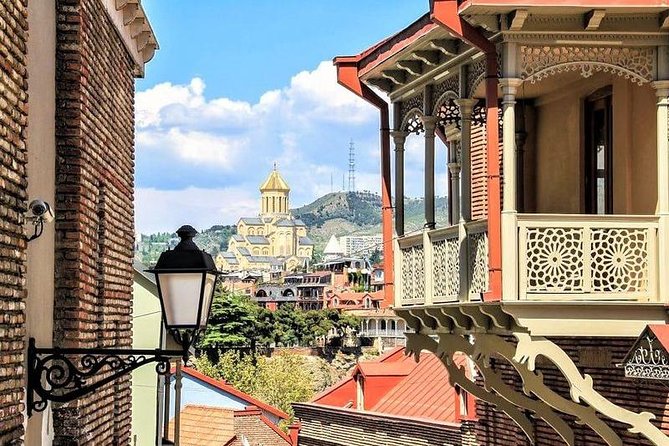
From the lower city, you take a cable car toward Kartlis Deda, the Mother of Georgia. The ride is at your own expense, with the cost listed as about $2. The description refers to the cable car as an important part of the experience, so bring small funds or be ready to pay separately.
Kartlis Deda is one of Tbilisi’s clearest symbols. The statue holds a cup of wine for friends and a sword for enemies. That image gives the guide an easy way to explain a Georgian idea of hospitality with a firm edge. It also makes the stop more than a photo break.
Allow about 30 minutes here. The reward is the view over the small houses, narrow streets, river, and fortress of Old Tbilisi. You get a useful sense of the city’s hills, something that is hard to grasp while walking below.
The cable car also gives your legs a short rest during a route that includes several uneven streets and slopes. Do keep the extra cost in mind. The tour price is $20 per person, which is attractive for four hours, but the cable car is not part of that headline price.
Sulfur Bath No. 5 explains Tbilisi’s name
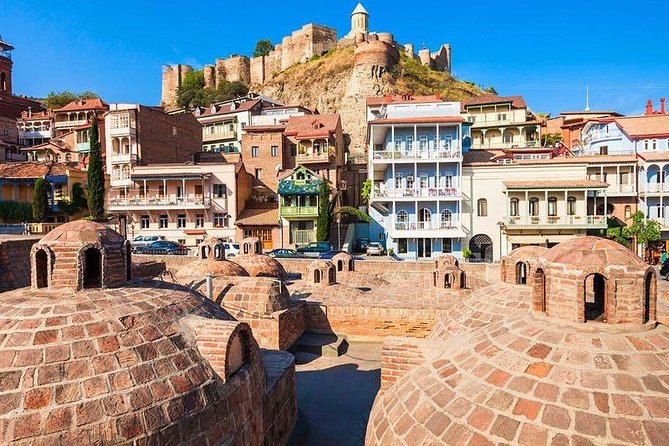
Back in the historic center, the walk reaches Sulfur Bath No. 5. Tbilisi is closely tied to its hot sulfur springs, and this stop gives the tour a local legend with a physical setting.
You hear the familiar story of the city’s founding, including the falcon and the hot springs. The guide also plans to explain why only 15 of the original 65 baths remain and how the bathhouses received names ranging from the plain No. 5 to more polished titles such as Royal and Variegated.
That detail is useful because the bath district can otherwise look like a collection of attractive domes and facades with no clear explanation. Here, the buildings become part of the city’s daily life and long commercial tradition. Marco Polo is also connected with the bath area in the tour’s account.
This stop lasts about 30 minutes. The description does not say that you enter a bath or receive a bathing treatment, so you should expect an exterior visit and stories, not a spa session. If you want to bathe, plan that separately.
The Fig Valley walk reaches a real waterfall
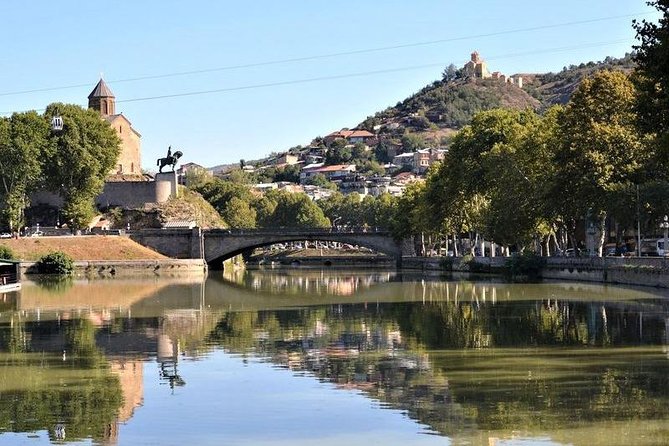
The route continues through the Old Town and along Fig Valley, where you reach a waterfall. This is one of the route’s pleasant changes of pace. Instead of looking only at churches, balconies, and monuments, you get a small natural feature within the city.
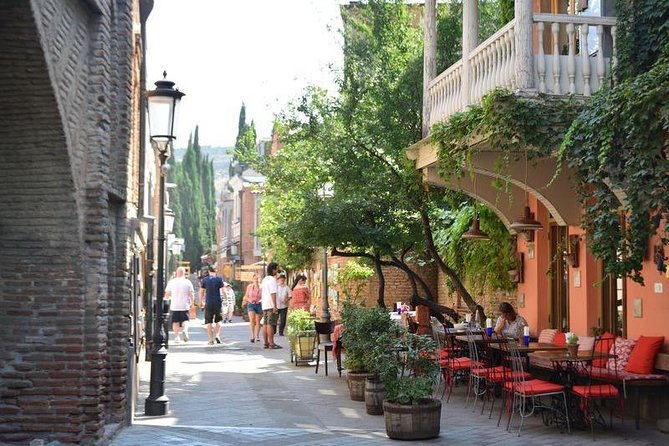
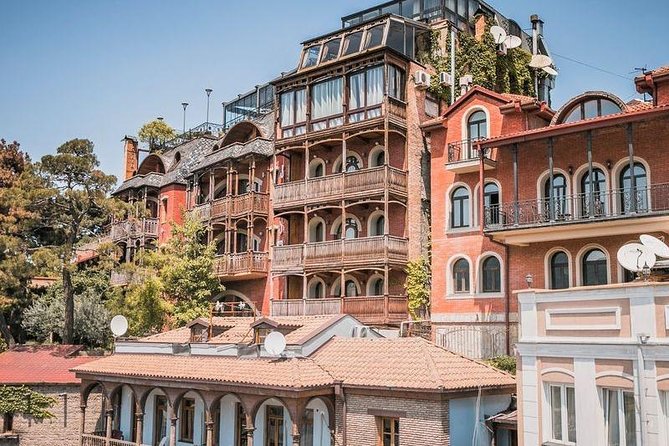
The walk takes about 20 minutes at this section. You also see Tbilisi’s famous wooden balconies, which give many Old Town streets their uneven, theatrical look. The guide explains how balconies served different purposes in different periods and why no two are exactly alike.
That explanation can help you read the city rather than simply photograph it. Look up as you walk. The balconies may be painted, enclosed, carved, or patched, and their differences tell you something about how homes changed over time.
The practical point is footwear. The tour is described as a walking experience, and the route includes the Fig Valley and historic streets. Wear shoes you can use comfortably for four hours. No special fitness level is given, but anyone who dislikes extended walking should think carefully before booking.
Same mountains, a completely different kind of day:
- Day Trip to Kakheti Wine Region Including 9 Wine Tastings
★ 5.0 · 2,774 reviews - Highlights of Caucasus Mountains-Jinvali,Ananuri,Gudauri,Kazbegi(Group tour)
★ 5.0 · 2,682 reviews - Day Trip to Kazbegi and Gudauri
★ 5.0 · 2,009 reviews - Day Trip to Mtskheta Gori and Uplistsikhe
★ 5.0 · 1,801 reviews
Peace Bridge brings modern Tbilisi into the conversation
At the Bridge of Peace, the tour shifts from old stone, bathhouses, and wooden balconies to contemporary design. The glass-and-steel bridge crosses the river near Rike Park, and the guide discusses its symbolism as well as local reactions to its appearance.
That local angle is useful. You do not have to decide that every modern structure is beautiful, and you do not have to dismiss it as out of place. The tour gives you a way to understand why the bridge, the glass structures, and the unusual pipes in Rike Park attract debate.
The stop takes about 30 minutes. You then take a cable car toward the fortress area, again with the cable-car cost separate. The route description appears to include cable-car travel in this portion as well as the earlier visit to Kartlis Deda, so ask the guide at the start whether one ride or more than one ride will be needed and what the total extra cost will be.
This is an important question because the stated $2 figure may not cover every cable-car journey. The tour is affordable, but small add-on costs can affect the final value.
Old Town courtyards show everyday Tbilisi
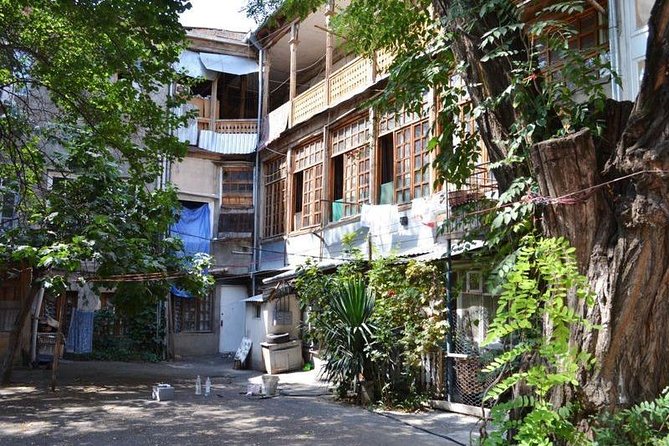
The last major walking section returns to the Old Town, but it is not simply a repeat of the earlier streets. Here the focus turns to Tbilisi’s residents, courtyards, festivals, humor, and food.
You visit the Italian courtyards, communal spaces associated with the city’s older homes. The guide also discusses Tbilisoba, the city festival, and jokes written on the turret of the Rezo Gabriadze Theater. These details sound especially useful for anyone who wants more than a list of rulers and construction dates.
At the Tamada monument, the guide explains the Georgian feast. Tamada means toastmaster, and the role is central to the structure of a traditional supra. The tour presents Georgian hospitality as a set of customs and responsibilities, not just an excuse to drink wine.
This section is scheduled for about 30 minutes, but the wine tasting is described as lasting an hour without restrictions. That creates a timing question. The full experience is advertised at about four hours, so the actual pace may vary, or the tasting time may be included within the broader walking schedule. Ask how the tasting fits into the morning if you have a fixed lunch, museum booking, or transport connection afterward.
The cellar tasting is the tour’s strongest extra
The tasting takes place in a 17th-century cellar storing exclusive wines. It is included at no extra charge, and the description says the tasting is conducted with comments from the winemaker for an hour without restrictions.
That is a better setup than a rushed sip at a souvenir shop. You have time to ask about the wines and the Georgian approach to winemaking. The experience does not specify the number or types of wines, so do not book expecting a fixed tasting menu.
The cellar also gives the tour a stronger connection to local life. Wine is not added as a random attraction at the end. It connects the city’s founding stories, the symbolism of Kartlis Deda’s cup, the Tamada monument, and the social customs of the supra.
You should still pace yourself. The tour begins in the morning, includes walking, and returns to the same meeting point. If you do not drink alcohol, the supplied details do not explain what alternative is offered, so ask before booking.
What the $20 price really buys you
At $20 per person, the tour offers a good amount for the money if you want orientation, storytelling, and a taste of Tbilisi’s main historic center. You receive about four hours with an English-speaking guide, a group limited to 15, the guided walking route, and the wine tasting.
Admission is listed as included at the stops. The cable car costs extra, about $2, and dinner is not included. You should also allow for any food or drinks you buy after the tasting.
The value is strongest for a first visit. In one morning, you connect viewpoints, religious history, the bath district, the river, modern architecture, local customs, and wine. You may not get long interior visits at every sight, but you get a practical map of the city and several ideas to explore later.
The rating given for the experience is 4.4 from nine ratings. That is a positive but still small sample, so I would treat it as a useful sign rather than a guarantee. The available written feedback includes one serious complaint about a cancellation made without enough warning. The provider’s response says the money was refunded and that the booking had been canceled because it was made the same day.
The lesson is simple: book ahead rather than on the day, and do not schedule an expensive nonrefundable activity immediately afterward. Free cancellation is available until 24 hours before the start time. If poor weather causes cancellation, you are offered another date or a full refund. The same applies if the minimum number is not reached.
Who will get the most from this walk
I would choose this for a first-time visitor who wants a broad introduction without paying for a private guide. The 15-person limit is small enough to keep the walk manageable, while the four-hour length gives the guide room to connect the sights.
It is also a good fit if you care about local stories and food culture, not only monuments. The Tamada explanation, Italian courtyards, Tbilisoba, Gabriadze Theater details, and cellar tasting give the morning a human focus.
You may prefer a different tour if you want long visits inside churches and museums, a private pace, or a dedicated food tour. The experience is built around movement and interpretation. It does not include dinner, and no formal meal is part of the schedule.
I would also be cautious if you have a tight schedule. Cable-car timing, walking speed, and the one-hour tasting could make the morning less predictable than the approximate four-hour duration suggests.
Should you book Tbilisi with all its glory and originality?
Book it if you want a reasonably priced first look at Tbilisi with strong viewpoints, Old Town walking, city stories, and a serious wine stop. The route covers the sights most useful for getting your bearings, and the small group should keep the experience more personal than a mass tour.
Before paying, check the cable-car details and avoid same-day booking. If your ideal tour is relaxed, local, and broad rather than museum-heavy, this is a sensible choice. If you need exact timing or guaranteed operation in uncertain weather, choose a more flexible plan.
FAQ
How much does the tour cost?
The price is $20 per person.
How long does the tour last?
The experience lasts approximately four hours.
What time does the tour begin?
It begins at 10:00 a.m.
Where does the tour start?
The meeting point is Alani1, Vakhtang Gorgasali Street, Tbilisi, Georgia.
Where does the tour end?
The tour ends back at the meeting point.
Is the cable car included in the price?
No. The cable car costs about $2 and is paid separately.
Is wine tasting included?
Yes. The wine tasting is free for people booked on the tour. It takes place in a 17th-century cellar and includes comments from the winemaker.
Just added around Tbilisi
- Private Adorable City Tour of Tbilisi★ 5.0 · 3 reviews
- Old tbilisi walking tour & wine tasting★ 5.0 · 9 reviews
- Tbilisi Airport to Gudauri, Bakuriani, Batumi, Tbilisi★ 5.0 · 3 reviews
- Your unique photo session in Tblisi, Georgia★ 3.5 · 4 reviews
- full day Kazbegi-Gudauri-jvari -from Tbilisi★ 5.0 · 6 reviews
- Wine promenade in hospitable Tbilisi★ 5.0 · 17 reviews
- Vardzia. Lake Paravani, Khertvisi & Lomisa castle, Rabati★ 4.5 · 12 reviews
- Wine Tasting Tour in Georgia’s Cradle of Wine★ 5.0 · 12 reviews
Walking Tours, compared.

Tbilisi Walking Tour Including Cable Car and Traditional Bakery
Read our review →
Evening Walking & Talking Tour with Wine & Boat Ride
Read our review →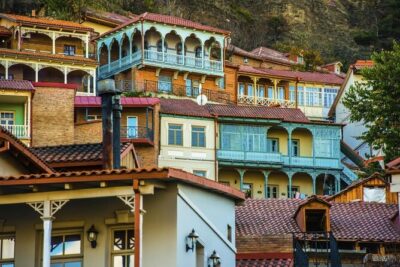
Old Tbilisi Highlights walking tour with wine & 10 tastings
Read our review →
Old Tbilisi Tour: Private Walking Tour With Wine Tasting
Read our review →
Private Tbilisi Food Tour: 9 Tastings Walk in Bohemian District
Read our review →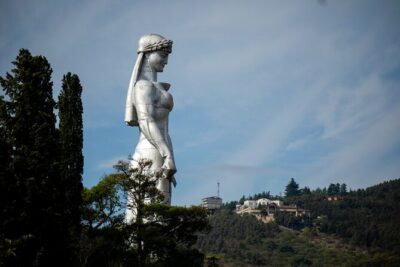
Tbilisi Old Town Walking Tour with a Local Guide
Read our review →
Discover Tbilisi: Hidden Gems and Iconic Sights Walking Tour
Read our review →
Browse the lists this tour appears in