
Reviewed · WALKING TOURS
Discover Tbilisi: Hidden Gems and Iconic Sights Walking Tour
Tbilisi reveals itself best on foot, one crooked lane, old courtyard, church, mosque, and balcony at a time. This tour packs a remarkable sweep of the city into a morning or afternoon, from Freedom Square to the sulphur waterfall, with a local guide explaining what you would likely miss alone.
I like the $9 price, which makes this one of the easiest ways to get your bearings before exploring on your own. I also like the small-group format, capped at 12 people in the highlights, or 15 under the general tour terms. The main consideration is pace: 20 stops in roughly three hours means some visits are brief, and the cable car to Narikala is not included.
In This Review
- Five things to know before you go
- Why this $9 walk works so well
- From Freedom Square to Tbilisi’s old walls
- The Bridge of Peace and the river crossing
- Old Town courtyards, theater, and film history
- Rike Park, Narikala, and the Mother of Georgia
- Churches, mosque, synagogue, and shared city life
- Tamada, theater, markets, and the sulphur waterfall
- How long the walk takes and how hard it feels
- What the guides add to the experience
- Who should book this Tbilisi walk?
- Should you book it?
- FAQ
- How much does the Discover Tbilisi walking tour cost?
- How long does the tour last?
- Is the cable car included?
- Where does the tour start and finish?
- What should I wear for the tour?
- Is free cancellation available?
Five things to know before you go
- You cover a large part of Old Tbilisi: The route links Freedom Square, the river, Rike Park, Shardeni Street, Meidan, religious sites, and the hills above town.
- The guides make the difference: Jonah, Salomea, Oksana, Tamara, Nini, Koba, Sofia, and other local guides have been praised for clear stories, patience, city tips, and friendly energy.
- The route mixes major sights with odd little surprises: Expect the Bridge of Peace and Narikala alongside the Toaster sculpture, film monuments, old wall ruins, and a waterfall.
- The cable car is optional and extra: The aerial tramway connects Rike Park with Narikala. Its ticket is not part of the tour price.
- Dress for churches and other religious buildings: Cover your knees and shoulders. Shorts and sleeveless tops can lead to refused entry.
- Wear proper walking shoes: You need moderate physical fitness, and the route includes old streets and uphill sections toward Kartlis Deda.
Why this $9 walk works so well
At $9 per person, this tour is priced more like an orientation walk than a premium sightseeing product. That is good news if you want a broad first look at Tbilisi without committing much money. The local guide is included, and the main stops do not charge admission.
The value is not in entering paid attractions. It is in the connections between them. A guide can explain why a mosque, synagogue, Georgian Orthodox cathedral, Armenian church, Soviet-era monument, and modern bridge all belong in the same short walk. Tbilisi has layers from many communities, and this route gives you a useful first framework.
The group size also matters. A maximum of 12 people is small enough for questions and photos, although the additional information allows up to 15 participants in some cases. That difference is worth checking when you book if you care strongly about a very small group.
The tour earns a 4.9 out of 5 rating from 138 ratings, with 98 percent recommending it. The most consistent praise goes to the guides’ storytelling, patience, and willingness to give restaurant and sightseeing advice for the rest of your stay. Several guides have been singled out by name, including Jonah, Oksana, Tamara, Nini, Koba, Salomea, and Sofia.
I would book it near the start of your time in Tbilisi. You get a useful map in your head, hear suggestions for Georgian food, and can return later to the places that deserve a slower look.
A few more Tbilisi trips to weigh up
- Tbilisi Walking Tour Including Cable Car and Traditional Bakery
★ 5.0 · 1,310 reviews - Tbilisi:Evening Walking & Talking Tour with Wine & Boat Ride
★ 5.0 · 572 reviews - Old Tbilisi Highlights walking tour with wine & 10 tastings
★ 5.0 · 276 reviews
From Freedom Square to Tbilisi’s old walls
The walk begins at Freedom Square, at the eastern end of Rustaveli Avenue. This is a sensible meeting point because it sits in central Tbilisi and near public transportation. The square has carried several names under Imperial Russian and Soviet rule, including Erivansky Square, Beria Square, and Lenin Square.
You spend about 15 minutes here. Do not expect a long formal visit. This opening stop helps place modern Tbilisi in its political and urban setting before the route turns into the older streets.
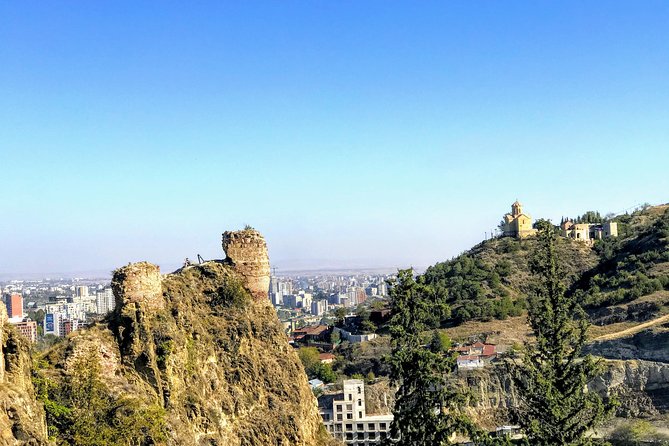
The next stop is the remains of the old city wall. Only about 15 minutes is scheduled, but the ruins offer a quick reminder that Old Tbilisi was once a fortified settlement rather than simply a pleasant collection of cafés and balconies.
From there, the route reaches Anchiskhati Basilica. Dating from the sixth century, it is the oldest surviving church in Tbilisi and belongs to the Georgian Orthodox Church. The stop is again listed at 15 minutes, so you should think of it as a guided introduction, not an extended church visit.
The practical point is dress. Knees and shoulders must be covered for places of worship and selected museums. This applies to men and women, and entry can be refused if you arrive in shorts or a sleeveless top. Carrying a light layer is a simple solution, especially in warm weather.
The Bridge of Peace and the river crossing
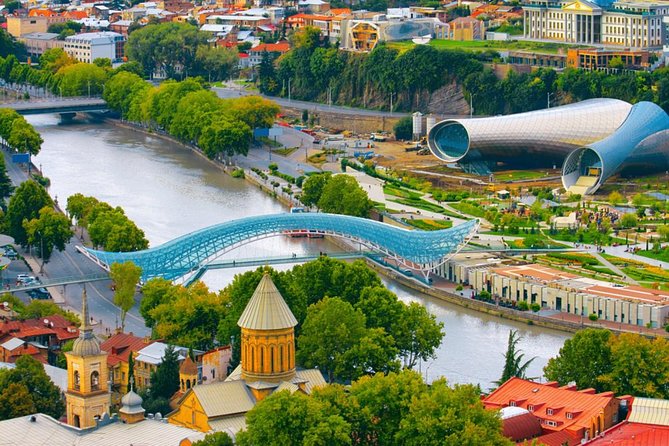
The Bridge of Peace opened in 2010 over the Mtkvari River, also called the Kura. Its curving modern form creates a sharp contrast with the brick, stone, and timber buildings of the old center.
You get around 15 minutes here, enough for views and photographs. The bridge is one of the tour’s clearest examples of Tbilisi’s old and new sides meeting in one frame. It also leads naturally toward Rike Park and the lower Old Town.
Next comes Jan Shardeni Street, a pedestrian lane scheduled for about 30 minutes. It is one of the city’s most popular streets, with restaurants, bars, and places to pause. This is a good place to ask your guide where to eat later, especially because several guides are praised for recommending authentic Georgian restaurants and local dishes such as khinkali.
The tradeoff is that Shardeni can feel more polished and visitor-focused than the less decorated side streets. I would enjoy the architecture and atmosphere here, then ask your guide to point out quieter lanes for your own wandering.
Old Town courtyards, theater, and film history
The longest single part of the tour is Old Town Tbilisi, with about an hour allocated. This is where the walk earns its title. The old center combines worn façades, balconies, eateries, theaters, lanes, and courtyards that are easy to pass without noticing.
The route is not just a march between famous buildings. Good guides pause to explain details in the streets and point toward corners you might otherwise overlook. Oksana has been praised for showing courtyards and small features that are hard to find alone. Nini is also noted for giving practical ideas for the rest of a stay.
The Rezo Gabriadze Marionette Theater receives a 15-minute stop. Opened in 1981, it has become an important part of Tbilisi’s cultural life. The building and clock tower are popular photo subjects, though this walking tour does not include a theater performance.
Two unusual monuments follow. The Sergey Paradzhanov monument honors the Armenian film director known for works including Shadows of Forgotten Ancestors and The Colour of Pomegranates. The Sayat-Nova monument honors the Armenian poet and musician who lived and died in Tbilisi. It sits near the northern wall of St. Kevork Armenian Church.
These stops are valuable because they broaden the story beyond kings, fortresses, and churches. Tbilisi has long been shaped by Georgian, Armenian, Jewish, Muslim, Russian, and other communities. A guide who explains those links can turn a pleasant walk into a far more useful introduction to the city.
Same mountains, a completely different kind of day:
- Day Trip to Kakheti Wine Region Including 9 Wine Tastings
★ 5.0 · 2,774 reviews - Highlights of Caucasus Mountains-Jinvali,Ananuri,Gudauri,Kazbegi(Group tour)
★ 5.0 · 2,682 reviews - Day Trip to Kazbegi and Gudauri
★ 5.0 · 2,009 reviews - Day Trip to Mtskheta Gori and Uplistsikhe
★ 5.0 · 1,801 reviews
Rike Park, Narikala, and the Mother of Georgia
The aerial tramway is one of the tour’s major optional elements. It connects Rike Park across the Mtkvari with Narikala Fortress above the Old Town. The ride takes about 30 minutes within the route, but the ticket is not included in the $9 price.
Some versions of the experience include the cable car ride, and several guide accounts refer to going up to the Mother of Georgia statue. Since the official inclusions exclude the cable car, you should bring money for that extra if the guide offers it or if conditions allow.
Kartlis Deda, usually called the Mother of Georgia, is a 20-meter aluminum statue of a woman in Georgian national dress. It was erected in 1958 for Tbilisi’s 1,500th anniversary and designed by Georgian sculptor Elguja Amashukeli.
The viewpoint near the statue is one of the strongest photo opportunities on the route. You can look across the old center, the river, the surrounding hills, and the mix of modern and historic Tbilisi. The climb and tramway connection are also why this tour is not a completely flat stroll.
Rike Park itself gets about 20 minutes. It is a public recreation area used by families, local residents, and people out for a walk. This gives you a break from the tight lanes of the Old Town and a chance to see how the riverfront has been reshaped.
Churches, mosque, synagogue, and shared city life
Sioni Cathedral is a 15-minute stop. This Georgian Orthodox cathedral is named after Mount Zion in Jerusalem, following a Georgian custom of naming churches after places in the Holy Land.
The tour then reaches Jumah Mosque, the Friday Mosque in the heart of Old Tbilisi. Its exterior may not immediately look like a mosque, and its most notable feature is that Shia and Sunni Muslims pray there together. The mosque is open to people of all religions and beliefs, but respectful clothing remains essential.
The Great Synagogue of Tbilisi follows. Built between 1895 and 1903, it is also called the Georgian Synagogue or the synagogue of the people of Akhaltsikhe. Georgian Jews from Akhaltsikhe built it after moving to Tbilisi in the late nineteenth century.
I especially like this part of the route because it gives you a better sense of Tbilisi as a meeting place. You are not just ticking off religious buildings. You are seeing how several traditions occupy a compact part of the city.
The itinerary allows about 15 to 20 minutes at each place. That is enough for an explanation and perhaps a brief look inside, but services, closures, or entry rules can affect what you see. The tour includes a local guide, not guaranteed admission to every interior.
Tamada, theater, markets, and the sulphur waterfall
The Toaster sculpture depicts a man holding a drinking horn. It is based on an ancient Colchian statuette and represents the tamada, the traditional toastmaster at a Georgian feast. This is a small stop, but it connects the street scene with one of Georgia’s best-known social customs.
The monument to Sofiko Chiaureli honors the Soviet Georgian actress. Like the Paradzhanov monument, it adds film and performance to the route’s cultural picture.
Meidan Bazaar is the practical souvenir stop. If you do not want to search through shops or have limited time, this is a convenient place to look. The scheduled visit is about 20 minutes, so you may want to return later if you prefer to shop slowly or compare prices.
The Monument Fountain of Falcon and Pheasant refers to the legend of Tbilisi’s founding in the fifth century by King Vakhtang Gorgasali. The story is tied to the city’s sulphur springs and helps explain why the Old Town is associated with bathhouses and hot water.
The final major sight is the Dzveli Tbilisi sulphur water waterfall. A real waterfall in the city center is exactly the kind of surprise that makes this route more than a standard historic-center circuit. It is a strong ending for photos and a reminder that Tbilisi’s natural features are woven into its streets.
Pushkin Street, one of six roads radiating from Freedom Square, is also part of the route or surrounding walking area. No separate duration is provided for this point, so expect it to be a passing section rather than a full stop.
How long the walk takes and how hard it feels
The advertised duration ranges from about two hours and 30 minutes to three hours and 30 minutes. That variation makes sense. The route has many stops, and the final timing can depend on group questions, the guide, religious-site access, the cable car, and walking speed.
The tour requires moderate physical fitness. You should expect extended walking, uneven Old Town surfaces, and an uphill section toward the statue and fortress area. One guide, Oksana, has been praised for adjusting to slow walkers, while Sofa has been noted for checking that children remained comfortable.
I would not choose this as a carefree stroll if you have significant mobility limits. If you walk slowly, tell the guide at the start. The small group and the reported patience of several guides may help, but the route itself remains broad and active.
Hot weather is another factor. Tbilisi can feel intense in the sun, especially around open squares and the hill. Start with water, comfortable shoes, and clothing that meets worship-site rules. The route is outdoors for most of its duration.
What the guides add to the experience
The tour’s strongest feature is its human side. Guides are assigned according to availability, so you cannot assume you will get one particular person. Still, the guide team has a clear pattern of strengths.
Jonah is praised for combining major sights with lesser-known corners and for taking memorable photos. Salomea is noted for strong energy and clear knowledge. Oksana is described as patient, accommodating, and good with questions. Tamara is praised for making the walk relaxed while telling engaging stories.
Nini is useful for orientation and restaurant suggestions. Koba grew up in Tbilisi and brings personal familiarity with the city. Sofia is praised for keeping people engaged even in hot weather, and Giorgi has gone as far as helping a participant find the correct metro station afterward.
That does not guarantee every guide will offer wine tasting, since some accounts include it and it is not listed as an official inclusion. Treat wine tasting as a possible extra or guide-dependent addition, not something to book the tour for.
Who should book this Tbilisi walk?
I would recommend it most strongly to first-time visitors who want a broad introduction before exploring independently. Solo visitors can also benefit from the group setting, and the friendly format may make the first day in a new city easier.
Families can make it work, especially if children are comfortable walking for several hours. People interested in architecture, religion, Georgian culture, film, food, and city photography will find plenty to hold their attention.
You may want a different format if you prefer slow museum visits, long time at each church, or a tightly focused history tour. Twenty stops is a lot. The reward is range, not depth.
Book at least 24 hours ahead if your plans may change, since free cancellation applies only when you cancel at least a day before the start time. Late changes and late arrival are less forgiving: the meeting point allows a 10-minute wait, and missing the start may require a new booking. Poor weather or an unmet minimum number can lead to a different date, another experience, or a full refund.
Should you book it?
Yes, if you want a low-cost, well-organized introduction to Tbilisi with a local guide and a wide range of sights. At $9, the tour offers excellent value, especially because it includes the guide, keeps the group relatively small, and covers places that are spread across the Old Town and riverfront.
Just plan for a quick-moving walk, dress properly for religious sites, and budget separately for the cable car. Take notes on the places you want to revisit, then return later for a slower look at the churches, markets, courtyards, and viewpoints that catch your eye.
FAQ
How much does the Discover Tbilisi walking tour cost?
The tour costs $9 per person. Group discounts are available, and the local guide is included.
How long does the tour last?
The approximate duration is two hours and 30 minutes to three hours and 30 minutes.
Is the cable car included?
No. The aerial tramway ticket is not included in the tour price.
Where does the tour start and finish?
It starts at Freedom Square on Shalva Dadiani Street in Tbilisi and ends back at the meeting point.
What should I wear for the tour?
You must cover your knees and shoulders to enter places of worship and selected museums. Shorts and sleeveless tops are not allowed for those visits.
Is free cancellation available?
Yes. You can cancel at least 24 hours before the local start time for a full refund. Cancellations or changes made less than 24 hours before the start are not accepted for a refund.
Just added around Tbilisi
- Private Adorable City Tour of Tbilisi★ 5.0 · 3 reviews
- Old tbilisi walking tour & wine tasting★ 5.0 · 9 reviews
- Tbilisi Airport to Gudauri, Bakuriani, Batumi, Tbilisi★ 5.0 · 3 reviews
- Your unique photo session in Tblisi, Georgia★ 3.5 · 4 reviews
- full day Kazbegi-Gudauri-jvari -from Tbilisi★ 5.0 · 6 reviews
- Wine promenade in hospitable Tbilisi★ 5.0 · 17 reviews
- Vardzia. Lake Paravani, Khertvisi & Lomisa castle, Rabati★ 4.5 · 12 reviews
- Wine Tasting Tour in Georgia’s Cradle of Wine★ 5.0 · 12 reviews
Walking Tours, compared.
Tbilisi Walking Tour Including Cable Car and Traditional Bakery
Read our review →
Evening Walking & Talking Tour with Wine & Boat Ride
Read our review →
Old Tbilisi Highlights walking tour with wine & 10 tastings
Read our review →
Old Tbilisi Tour: Private Walking Tour With Wine Tasting
Read our review →
Private Tbilisi Food Tour: 9 Tastings Walk in Bohemian District
Read our review →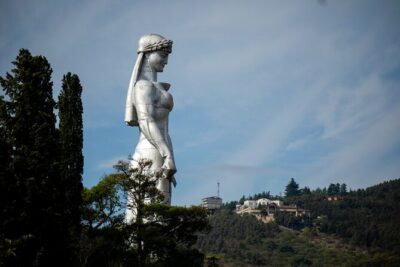
Tbilisi Old Town Walking Tour with a Local Guide
Read our review →
Browse the lists this tour appears in