
Reviewed · WALKING TOURS
Tbilisi Explorer: Essential Walking Tour for First-Timers
Tbilisi reveals itself best on foot, where grand squares give way to crooked Old Town lanes, ancient churches, balconies, markets, and a waterfall tucked into the city. This private tour packs those contrasts into roughly 90 minutes to two hours, with a one-way cable car ride adding a fine view over the Mtkvari River.
I like the private format, since guides such as Gio, Jonah, Koba, Aleksi, Tamar, and Sofi have adapted the pace and route to families, solo visitors, and tight schedules. I also like the mix of major sights and small surprises, from Sayat-Nova’s monument to the Toaster sculpture and the sulfur waterfall.
The main consideration is pace. The route covers a lot, and Tbilisi is hilly and paved with uneven surfaces in places. If you want long church visits, a relaxed meal, or extensive museum time, this tour may feel brisk. It works best as a first look, not a slow study of every stop.
In This Review
- Key points to know before you book
- Starting at Freedom Square
- From the city wall to Anchiskhati Basilica
- The Peace Bridge and the riverfront
- Sayat-Nova, the marionette theater, and creative Tbilisi
- Old Town and Jan Shardeni Street
- The cable car to Narikala and Kartlis Deda
- Sioni Cathedral, the mosque, and shared religious space
- Rike Park, the Toaster, and Meidan Bazaar
- The sulfur waterfall and Metekhi Cathedral
- What the $41 price gets you
- Pace, families, and guide style
- Who should book this Tbilisi walk?
- Should you book it?
- FAQ
- How long does the Tbilisi Explorer tour last?
- Where does the tour begin?
- Where does the tour end?
- Is this a private tour?
- Is the tour offered in English?
- Is the cable car included?
- What should I wear for the churches and mosque?
- Can I cancel for a full refund?
Key points to know before you book
- Private English-language guiding: Your group travels alone, with personal attention rather than a large crowd.
- A quick Old Town orientation: The route links Freedom Square, Anchiskhati Basilica, Sioni Cathedral, Meidan Bazaar, and Metekhi Cathedral.
- A one-way cable car ride: The aerial tramway connects Rike Park with the Narikala area and the slopes near Kartlis Deda.
- Strong guide flexibility: Gio matched a fast walking pace, Jonah adjusted a family’s timing, and Aleksi helped a family with a toddler.
- Church dress rules matter: Men and women need covered knees and shoulders for places of worship and selected museums.
- Good value for a short introduction: At $41 per person, the price is most attractive when several people share a private booking or when you have only a few hours.
Starting at Freedom Square
The tour begins at 2 Freedom Square, a central and easy-to-find meeting point near public transportation. Freedom Square sits at the eastern end of Rustaveli Avenue and has carried several names over time, including Erivansky Square, Beria Square, and Lenin Square.
That changing name is a useful first hint about Tbilisi. This is a city shaped by Georgian, Russian, Soviet, Armenian, Persian, and wider European influences. Your guide gives you the basic map and political background here, then leads you toward the older streets.
I like starting in a broad, open square before entering the compact lanes of the historic center. It helps you understand the city’s layout. The tour finishes back at the meeting point, though the route itself moves through much of central Tbilisi.
A few more Tbilisi trips to weigh up
- Tbilisi Walking Tour Including Cable Car and Traditional Bakery
★ 5.0 · 1,310 reviews - Tbilisi:Evening Walking & Talking Tour with Wine & Boat Ride
★ 5.0 · 572 reviews - Old Tbilisi Highlights walking tour with wine & 10 tastings
★ 5.0 · 276 reviews
From the city wall to Anchiskhati Basilica
The remains of the old Tbilisi wall offer a quick look at the city’s defensive past. You will not spend a long time among ruins, but the stop helps explain why the Old Town developed as a compact settlement beside the river and below the hills.
Next comes Anchiskhati Basilica of St. Mary, generally described as Tbilisi’s oldest surviving church. It dates from the sixth century and belongs to the Georgian Orthodox Church. Its age gives the tour a strong historical anchor before the route turns toward newer architecture and modern public spaces.
Church access can depend on local conditions, services, or dress. Bring clothing that covers your shoulders and knees. This rule applies to both men and women, and you may be refused entry if you arrive in shorts or a sleeveless top.
The Peace Bridge and the riverfront
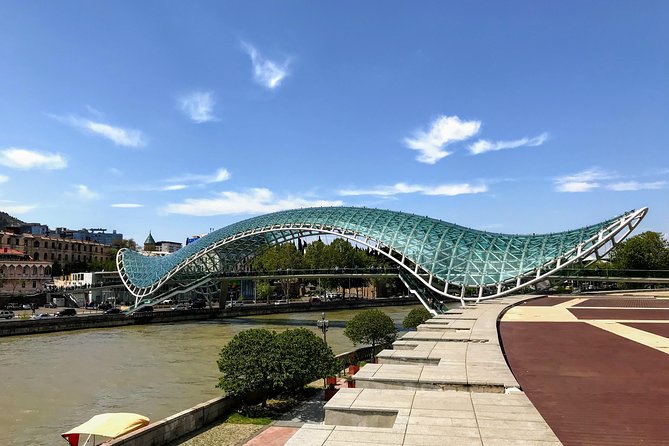
The Bridge of Peace opened in 2010 over the Mtkvari River, also known as the Kura. Its glass-and-steel form is a sharp contrast to the older churches, stone walls, and balconies nearby.
That contrast is one of the best parts of this route. Tbilisi does not separate old and new into tidy districts. You can look from a medieval church toward a modern bridge, then turn into a lane lined with older buildings. A guide helps connect those sights so the walk feels like a story rather than a string of photo stops.
The bridge also points you toward Rike Park, the broad public recreation area on the opposite side of the river. Families, local residents, and people out for a stroll use the park, making it a less formal pause in the tour.
Sayat-Nova, the marionette theater, and creative Tbilisi
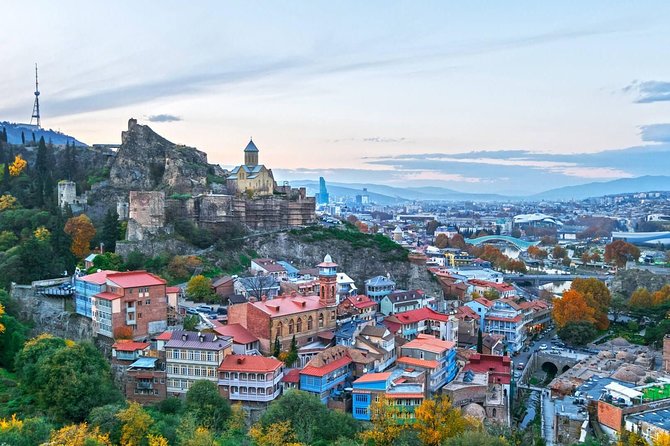
Near the northern wall of St. Kevork Armenian Church, you will find the monument to Sayat-Nova, the Armenian poet and musician whose birth name was Harutyun Sayadian. The monument recalls his connection to Tbilisi and the church, where he hid during the 1795 attack by Shah Aga Mohammed Khan. He was killed at the church door and buried there.
This is an easy stop to miss if you walk alone. It also adds an Armenian thread to the city’s story, something especially valuable on a short first visit.
The route then passes the Rezo Gabriadze Marionette Theater, opened in 1981. The theater is part of Tbilisi’s cultural life, and its small-scale, imaginative character fits the surrounding Old Town better than a grand modern venue would.
Nearby, the Sergey Paradzhanov monument recalls the Armenian-Georgian filmmaker celebrated for works such as Shadows of Forgotten Ancestors and The Colour of Pomegranates. These two creative stops show that Tbilisi’s identity is not only about fortresses and churches. Poetry, film, puppetry, and street sculpture are part of the city’s appeal.
Same mountains, a completely different kind of day:
- Day Trip to Kakheti Wine Region Including 9 Wine Tastings
★ 5.0 · 2,774 reviews - Highlights of Caucasus Mountains-Jinvali,Ananuri,Gudauri,Kazbegi(Group tour)
★ 5.0 · 2,682 reviews - Day Trip to Kazbegi and Gudauri
★ 5.0 · 2,009 reviews - Day Trip to Mtskheta Gori and Uplistsikhe
★ 5.0 · 1,801 reviews
Old Town and Jan Shardeni Street
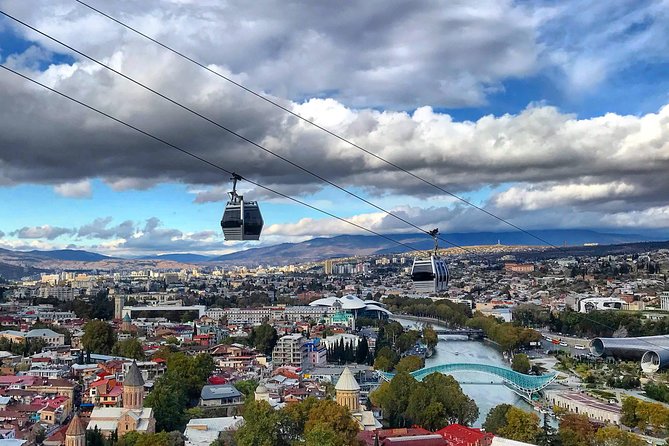
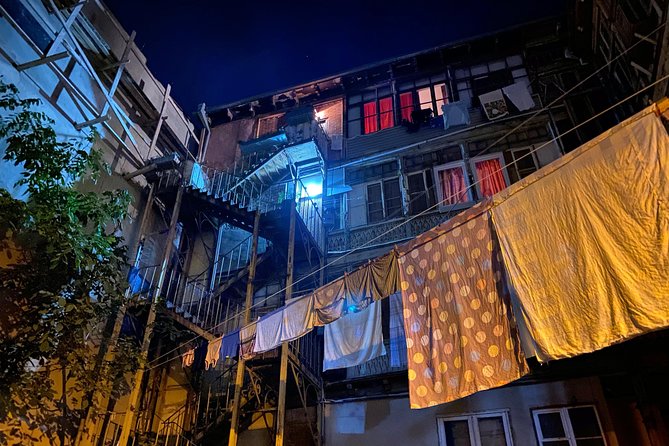
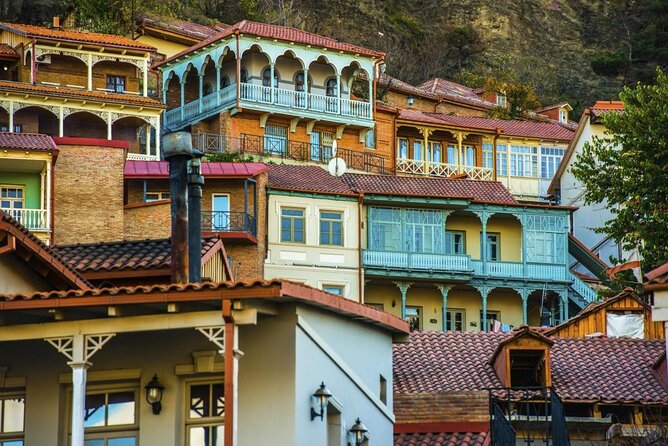
The largest portion of the walk is in Old Town Tbilisi, where the tour allows about an hour. This is where you get the most atmosphere: old buildings, restaurants, eateries, theaters, narrow streets, and the uneven texture of a historic neighborhood still used for daily life.
Do not expect every building to look polished. The charm comes partly from the mix of restored facades, worn walls, balconies, and ordinary city activity. Your guide can help you tell the difference between an important historic site and a simply photogenic corner.
Jan Shardeni Street is a pedestrian area lined with restaurants and places to stop. It is one of the better-known streets in the Old Town, so it can feel more commercial than the quieter lanes nearby. That is not necessarily a flaw. It gives you a convenient place to pause, browse, or note a restaurant for later, but I would not treat it as the purest picture of local life.
The private setup is useful here. Sofi helped one visitor find souvenirs and answered questions during a short visit. Tamar has also added wine tasting at the end of a tour for one booking, but you should treat that as a possible guide-led extra rather than a guaranteed part of the published route.
The cable car to Narikala and Kartlis Deda
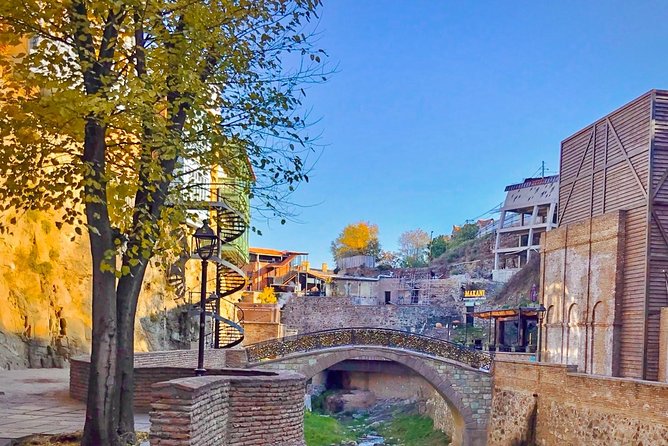
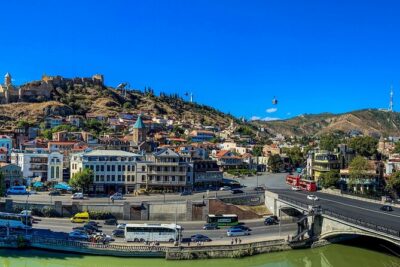
The aerial tramway is the tour’s key transport break. It links Rike Park with Narikala, the fortress overlooking Tbilisi, and opened in 2012. The ride saves you from tackling the hill on foot and gives you a different view of the river and Old Town.
The package information lists a one-way cable car ride as included, while the itinerary marks the tramway admission as not included. Because those details conflict, confirm the exact fare arrangement when booking. Either way, budget a little flexibility around the cable car, since its operation can be affected by weather or local conditions.
Kartlis Deda, or Mother Georgia, is a 20-meter aluminum statue erected in 1958 for Tbilisi’s 1,500th anniversary. Sculptor Elguja Amashukeli designed the woman in Georgian national dress holding symbols associated with welcome and defense.
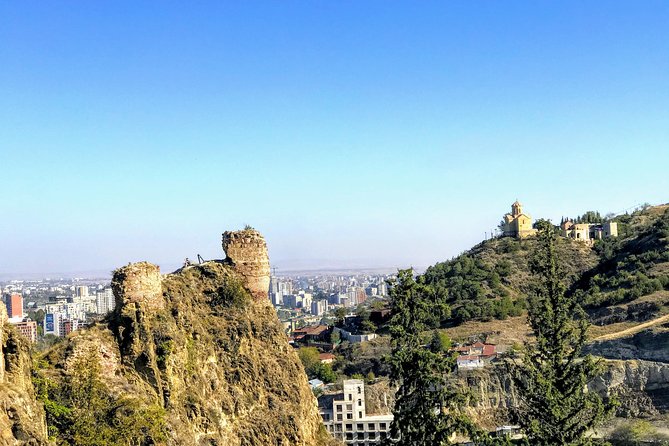
The statue is more than a quick photo stop. From the hill, you can understand Tbilisi’s physical setting: river, old houses, bridges, and steep slopes packed into one compact city. The route gives you a view that would be difficult to get from street level alone.
Sioni Cathedral, the mosque, and shared religious space

Sioni Cathedral of the Dormition follows a Georgian naming tradition connected to places in the Holy Land. Its name refers to Mount Zion in Jerusalem. The cathedral adds another major Georgian Orthodox site to the route after Anchiskhati Basilica.
The Jumah Mosque offers a different and especially important perspective. Located in the heart of the Old Town, it is open to visitors of all religions and beliefs. Its architecture may not immediately announce that it is a mosque, and it is known as one of the few places where Shia and Sunni Muslims pray together.
This is a strong stop for anyone interested in Tbilisi’s religious mix. Again, dress carefully. Covered shoulders and knees are required for entry to worship sites, and a respectful approach matters even during a brief visit.
Rike Park, the Toaster, and Meidan Bazaar
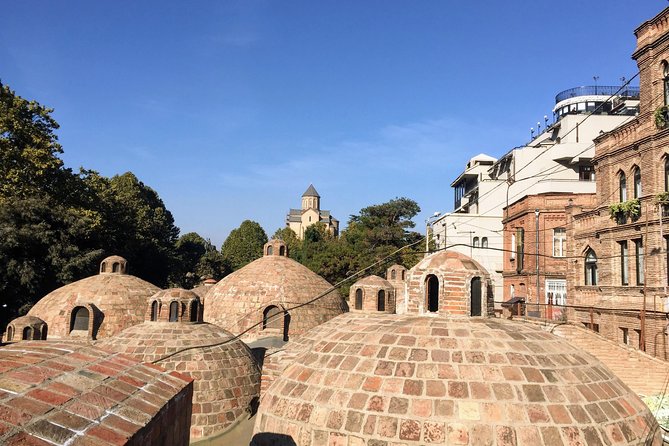
Back near the river, Rike Park gives the walking route some breathing room. It is a public recreation area used by families, residents, and people visiting the city. After the tight lanes of the Old Town and the hilltop views, the open space provides a welcome change.
The sculpture called the Toaster depicts a man holding a horn, based on an ancient Colchian statuette and associated with the Georgian tamada, or toastmaster. It is a small but telling introduction to Georgia’s social and wine traditions.
Meidan Bazaar is the practical souvenir stop. If you do not want to search through many shops, or your schedule is short, this underground market provides a focused place to browse. It is convenient rather than a substitute for exploring every local shop, but convenience has real value on a short tour.
Nearby, the Fountain Falcon and Pheasant recalls the legend of Tbilisi’s founding in the fifth century by King Vakhtang Gorgasali. The story connects with the city’s sulfur springs and leads naturally to the next stop.
The sulfur waterfall and Metekhi Cathedral
Dzveli Tbilisi Sulphur Waterfall is one of the route’s best surprises. A real waterfall sits in the middle of the city, close to the historic center. It is not a grand wilderness scene, but its setting makes it memorable. You move from shops, churches, and city streets to running water in just a few minutes.
The sulfur-water tradition is central to Tbilisi’s origin story and identity. This stop gives you a physical sense of why the city was founded here, rather than only hearing the legend at a monument.
Metekhi Cathedral completes the circuit with another ancient landmark. The twelfth-century temple sits close to the edge of the rocky bank above the Mtkvari River. Its position gives the final stretch a dramatic finish and reinforces the city’s recurring pattern: old religious buildings perched above water and streets.
What the $41 price gets you
At $41 per person, the price is reasonable for a private English-language tour that includes a local guide and lists a one-way cable car ride among the inclusions. The value improves if you are traveling with family or friends and can use a group discount, since the private format gives your party the guide’s full attention.
You are paying for orientation, local explanation, and time saved. A short visit to Tbilisi can otherwise become a puzzle of hills, churches, river crossings, and overlapping place names. The guide also adds practical help. Aleksi helped with persistent sellers and negotiated prices when useful, while Sofi assisted with souvenir choices.
Do not expect admission to a long list of paid attractions. Most stops are viewed from public areas and have no admission charge. The stated duration is also short compared with the number of places covered, so this is a highlights route. You will see many locations, but usually in brief visits.
Pace, families, and guide style
A moderate level of physical fitness is required. You will walk for most of the experience, use city streets and Old Town lanes, and deal with hills around the cable car, Narikala, and Kartlis Deda. Comfortable shoes are more important than fashionable ones.
The private format helps families. Aleksi was patient with a toddler and adjusted the experience when the child became fussy. Jonah tailored one family’s route and timing, which is useful if you need to shorten a stop or spend longer in an area that interests you.
Solo visitors can also benefit. Koba’s warm, personal approach made one solo booking feel informal and friendly, while Gio matched a fast walker’s pace. Tamar brings strong enthusiasm for Tbilisi and can add food or wine context, and Sofi is a good choice to request if practical questions and souvenir help matter to you.
Guide assignment is not guaranteed, so ask about availability if a particular guide is important. The experience is offered in English.
Who should book this Tbilisi walk?
I would choose this tour if you are in Tbilisi for the first time, have only a few hours, or want a clear introduction before exploring alone. It is especially useful for people who want the Old Town, major churches, riverfront, cable car, Mother Georgia, and Metekhi Cathedral in one compact outing.
It also suits families and solo visitors who value a guide’s attention. The route mixes famous sights with easy-to-miss details, and the flexible private format can make a big difference.
I would choose a longer, slower tour if your priority is photography, extended church interiors, museums, a full meal, or detailed discussion at every monument. At roughly two hours, this experience gives you breadth rather than long pauses.
Book with weather in mind. The activity requires good weather, and a cancellation for poor conditions leads to another date or a full refund. You can cancel for a full refund up to 24 hours before the start time, but changes or cancellations inside that window are not accepted.
Should you book it?
Book it if you want a fast, personal first look at Tbilisi and like the idea of combining walking with one cable car ride. The route covers an unusually broad range of the city, from sixth-century Anchiskhati Basilica and the old wall to the Peace Bridge, sulfur waterfall, market, mosque, and hilltop Mother Georgia.
Skip it if you prefer to linger at each stop or dislike walking uphill on uneven historic streets. For most first-time visitors, though, $41 is a fair price for a private orientation, especially when shared among a small group. Bring covered clothing, wear good shoes, and ask about the cable car inclusion before you set out.
FAQ
How long does the Tbilisi Explorer tour last?
The experience lasts approximately 1 hour 30 minutes to 2 hours.
Where does the tour begin?
It begins at 2 Freedom Square in Tbilisi, Georgia.
Where does the tour end?
The activity ends back at the meeting point.
Is this a private tour?
Yes. Only your group participates in the activity.
Is the tour offered in English?
Yes. English-language guiding is available.
Is the cable car included?
The package information lists a one-way cable car ride as included. The aerial tramway stop also notes that admission is not included, so confirm the exact fare arrangement before booking.
What should I wear for the churches and mosque?
You must cover your shoulders and knees. This applies to both men and women, and entry may be refused if you wear shorts or a sleeveless top.
Can I cancel for a full refund?
Yes. You can cancel at least 24 hours before the experience start time for a full refund. If poor weather forces cancellation, you will be offered another date or a full refund.
Just added around Tbilisi
- Private Adorable City Tour of Tbilisi★ 5.0 · 3 reviews
- Old tbilisi walking tour & wine tasting★ 5.0 · 9 reviews
- Tbilisi Airport to Gudauri, Bakuriani, Batumi, Tbilisi★ 5.0 · 3 reviews
- Your unique photo session in Tblisi, Georgia★ 3.5 · 4 reviews
- full day Kazbegi-Gudauri-jvari -from Tbilisi★ 5.0 · 6 reviews
- Wine promenade in hospitable Tbilisi★ 5.0 · 17 reviews
- Vardzia. Lake Paravani, Khertvisi & Lomisa castle, Rabati★ 4.5 · 12 reviews
- Wine Tasting Tour in Georgia’s Cradle of Wine★ 5.0 · 12 reviews
Walking Tours, compared.
Tbilisi Walking Tour Including Cable Car and Traditional Bakery
Read our review →
Evening Walking & Talking Tour with Wine & Boat Ride
Read our review →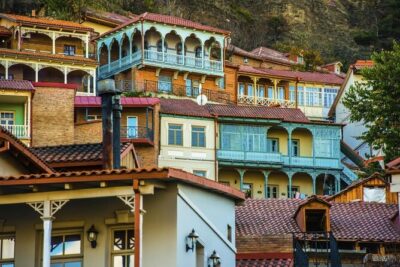
Old Tbilisi Highlights walking tour with wine & 10 tastings
Read our review →
Old Tbilisi Tour: Private Walking Tour With Wine Tasting
Read our review →
Private Tbilisi Food Tour: 9 Tastings Walk in Bohemian District
Read our review →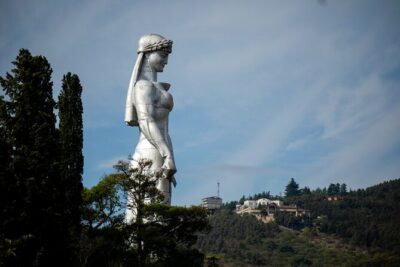
Tbilisi Old Town Walking Tour with a Local Guide
Read our review →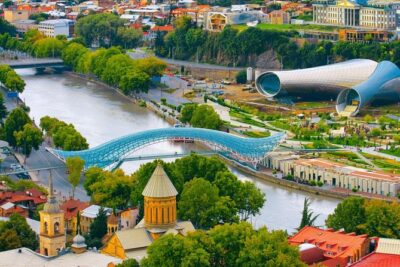
Discover Tbilisi: Hidden Gems and Iconic Sights Walking Tour
Read our review →
Browse the lists this tour appears in