
Reviewed · MTSKHETA & JVARI TOURS
One-day tour in ancient Mtskheta, Gori and Uplistsikhe
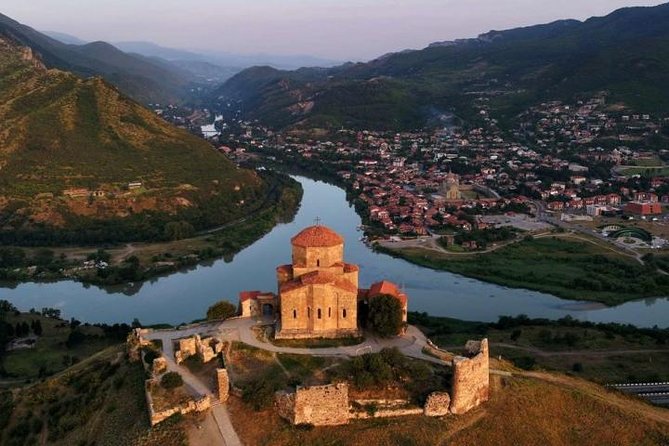
Mtskheta’s hilltop Jvari Monastery and the rock-cut streets of Uplistsikhe give this trip its real punch. In between, you’ll see Georgia’s old religious heart, Gori Fortress, and the deeply political Joseph Stalin Museum.
I like the wide sweep of Georgian history packed into one day, from the sixth century to the Soviet era. I also like the practical setup: hotel pickup is offered, transport is air-conditioned, bottled water is included, and a professional guide leads the way.
The tradeoff is time. Ten hours is a long day, and the stops are brisk. The Stalin Museum and Uplistsikhe also require extra admission, while lunch is on your own.
In This Review
- Key points to know before booking
- Why this day trip works from Tbilisi
- Jvari Monastery above two rivers
- Mtskheta and the story of Svetitskhoveli
- Gori Fortress and a difficult Soviet legacy
- Uplistsikhe, Georgia’s ancient rock-cut town
- What the $50.13 price really covers
- Guide style, group size, and practical comfort
- Who should book this Georgian history tour?
- Should you book it?
- FAQ
- How long does the tour last?
- Where does the tour begin?
- What transportation is included?
- Is a guide included?
- How many people can join the tour?
- Is lunch included?
- Is entry to the Stalin Museum included?
- Is entry to Uplistsikhe included?
- Can I cancel for a full refund?
Key points to know before booking
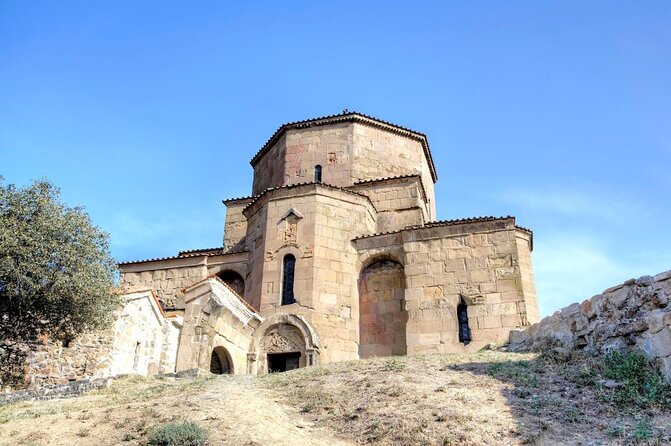
- Jvari gives you Georgia’s classic view: The sixth-century monastery sits above the meeting point of the Mtkvari and Aragvi rivers.
- Mtskheta combines a holy site with an old town: You’ll visit Svetitskhoveli Cathedral and have time to see streets lined with balconies.
- Gori adds a complicated modern chapter: The fortress is free to visit, but the Stalin Museum costs extra.
- Uplistsikhe is the day’s most unusual stop: The ancient settlement is carved into rock and requires a separate admission fee.
- The tour is built for a full day: Expect about 10 hours, with five main stops and limited time at each.
- The guide can shape the experience: Aleko is one named guide associated with the tour, and guiding is included in the price.
Why this day trip works from Tbilisi
Georgia’s most important historic sites are spread across the region west and northwest of Tbilisi. Seeing Mtskheta, Gori, and Uplistsikhe independently would mean arranging several transport legs, checking opening details, and keeping a close eye on the clock.
This tour solves that problem in one long outing. For $50.13 per person, you get pickup, an air-conditioned vehicle, fuel, bottled water, and a professional guide. That is a fair price for a private car or small-group day on the road, especially if you value context at religious and historic sites.
The group can reach a maximum of 20 people. That is small enough to be manageable, but it does not guarantee a quiet minivan or a personal guide. If your departure does not reach the minimum number of participants, the provider offers a different date or experience, or a full refund. One booking was changed into a solo outing without an extra charge, but you should not assume that arrangement will always be available.
Pickup is offered, and the tour runs for about 10 hours. That makes this a useful choice if you have only a few days in Georgia and want to cover major sites without changing hotels. It is less suitable if you prefer slow meals, long museum visits, or time to wander without a schedule.
More mtskheta & jvari tours in Tbilisi:
- Day Trip to Mtskheta Gori and Uplistsikhe
★ 5.0 · 1,801 reviews - Tbilisi:Mtskheta,Jvari,Bazaar,wine tasting,Chronicles of Georgia
★ 5.0 · 730 reviews - Mtskheta-Gori-Uplistsikhe
★ 5.0 · 112 reviews
Jvari Monastery above two rivers
The first stop is Jvari Monastery, a sixth-century Georgian Orthodox site on a rocky hill above Mtskheta. The view is the main reward. From here, you can see the Mtkvari and Aragvi rivers meet below, with the former capital of the Kingdom of Iberia spread around them.
This place also gives you an early lesson in Georgia’s conversion to Christianity. After Christianity was adopted, King Mirian III placed a large wooden cross on the hill. A small church was built beside it in the second half of the sixth century by Guaram, the ruler of Kartli.
You have about 20 minutes here, and admission is free. That is enough for a look inside, a few minutes with the view, and some explanation from the guide. It is not enough for a long architectural study or a quiet pause if the site is busy.
Jvari was added to the UNESCO World Heritage list in 1994. Its value is not just its age. The setting connects the monastery to Mtskheta below, the two rivers, and the early formation of Georgian Christianity. Bring a camera, but give yourself time to look beyond the photo. The hilltop setting is one of the day’s clearest visual moments.
Mtskheta and the story of Svetitskhoveli
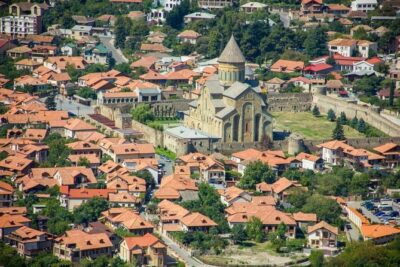
From Jvari, the tour continues into Mtskheta, Georgia’s former capital. The old town offers a change of pace from the hilltop monastery. You can walk among streets with traditional balconies and see the architectural character of a place that once served as the political center of the Kingdom of Iberia.
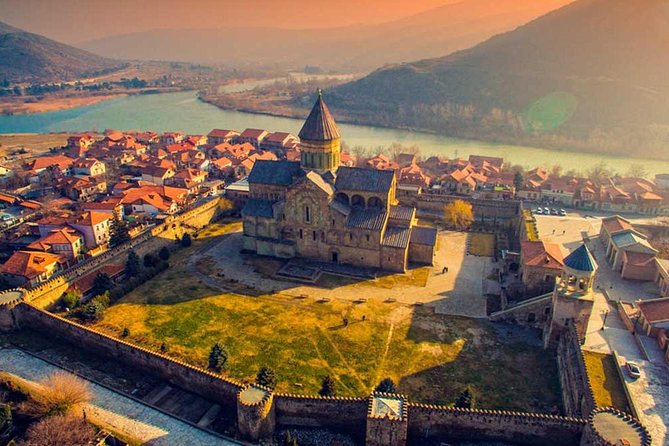
The main stop is Svetitskhoveli Cathedral, one of Georgia’s most important churches. The present building dates to the 11th century and is recognized as a UNESCO World Heritage site. It is the country’s second-largest church building, after Holy Trinity Cathedral in Tbilisi.
You have about 30 minutes, with no admission fee listed for the visit. That is a useful stop for anyone interested in Georgian Orthodox architecture, but the timing remains tight. You will see the cathedral and hear its central story, though you may not have much time to explore every corner of the old town.
The cathedral is tied to a Georgian religious legend about the robe of Christ. Elioz, a citizen of Mtskheta, is said to have found the tunic in Jerusalem. His sister Sidonia died after touching it and was buried with the robe. A cedar of Lebanon then grew over her grave, and the story connects that tree to the church’s foundation.
You do not need to treat the legend as a historical fact to appreciate its importance. It explains why Svetitskhoveli has such a strong place in Georgia’s religious tradition. The guide’s explanation matters here, since a quick look at the stone walls alone will not tell you why the cathedral is so important.
Gori Fortress and a difficult Soviet legacy
Gori provides two very different subjects in one stop. First comes Gori Fortress, a 13th-century castle on a hill above the city. Admission is free, and the visit lasts about 30 minutes.
The fortress changed hands among Georgians, Ottomans, and Persians. Much of what you see dates from the 17th and 18th centuries, and a major earthquake in 1920 caused serious damage. The elevated position gives the site a strong sense of its military purpose, even though the surviving structure is not intact.
The stop is relatively short, so think of Gori Fortress as an introduction rather than a full archaeological visit. You will get the setting, the broad story, and a look over the city. If you want extensive time on the walls, this schedule may feel rushed.
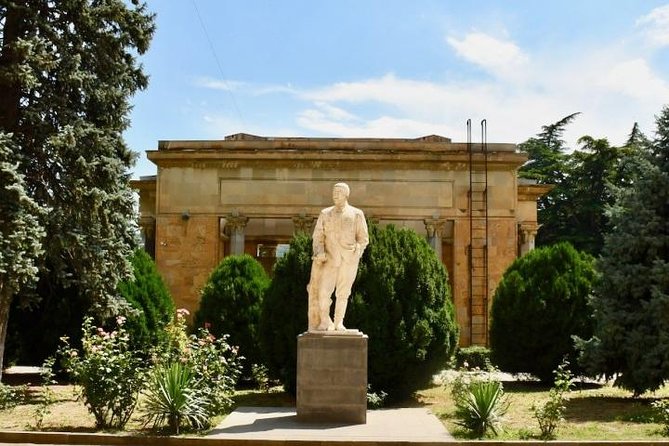
The next stop is the Joseph Stalin Museum, which lasts about 45 minutes. Stalin was born in Gori, and the museum is devoted to his life as leader of the Soviet Union. It retains its Soviet-era character, a fact that shapes the visit as much as the objects on display.
The museum visit includes the chance to see Stalin’s house, the museum collection, and his train wagon with a local guide. Admission is not included, so keep extra money ready. The displays are in Georgian and Russian, and an English-speaking guide is recommended if you want help interpreting the material.
This is not a simple hero’s museum, even if parts of its presentation retain an older Soviet tone. It is an opportunity to examine how Stalin’s birthplace presents one of the 20th century’s most powerful and controversial political figures. The collection includes material that can be unfamiliar even to people who have already studied the Soviet period.
I would give this stop your full attention rather than treating it as a quick photo opportunity. The contrast with Mtskheta is striking: you move from sacred kingship and medieval church tradition to the propaganda and memory of the Soviet state.
More gori & uplistsikhe tours in Tbilisi:
- Mtskheta, Jvari, gori, uflistsikhe, history and panorama (group tours)
★ 4.5 · 107 reviews - Day tour to Chronicles of Georgia, Gori city, Uplistsikhe cave
★ 5.0 · 86 reviews - Ancient Georgia Group Tour: Mtskheta,Jvari, Gori, Uplistsikhe
★ 4.5 · 73 reviews - Mtskheta – Jvari + Gori – Uplistsikhe Tour
★ 5.0 · 49 reviews
Uplistsikhe, Georgia’s ancient rock-cut town
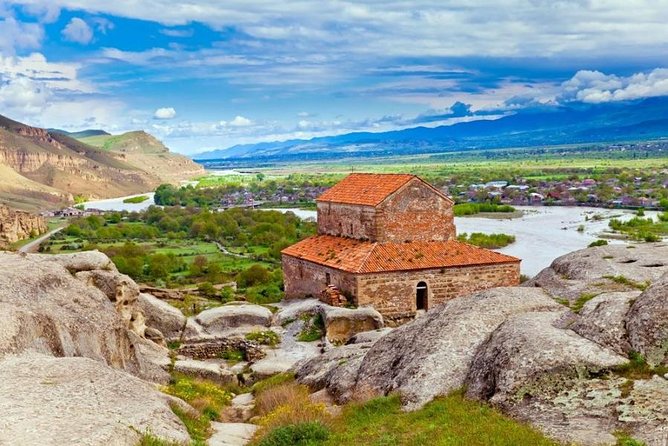
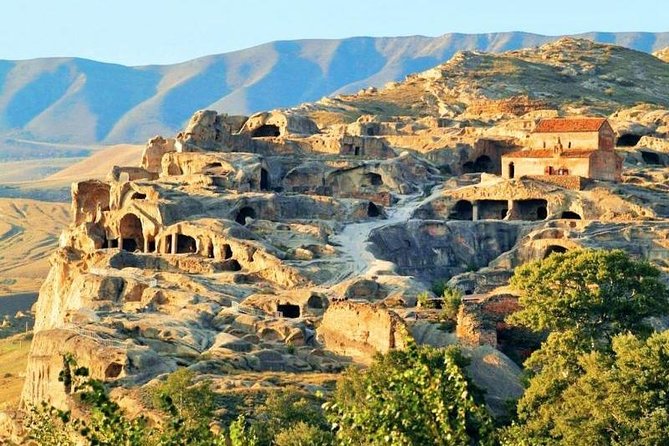
Uplistsikhe is the final major stop and, for many people, the most unusual. The name means fortress of the lord. Archaeologists place the settlement’s beginnings in the second or first millennium BC, making it one of the oldest urban settlements in Georgia.
The site was built in rock in the heartland of ancient Kartli, also known as Iberia in classical sources. It served as a political and religious center, and in the Middle Ages it stood on a trade route linking Byzantium with India and China.
You have about one hour here. Admission is not included, and the rock-cut terrain means you should expect uneven walking. The supplied details do not specify accessibility conditions, so you should ask the provider if you have mobility concerns. Most people can participate in the tour, but that does not mean every surface at Uplistsikhe will be easy for every visitor.
The value of a guided visit is clear. Uplistsikhe is not just a group of caves. It was a functioning settlement with religious, political, and practical spaces shaped directly from the rock. Without context, it can be hard to understand how the rooms relate to one another or why the site mattered.
One hour gives you a useful introduction, but not a complete exploration. You will need to keep moving and watch your footing. This is the stop where sturdy shoes and water matter most, though bottled water is included in the tour.
Uplistsikhe also gives the day a strong ending. Jvari and Svetitskhoveli show Georgia’s Christian tradition, Gori presents its medieval fortress and Soviet memory, and Uplistsikhe reaches back to the ancient world. Few day trips from Tbilisi cover such a broad span of time.
What the $50.13 price really covers
At $50.13 per person, the cost is reasonable for a 10-hour excursion with transport and guiding. Pickup, an air-conditioned vehicle, fuel surcharge, bottled water, and professional guide service are included.
The price does not cover lunch or admission to the Stalin Museum and Uplistsikhe. The churches and Gori Fortress are listed with free admission, so only two scheduled sites add ticket costs. Still, you should budget for those fees and food before you leave Tbilisi.
The strongest value comes from the geography. Mtskheta, Gori, and Uplistsikhe are close enough to combine, but far enough apart that a first-time visitor may find public transport slow or awkward. You pay for a coordinated route, transport back to Tbilisi, and explanations at places where the meaning is not always obvious.
The weakest value appears if you want a relaxed day. The schedule allows roughly 20 minutes at Jvari, 30 minutes at Svetitskhoveli, 30 minutes at the fortress, 45 minutes at the museum, and one hour at Uplistsikhe. Driving and meals fill out the rest of the day, so you should not expect long free periods.
Guide style, group size, and practical comfort
A professional guide service is included, and Aleko is one guide named in connection with this experience. The specific guide may vary, so treat Aleko’s involvement as a possibility rather than a guarantee.
One useful feature is the handling of a possible low-enrollment departure. If the minimum number is not met, the provider offers another date or experience, or a full refund. A solo replacement without an added charge has also been arranged in one case, which suggests some flexibility, but it is not a promised feature.
The maximum group size is 20. That gives the tour enough capacity to keep the price low, but the experience will depend on the final group and vehicle. A larger group can make it harder to hear at busy sites, while a smaller departure may feel much more personal.
Pickup is offered, and mobile tickets make the booking easy to carry on your phone. Confirmation is provided at booking. The tour is near public transportation, though the package is designed around the included vehicle rather than independent transfers.
Most people can participate. You should still be ready for a full day, church visits, museum time, and uneven ground at Uplistsikhe. Lunch is not included, so plan for the day accordingly.
Who should book this Georgian history tour?
I would recommend it to a first-time visitor based in Tbilisi who wants the major historical sights without arranging separate transport. It is particularly useful if you want both famous churches and less familiar places, rather than spending the entire day in the capital.
It also suits anyone interested in the tension between Georgia’s religious past, ancient kingdoms, medieval trade, and Soviet politics. The route is not just a series of monuments. Each stop adds a different chapter.
Families and mixed-interest groups may also find the variety useful. Jvari offers views, Mtskheta offers old-town streets, Gori offers a fortress and museum, and Uplistsikhe offers outdoor exploration. The day keeps changing, though younger children may find ten hours and the rock-cut walking tiring.
I would hesitate if your priority is slow travel. The visit to Mtskheta is short, the fortress gets only 30 minutes, and Uplistsikhe deserves more time than the schedule allows. Independent visitors with several days in Georgia may prefer to split this route across two days.
The free cancellation policy gives you some protection: cancel at least 24 hours before the start time for a full refund. Changes or cancellations within 24 hours are not refunded, and the departure depends on a minimum number of participants.
Should you book it?
Book this tour if you want a well-priced, history-heavy day from Tbilisi and accept a brisk schedule. The combination of Jvari, Svetitskhoveli, Gori, and Uplistsikhe is unusually varied, and included transport removes much of the planning work.
Skip it if you want long meals, extended museum time, or a slow visit to Mtskheta. Also remember to budget for lunch and the two paid admissions. For the right kind of visitor, this is an efficient way to see Georgia’s ancient religious center, Stalin’s birthplace, and one of the country’s most remarkable rock-cut settlements in a single day.
FAQ
How long does the tour last?
The tour lasts approximately 10 hours.
Where does the tour begin?
The tour is based in Tbilisi, Georgia, and pickup is offered.
What transportation is included?
An air-conditioned vehicle is included, along with fuel surcharge and bottled water.
Is a guide included?
Yes. Professional guide service is included.
How many people can join the tour?
The maximum group size is 20 people.
Is lunch included?
No. Lunch is not included in the tour price.
Is entry to the Stalin Museum included?
No. Admission to the Stalin Museum is not included.
Is entry to Uplistsikhe included?
No. Admission to Uplistsikhe is not included.
Can I cancel for a full refund?
Yes. You can cancel at least 24 hours before the experience start time for a full refund. Cancellations within 24 hours are not refunded.
Just added around Tbilisi
- Private Adorable City Tour of Tbilisi★ 5.0 · 3 reviews
- Old tbilisi walking tour & wine tasting★ 5.0 · 9 reviews
- Tbilisi Airport to Gudauri, Bakuriani, Batumi, Tbilisi★ 5.0 · 3 reviews
- Your unique photo session in Tblisi, Georgia★ 3.5 · 4 reviews
- full day Kazbegi-Gudauri-jvari -from Tbilisi★ 5.0 · 6 reviews
- Wine promenade in hospitable Tbilisi★ 5.0 · 17 reviews
- Vardzia. Lake Paravani, Khertvisi & Lomisa castle, Rabati★ 4.5 · 12 reviews
- Wine Tasting Tour in Georgia’s Cradle of Wine★ 5.0 · 12 reviews
Mtskheta & Jvari Tours, compared.

Mtskheta,Jvari,Bazaar,wine tasting,Chronicles of Georgia
Read our review →
Mtskheta, Jvari, gori, uflistsikhe, history and panorama (group tours)
Read our review →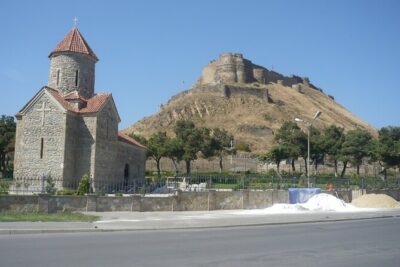
Ancient Georgia Group Tour: Mtskheta,Jvari, Gori, Uplistsikhe
Read our review →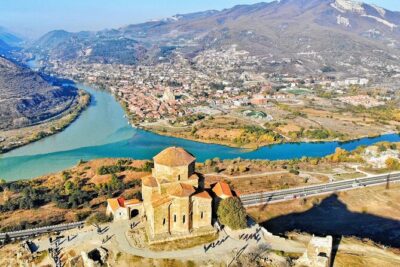
Ancient Mtskheta and Chronicle of Georgia half day tour
Read our review →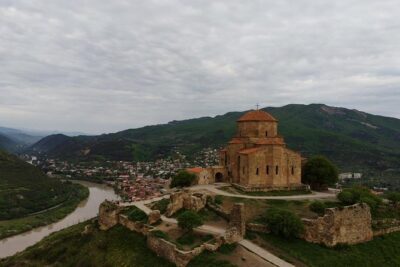
Private Day Trip to Gudauri and Kazbegi from Tbilisi via Jvari and Mtskheta
Read our review →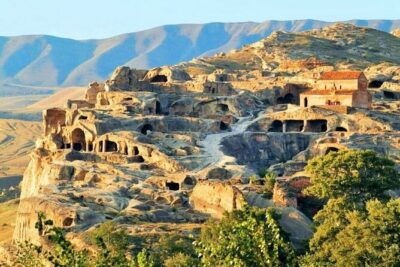
Browse the lists this tour appears in