
Reviewed · MTSKHETA & JVARI TOURS
Mtskheta, Jvari, gori, uflistsikhe, history and panorama (Private tours)
Georgia’s story comes into sharp focus on this full-day route. At Jvari and Mtskheta, you see the country’s early Christian heart. At Uplistsikhe, you walk through a rock-cut city that reaches back to the pre-Christian era. The change from sacred churches to pagan caves gives the day real range.
I like two things here. First, it is a private tour, so your group can travel at its own pace and ask questions without competing with a busload of strangers. Second, guides Nino and Giorgi are named in the booking details, and the feedback points to Nino’s storytelling and Giorgi’s careful driving as particular strengths. The main drawback is the long day: roughly nine hours, with several stops and a lunch break that you must pay for yourself.
In This Review
- Key points at a glance
- Why this day trip works so well
- Jvari Church and the first great panorama
- Svetitskhoveli, the center of Mtskheta
- Samtavro Church and the royal family
- Gori and the optional Stalin Museum
- Uplistsikhe, Georgia’s carved stone past
- What the private format adds
- Food, timing, and what to bring
- How the price compares with the experience
- Who should book this tour
- Should you book it?
- FAQ
- Where does the tour start?
- What time does the tour begin?
- How long does the tour last?
- Is this a private tour?
- Is lunch included?
- Are the Stalin Museum and Uplistsikhe tickets included?
Key points at a glance
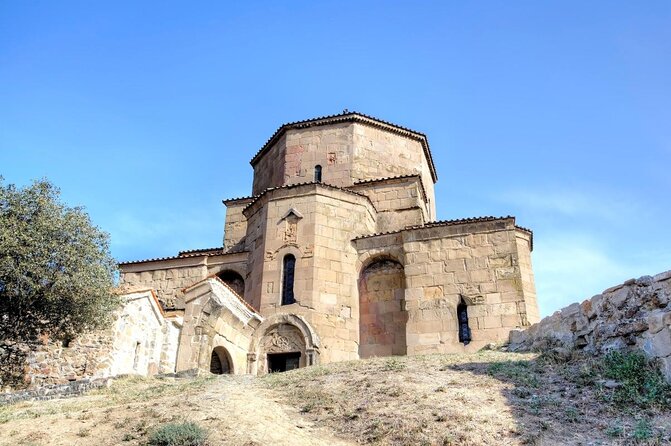
- Jvari gives you the day’s great opening view: The sixth-century church looks over Mtskheta and the meeting point of the Aragvi and Kura rivers.
- Mtskheta covers Georgia’s Christian foundations: Svetitskhoveli and Samtavro connect royal history, saints, relics, and Georgian Orthodox tradition.
- Uplistsikhe changes the mood completely: Its carved rooms, passageways, and ritual spaces reveal a much older pagan world.
- Gori adds a modern historical complication: The Stalin Museum is optional and costs an additional 15 GEL.
- Private transport matters on this route: You receive an air-conditioned vehicle, onboard WiFi, and a guide for your group alone.
- Budget for extras: Lunch is not included, and the listed extra charges for the Stalin Museum and Uplistsikhe should be confirmed when booking.
Why this day trip works so well
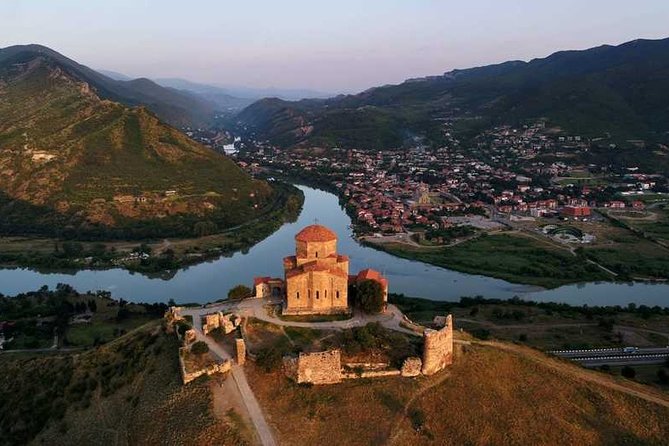
This is not just a collection of Georgian sights. It is arranged as a timeline. You begin above Mtskheta at Jvari, move into the early Christian period at Svetitskhoveli and Samtavro, then continue to Gori and the much older cave settlement of Uplistsikhe.
That sweep is the tour’s main strength. Many day trips from Tbilisi give you one church and one scenic stop. This one lets you compare different versions of Georgia: pagan and Christian, royal and Soviet, open countryside and carved stone.
The route also has a useful visual rhythm. Jvari is about the view. Mtskheta is about active religious sites and royal memory. Uplistsikhe is about walking, rock, and imagination. Gori sits between the two as a sharp reminder that Georgian history does not end in the medieval period.
The day begins at 9:30 a.m. from 3 Vakhtang Gorgasali Street in Tbilisi, with pickup offered. Since the tour lasts about nine hours, you should expect to return in the early evening. The private format makes this much easier than a fixed group outing, especially if you want more time at one church or less time at another.
More mtskheta & jvari tours in Tbilisi:
- Day Trip to Mtskheta Gori and Uplistsikhe
★ 5.0 · 1,801 reviews - Tbilisi:Mtskheta,Jvari,Bazaar,wine tasting,Chronicles of Georgia
★ 5.0 · 730 reviews - Mtskheta-Gori-Uplistsikhe
★ 5.0 · 112 reviews
Jvari Church and the first great panorama
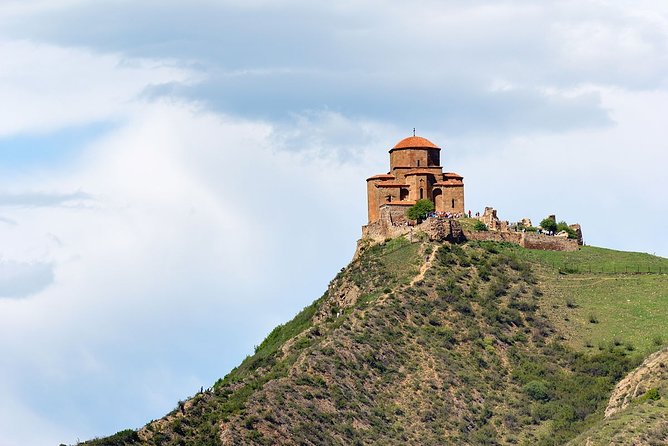
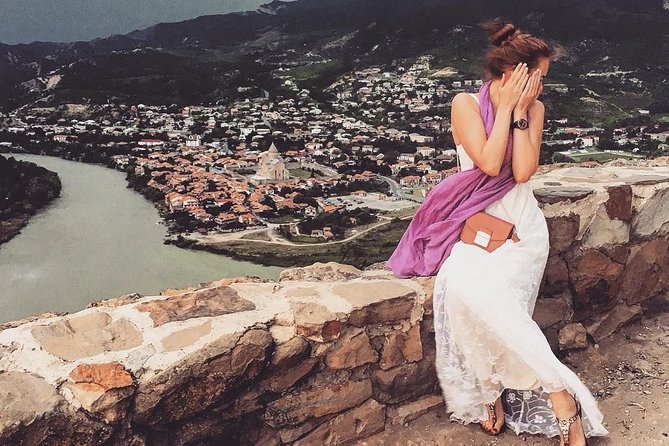
Jvari Church is a strong first stop because it gives you the setting before the details. From the hill, you look down toward Mtskheta and the point where the Aragvi meets the Kura. The view helps explain why Mtskheta became such an important center. Rivers, routes, and a defensible hill mattered here long before modern roads.
The church dates from the sixth century. Its plain stone form fits the ridge, and the setting does much of the work. This is the place to pause, take in the two rivers, and let your guide explain how Georgia moved into the early Christian era.
The route also has a literary connection. The walk recalls places associated with Mikhail Lermontov’s poem Mtsyri, and the wider area attracted major Russian writers, composers, and artists, including Pushkin, Tchaikovsky, Dumas, and Tolstoy. You do not need to know their work to enjoy the stop, but the stories add another layer to the view.
Jvari is not a long museum visit. Your hour here is likely to include the church, the lookout points, and the guide’s explanation of the site. Wear shoes that are comfortable for walking. The description calls this a walk rather than a simple roadside photo stop, so do not treat it as a place where you only step out for five minutes.
Svetitskhoveli, the center of Mtskheta
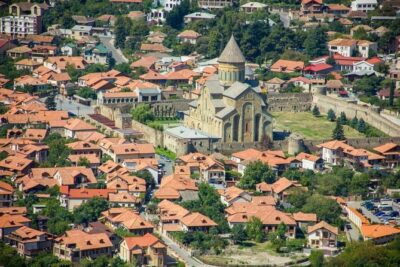
From Jvari, the tour continues into Mtskheta and Svetitskhoveli Cathedral. This is the main religious stop of the day and one of the most important churches in Georgia.
Svetitskhoveli means Pillar of Life-Giving. It is the patriarchal cathedral of the Georgian Orthodox Church, and the visit gives you a direct look at the country’s Christian identity. Your guide will explain major events linked to the cathedral and the sacred traditions connected with it.
The site is associated with the tunic of Jesus Christ, the mantle of the Prophet Elijah, and relics of Saint Andrew the First-Called. These traditions are central to the religious meaning of the cathedral, so listen for the difference between what the site preserves, what tradition holds, and how Georgian worship treats these objects.
Allow about an hour here. That is enough time for a guided visit without making the church feel like a rushed tick on a list. You can focus on the structure, the religious stories, and the role Mtskheta played in the early Christian and medieval periods.
One practical point: this is an active Orthodox setting, not simply an archaeological monument. Dress respectfully and follow any instructions given inside. The tour includes admission to the Mtskheta stops, but the exact amount of free time inside a working church can depend on services or local conditions.
Samtavro Church and the royal family
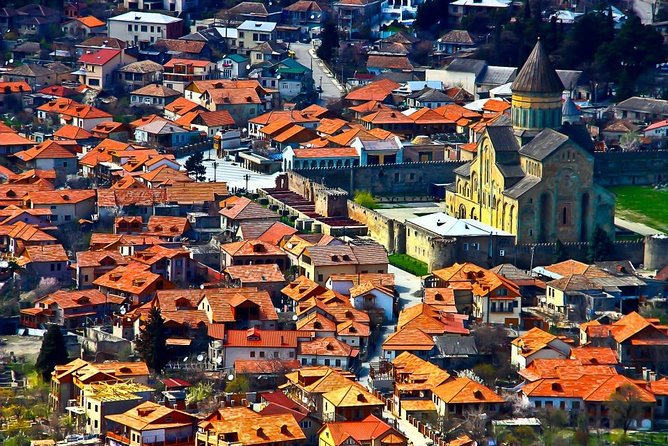
Samtavro is a smaller stop, with about 30 minutes set aside. It is easy to underestimate, but it adds personal detail to the grand story told at Svetitskhoveli.
The church contains the burial place of King Mirian, identified as Georgia’s first Christian king, and Queen Nana. Their story gives you a human link to the country’s conversion to Christianity. Instead of hearing only about buildings and dates, you see where the royal couple is remembered.
You will also hear about Saint Nino, whose preaching helped bring Christianity to Georgia. A blackberry bush connected with her is treated as miraculous. The story says it was cut down by invaders and grew back repeatedly. It is the sort of small, memorable detail that can stay with you longer than a list of rulers.
Because the stop is short, Samtavro works best if you arrive ready to listen. You will not have the same amount of time for a long wander as at Svetitskhoveli. Still, the visit rounds out Mtskheta by adding royal burials, saintly tradition, and local religious memory.
More gori & uplistsikhe tours in Tbilisi:
- Mtskheta, Jvari, gori, uflistsikhe, history and panorama (group tours)
★ 4.5 · 107 reviews - Day tour to Chronicles of Georgia, Gori city, Uplistsikhe cave
★ 5.0 · 86 reviews - Ancient Georgia Group Tour: Mtskheta,Jvari, Gori, Uplistsikhe
★ 4.5 · 73 reviews - Mtskheta – Jvari + Gori – Uplistsikhe Tour
★ 5.0 · 49 reviews
Gori and the optional Stalin Museum
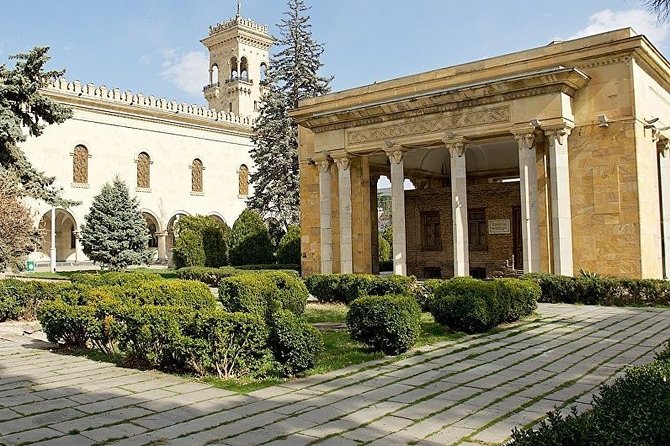
The second part of the day brings you to Gori, the birthplace of Joseph Stalin. A visit to the Stalin Museum is optional and costs an additional 15 GEL. That choice is useful because the museum will appeal strongly to some people and not at all to others.
Inside, you can see a preserved statue of Stalin, personal possessions, furniture, and exhibition halls devoted to his life. A museum guide conducts the visit. The material gives you a close look at how Stalin is presented in his hometown, but you should expect a site shaped by its subject and its local setting, not a neutral overview of every aspect of Soviet rule.
If you are interested in twentieth-century politics, propaganda, or the way countries remember controversial figures, the museum adds a different kind of value. It breaks up the ancient and medieval focus of the day and gives you a reason to think about Georgia’s place in the Soviet period.
If your main goal is churches and ancient ruins, you may prefer to use this time for lunch or a slower visit elsewhere. The museum is not included in the tour price, so you can make the decision based on both interest and budget.
Uplistsikhe, Georgia’s carved stone past
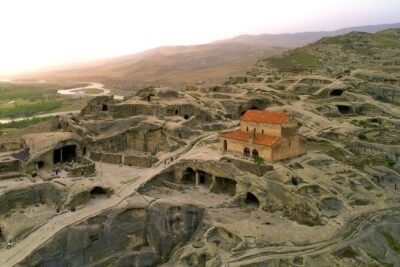
Uplistsikhe is the tour’s most unusual stop. The site is a cave city dating from the end of the second millennium to the beginning of the first millennium BC. You walk through rooms and corridors cut into stone, including living spaces, work areas, and places linked with pagan worship.
This is where the day moves furthest away from familiar church tourism. Rather than entering a polished building with a clear religious function, you follow a network of rock-cut spaces and try to picture how an ancient settlement operated.
Your guide will explain Uplistsikhe’s links with Urartu and Media, two ancient powers connected with the wider region. You will also hear about the city’s period of growth and later decline. Those connections matter because they show that this was not an isolated group of caves. It formed part of wider trade and political networks.
The site also opens onto broad views of the Kura Valley. That combination of stone passages and open scenery makes Uplistsikhe a memorable final stop. The setting helps you see why settlements took shape here, while the carved rooms force you to think about daily life in a very different age.
Plan on about an hour. The ground can be uneven, and the stop involves walking through exposed rock spaces. The supplied information lists an additional 15 GEL ticket for Uplistsikhe, although one section also describes admission as free. I would confirm the current entrance arrangement with Ushba Travel before departure rather than assume the ticket is covered.
What the private format adds
The private setup is more than a label. Only your group takes part, which gives you a better chance to ask about Georgian religion, ancient trade, Soviet memory, or the stories behind the sites.
The named guides connected with this experience are Nino and Giorgi. Nino is described as providing useful historical information with a warm and courteous manner. Giorgi is identified as the driver, with careful and efficient transport between stops. Those details matter on a nine-hour route, since the quality of the time between attractions can shape the whole day.
You receive an air-conditioned vehicle and WiFi onboard. The vehicle is especially useful during the longer road sections between Tbilisi, Gori, and Uplistsikhe. Air conditioning will be welcome in warm weather, while WiFi can help you stay connected, though you should not book this tour solely for internet access.
The route is offered with group discounts. Since the listed price is $90 per person, the value improves when shared by a small private group. Compared with arranging separate transport, a guide, and admission planning yourself, the price can be sensible for a day that combines four distinct historical sites.
Food, timing, and what to bring
Lunch is not included. You should plan to pay separately for a meal during the day, and the tour feedback specifically points to a café near the rock city as a place with good, inexpensive food. That is useful because Uplistsikhe is likely to arrive after several morning stops, when you may be ready for a proper break.
Start with comfortable walking shoes. Jvari involves a walk, and Uplistsikhe has stone paths and carved passages. Bring water, sun protection, and a layer you can use inside churches or during changes in weather.
The nine-hour schedule is full but reasonable for the number of places covered. You will not have unlimited time at every site. If you prefer long, unhurried visits with time for every side chapel and museum panel, this may feel fast. If you want a broad, well-organized introduction to central Georgia outside Tbilisi, the pace makes sense.
Pickup is offered, while the stated meeting point is 3 Vakhtang Gorgasali Street in Tbilisi. Confirm the exact pickup arrangement when you book. Confirmation is sent at the time of booking, and most people can take part, but the walking at Uplistsikhe is worth considering if you have mobility concerns.
How the price compares with the experience
At $90 per person, this is not the cheapest way to see Mtskheta and Uplistsikhe. It is also not simply a transfer service. The price includes a private air-conditioned vehicle, WiFi, and a qualified guide, as well as admission to the included Mtskheta area stops.
The strongest value comes from the amount of context packed into one day. You are not only looking at a church, taking a picture, and moving on. The guide connects Jvari’s view, Mtskheta’s Christian sites, Gori’s Soviet association, and Uplistsikhe’s pagan past.
You should add the cost of lunch and check the two listed extra charges. The Stalin Museum costs 15 GEL, while Uplistsikhe is also listed with a 15 GEL additional ticket in the tour details, despite another line describing its admission as free. That inconsistency is small but worth clearing up before you set your budget.
Free cancellation is available if you cancel at least 24 hours before the start time. Changes or cancellations inside that 24-hour window are not refunded.
Who should book this tour
I would choose this tour if you want a historical overview rather than a single-theme outing. It suits first-time visitors to Georgia who want to see the country’s Christian center, an ancient cave settlement, and a major twentieth-century figure in one day.
It also fits couples, families, and small groups who value a private vehicle and the freedom to ask questions. The route is particularly good for anyone who enjoys connecting places to one another instead of visiting isolated sights.
You may want a different plan if you dislike long day trips, prefer slow photography stops, or have no interest in either religious sites or ancient ruins. The optional Stalin Museum helps, but the main route is still built around history, churches, archaeology, and scenery.
Should you book it?
Book it if you want to see several sides of Georgia in one well-filled day. The strongest reasons are the Jvari panorama, the religious importance of Mtskheta, and the strange, atmospheric stone corridors of Uplistsikhe. Having Nino or Giorgi guide the route can make the connections between those places much clearer.
Before paying, confirm pickup details, the current Uplistsikhe admission charge, and whether you want the optional Stalin Museum. If you are comfortable with a nine-hour schedule and separate lunch costs, this private outing offers a strong introduction to Georgia’s long story beyond Tbilisi.
FAQ
Where does the tour start?
The stated ticket redemption point is 3 Vakhtang Gorgasali Street in Tbilisi, Georgia. Pickup is also offered, so confirm the exact arrangement when booking.
What time does the tour begin?
The start time is 9:30 a.m.
How long does the tour last?
The experience lasts approximately nine hours.
Is this a private tour?
Yes. Only your group participates in the activity, and group discounts are available.
Is lunch included?
No. Lunch is not included in the tour price. You should budget separately for food during the day.
Are the Stalin Museum and Uplistsikhe tickets included?
The Stalin Museum ticket is not included and is listed at an additional 15 GEL. The tour details also list a 15 GEL additional ticket for Uplistsikhe, although another section describes its admission as free, so confirm the current charge before departure.
More Historical Tours in Tbilisi
- Tbilisi old town & soviet heritage – Private driver-guided Tour
★ 5.0 · 83 reviews - A 6-Day Private Expedition into Rich Heritage
★ 5.0 · 34 reviews - Jewish Heritage Walking Tour with Kosher Wine Tasting
★ 5.0 · 15 reviews - Kazbegi-Ananuri-Gudauri: Epic Views & History (Group)
★ 5.0 · 15 reviews
Just added around Tbilisi
- Private Adorable City Tour of Tbilisi★ 5.0 · 3 reviews
- Old tbilisi walking tour & wine tasting★ 5.0 · 9 reviews
- Tbilisi Airport to Gudauri, Bakuriani, Batumi, Tbilisi★ 5.0 · 3 reviews
- Your unique photo session in Tblisi, Georgia★ 3.5 · 4 reviews
- full day Kazbegi-Gudauri-jvari -from Tbilisi★ 5.0 · 6 reviews
- Wine promenade in hospitable Tbilisi★ 5.0 · 17 reviews
- Vardzia. Lake Paravani, Khertvisi & Lomisa castle, Rabati★ 4.5 · 12 reviews
- Wine Tasting Tour in Georgia’s Cradle of Wine★ 5.0 · 12 reviews
Mtskheta & Jvari Tours, compared.

Mtskheta,Jvari,Bazaar,wine tasting,Chronicles of Georgia
Read our review →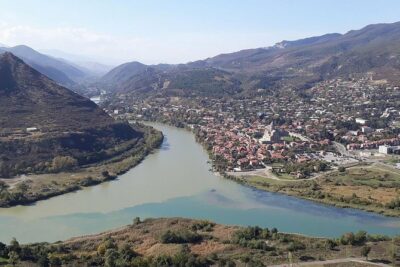
Mtskheta, Jvari, gori, uflistsikhe, history and panorama (group tours)
Read our review →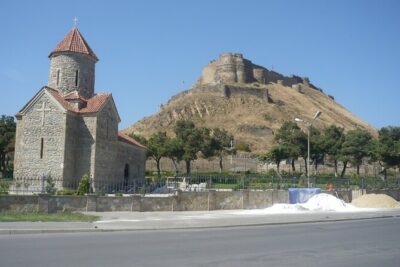
Ancient Georgia Group Tour: Mtskheta,Jvari, Gori, Uplistsikhe
Read our review →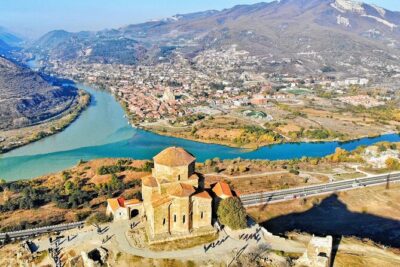
Ancient Mtskheta and Chronicle of Georgia half day tour
Read our review →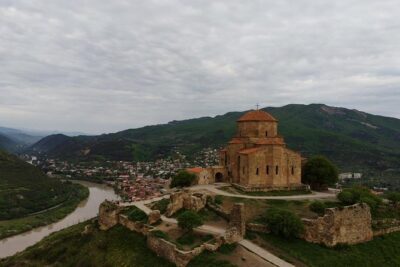
Private Day Trip to Gudauri and Kazbegi from Tbilisi via Jvari and Mtskheta
Read our review →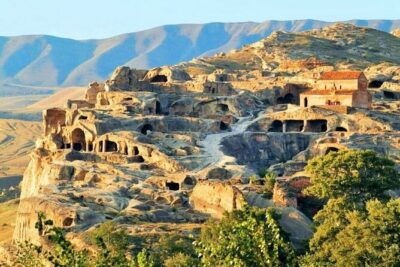
Browse the lists this tour appears in