
Reviewed · WALKING TOURS
Classic Tbilisi Walking Tour
Tbilisi reveals itself best on foot, where grand squares give way to steep lanes, old churches, sulfur baths, and sudden views over the Mtkvari River. This three-hour route packs in the city’s main old-town sights, with a cable-car ride to Narikala Fortress breaking up the walking.
I like the clear start and finish. You begin at central Freedom Square and end in Abanotubani, so you can keep exploring the bathhouse district afterward. I also like the mix of familiar sights and lesser-known corners, especially the Betlemi churches and the remains of a Zoroastrian fire temple. The main consideration is the climbing: stairs, hills, and uneven streets make sensible shoes essential.
In This Review
- Key points at a glance
- Why this route works for a first morning in Tbilisi
- Freedom Square and the streets of Sololaki
- Lado Gudiashvili Square and Kldisubani
- Climbing to the Lower and Upper Betlemi Churches
- The Bridge of Peace and modern Tbilisi
- Riding the cable car to Narikala Fortress
- Descending into Abanotubani and Meidan Square
- Guide quality and the size of the group
- Price, timing, and what to bring
- Who should book this Tbilisi walk
- Should you book the Classic Tbilisi Walking Tour?
- FAQ
- Where does the tour start?
- Where does the tour end?
- How long is the tour?
- Is the cable-car ride included?
- Is a professional guide included?
- Does the tour include hotel pickup and drop-off?
- Is transportation provided between the attractions?
- What should women wear at the churches?
- What should men wear at the churches?
- Does the tour operate in bad weather?
- How many people can join the tour?
- Can I cancel for a full refund?
Key points at a glance
- Freedom Square to Sololaki: Begin near the old city hall and walk through recently renovated streets.
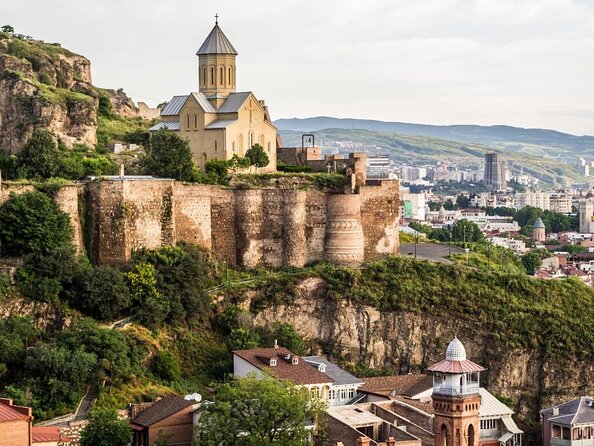
- Betlemi churches and fire temple remains: Climb into Kldisubani for churches, old stonework, and city views.
- Bridge of Peace: See Tbilisi’s bold modern side above the Mtkvari River.
- Narikala by cable car: The ride is included and saves you a long uphill climb.
- Abanotubani finish: End beside the sulfur bathhouses and Meidan Square.
- English-speaking guide: The tour is offered in English, with guide Eka singled out for her humor, flexibility, and strong command of Georgia’s past.
Why this route works for a first morning in Tbilisi
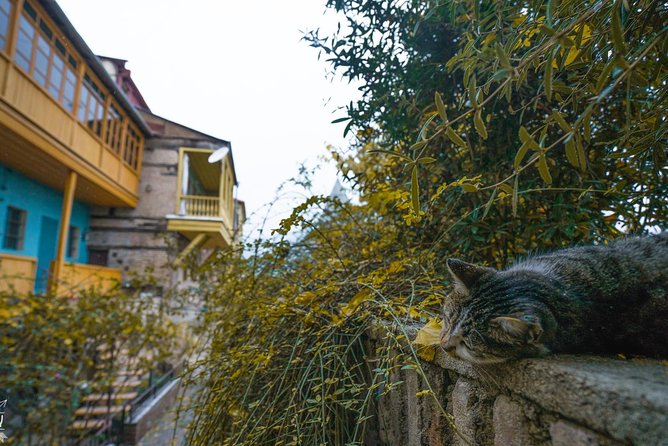
Tbilisi can feel confusing at first. The old city is compact, but it is split by the river, pressed against hills, and threaded with lanes that change character quickly. This route gives you a useful mental map in about three hours.
You meet at 10:00 am at the Chronograph store near Freedom Square. That location is central and easy to connect with by public transport. From there, the route heads toward Sololaki, Kldisubani, the river, Narikala Fortress, and Abanotubani.
I like this order because it starts gently, builds toward the best views, and finishes in one of Tbilisi’s most distinctive areas. You are not spending the whole tour inside museums or riding in a vehicle. The city itself is the subject, and your guide helps connect the streets, buildings, faiths, and political eras.
The tour is listed at $134 per person. That is a serious price for three hours, so the value rests mainly in the guide and the included cable car, not in admission fees. If you want an introduction that helps you find your way around for the rest of your stay, the cost may make sense. If you prefer to wander alone and use a map, it will feel expensive.
A few more Tbilisi trips to weigh up
- Tbilisi Walking Tour Including Cable Car and Traditional Bakery
★ 5.0 · 1,310 reviews - Tbilisi:Evening Walking & Talking Tour with Wine & Boat Ride
★ 5.0 · 572 reviews - Old Tbilisi Highlights walking tour with wine & 10 tastings
★ 5.0 · 276 reviews
Freedom Square and the streets of Sololaki
Freedom Square is a practical place to begin. It is central, recognizable, and close to the old city. You meet near the old city hall at the Chronograph store, then set out on foot.
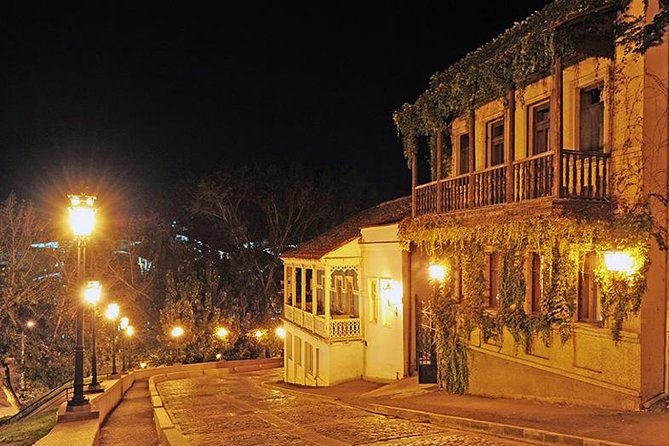
The first section moves through Sololaki, an old central district with recently renovated streets. The short walk here gives your guide room to explain Tbilisi’s changing character before the route becomes steeper.
Sololaki is useful as an opening chapter because it lets you see more than the postcard version of the city. The route is not limited to the sulfur baths and fortress. You also get a sense of how central neighborhoods connect to the old town.
Allow about 15 minutes at this stop. There is no admission charge, and the appeal is the street setting rather than a single monument. Keep your eyes up as you walk, but also watch your footing. Old-city routes often look easy on a map and feel different once stairs and slopes enter the picture.
Lado Gudiashvili Square and Kldisubani
After Sololaki, you reach Lado Gudiashvili Square. The square has been renovated, and it creates a natural pause before the climb toward Kldisubani.
From here, you follow Asatiani Street. The route then turns toward Kldisubani, one of the old city’s hill districts. This is where the tour becomes more physical and more scenic.
You spend about 15 minutes at Gudiashvili Square. Again, there is no ticket to buy. The benefit comes from hearing the guide place the square and nearby streets within Tbilisi’s wider story.
A guide is especially useful here because the pleasure is in the connections. A square, a street name, and a hillside church can seem like separate stops when you explore alone. A good guide turns them into one walking story. Eka, one of the guides associated with this experience, was praised for being friendly, funny, flexible, and fluent in English. Those qualities matter on a walking tour, where questions and pacing can shape the morning.
Climbing to the Lower and Upper Betlemi Churches
The pedestrian route now goes uphill to the Lower and Upper Betlemi Churches. Plan for stairs and a slower pace. This is the section where comfortable shoes and weather-ready clothing stop being optional.
The churches offer a closer look at Tbilisi’s religious and architectural past. Nearby are the remains of a Zoroastrian Ateshgah fire temple dating from the fifth century. That detail gives this part of the walk unusual depth. You are not seeing only one faith tradition, but traces of several periods and beliefs gathered on the same hillside.
The stop lasts about 30 minutes. There is no admission charge, but the setting rewards time. The elevated position opens views around the old city, so this is a good place to pause, catch your breath, and let the guide explain what you are seeing.
Church dress rules matter. Women are expected to wear a head scarf and a dress, while men should wear long trousers. Dress modestly from the start so you do not need to adjust your clothing halfway through the walk.
The route’s drawback is clear here: the climb may be uncomfortable for anyone who has trouble with stairs. The tour information says most people can participate, but that does not remove the need to judge your own mobility and stamina.
Same mountains, a completely different kind of day:
- Day Trip to Kakheti Wine Region Including 9 Wine Tastings
★ 5.0 · 2,774 reviews - Highlights of Caucasus Mountains-Jinvali,Ananuri,Gudauri,Kazbegi(Group tour)
★ 5.0 · 2,682 reviews - Day Trip to Kazbegi and Gudauri
★ 5.0 · 2,009 reviews - Day Trip to Mtskheta Gori and Uplistsikhe
★ 5.0 · 1,801 reviews
The Bridge of Peace and modern Tbilisi
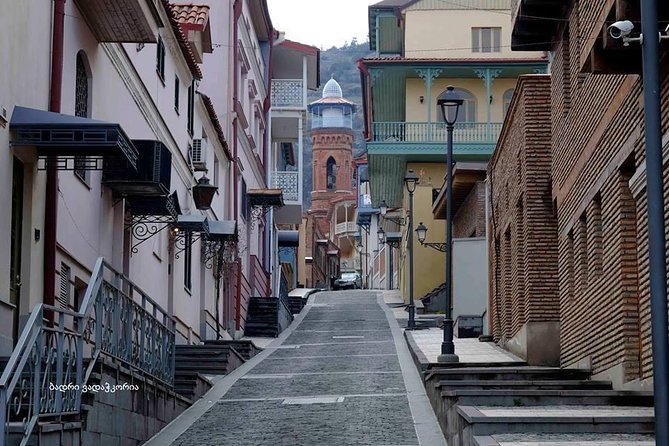
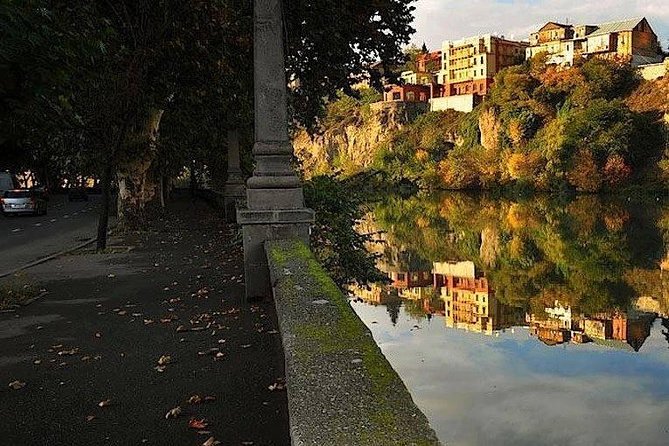
The next major stop shifts the mood. The Bridge of Peace is a contemporary pedestrian bridge made of glass and steel. Its bow shape arches over the Mtkvari River, linking the old-city area with the newer side of central Tbilisi.
You spend about 30 minutes here. The bridge is free to cross, and the stop gives you a visual break from stone lanes and historic churches.
I like this contrast. Tbilisi is not preserved as a single old-world set piece. Its identity includes ambitious modern design alongside old religious buildings, fortress walls, and bathhouses. The bridge helps you see that the city is still changing.
This is also a useful point for orientation. From the river, you can better understand how the old city sits against the hills and how Narikala rises above it. Your guide may also use the route to discuss the city’s Soviet-era past, one of the stated themes of the experience.
The information provided does not promise a separate museum visit or a long lecture on the Soviet period. Expect history woven into the walk rather than a formal classroom session. If you have specific questions about Georgia’s Soviet years, ask them directly. One strong feature of the guiding style described for this tour is the ability to answer questions and adjust to your interests.
Riding the cable car to Narikala Fortress
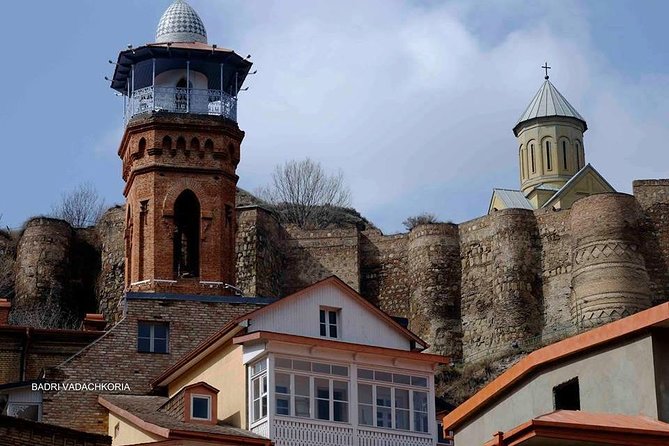
At the cable-car station, you ride up to Narikala Fortress. The ride is included in the tour price, which is important when judging value.
Narikala dates from the fourth century and sits high above the city. The fortress section lasts about one hour, making it the longest stop on the route. You have time to explore the site and take in the views rather than simply step out, snap a picture, and leave.
The cable car also solves a practical problem. Walking to the fortress would mean a much longer uphill approach. Instead, you get a quick change of height and a broad view of Tbilisi as the city opens below you.
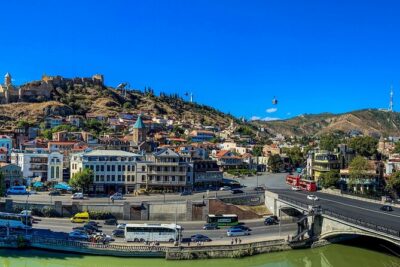
The fortress itself is a major reason to choose this tour. From the top, you can look back across the old city and the Mtkvari River. The view helps all the earlier stops make sense: Freedom Square and Sololaki below, the old lanes around Betlemi, the river crossing at the Bridge of Peace, and the bathhouse district at the foot of the hill.
Do not expect a polished indoor attraction. Narikala is a fortress site, and the pleasure comes from stone walls, open air, and position. Weather will shape this part of the visit. The tour operates in all weather, so bring clothing that suits the forecast. Sun, rain, wind, or wet stone can change how comfortable the hilltop feels.
The cable car may also introduce a short wait or a crowded ride, though no exact waiting time is provided. Keep your schedule flexible after the tour rather than booking something immediately at 1:00 pm.
Descending into Abanotubani and Meidan Square
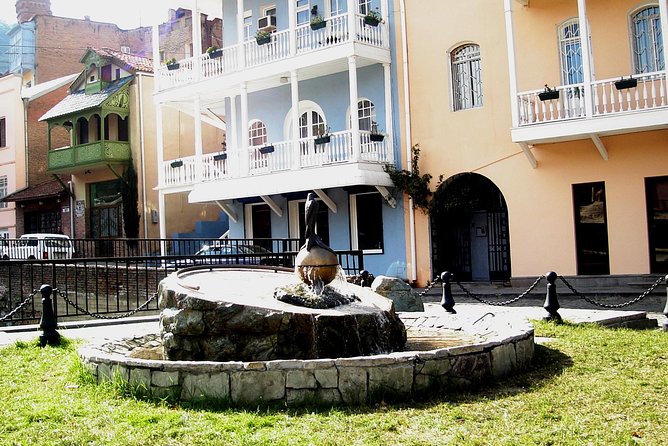
After Narikala, you head down toward Abanotubani, Tbilisi’s sulfur bathhouse area. The tour finishes near the Monument Fountain Falcon and Pheasant, after about 30 minutes in the district.
This ending is well chosen. Abanotubani has a strong sense of place, and Meidan Square gives you a natural base for further exploring. You can continue independently after saying goodbye to your guide, with the old-city lanes and bathhouse district close at hand.
The tour does not include lunch, dinner, or a bathhouse visit. It also does not provide hotel pickup, drop-off, or a vehicle between attractions. That is not a problem for this route, since the point is to walk, but you should understand what the $134 covers: a professional guide and the cable-car ride, not a full-day package.
The final section is relatively short, but the descent can be just as tiring as the climb. Uneven paving and steps are part of the old-city setting. If your knees are sensitive, take your time and tell the guide.
Guide quality and the size of the group
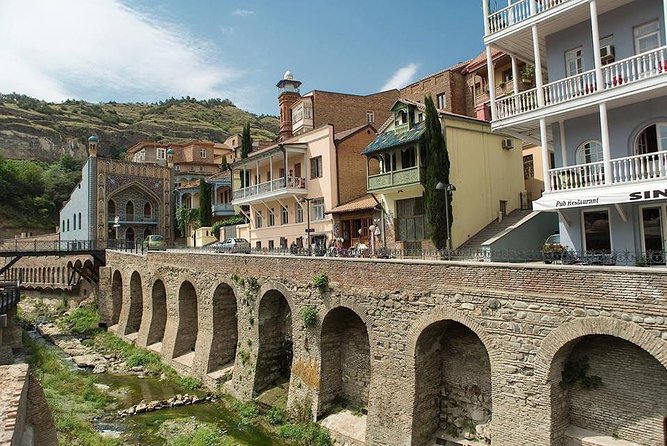
The guide is the heart of this experience. The tour is offered in English, and guide Eka received especially warm praise for her humor, flexibility, and ability to respond to personal interests. Another guide was described as fluent in English and able to answer questions about Georgia across a long walking program.
The published maximum is 99 people. That is a very large possible group for narrow old-city streets, even though the actual number on a particular departure may be smaller. A large group can make it harder to hear, ask questions, or keep a steady pace. If group size matters greatly to you, confirm the expected number before booking.
The strongest reason to choose a guided route is not simply getting from one sight to another. It is the context between the sights. You can find Freedom Square, the bridge, fortress, and bathhouses on a map. You cannot get the same sense of how the districts relate without someone leading you through them and explaining what changed over time.
The guide can also help you use the rest of your stay well. One useful piece of advice is to take the tour early in your visit. After the walk, you will know which lanes, squares, and viewpoints deserve a return visit at your own pace.
Price, timing, and what to bring
At $134 per person, this is not a bargain walking tour. There are no paid entries listed beyond the included cable-car ride, and the tour lasts about three hours. You are paying mainly for the professional guide, the organized route, and the time saved in working out Tbilisi’s layout yourself.
I would find the price easier to justify if you value expert explanation and want a firm introduction on your first day. It is harder to justify if you already know the city or plan to explore every sight independently.
Bring:
- Comfortable walking shoes with good grip
- Modest clothing for the churches
- A head scarf and dress for women entering the churches
- Long trousers for men
- Weather-appropriate clothing
- Water for the uphill sections
The tour starts at 10:00 am and ends in Abanotubani after approximately three hours. Tips are not included. The experience operates in all weather, so do not treat rain as an automatic cancellation.
Free cancellation is available if you cancel at least 24 hours before the local start time. Changes or cancellations made inside that window are not accepted for a refund.
Who should book this Tbilisi walk
I would choose this tour for a first visit, especially if you want history, views, and old-city orientation in one morning. It suits people who enjoy walking and do not mind stairs.
It is also a good match if you want an English-speaking guide who can answer questions rather than simply recite a script. Eka’s praised style, friendly, funny, and flexible, is the kind of approach that can make a short tour feel personal.
You may want another option if you dislike hills, need a small group, or want a food tasting, museum entry, lunch, or hotel transport. None of those are included here.
Should you book the Classic Tbilisi Walking Tour?
Book it if you are new to Tbilisi and want a well-shaped introduction before exploring alone. The route covers the city’s main viewpoints and several layers of its past, while the cable car makes Narikala easier to reach.
The price is the sticking point. At $134 for roughly three hours, it asks you to value the guide more than the admission inclusions. If you do, this is a useful first-morning investment. If you do not, you can still visit these public areas independently, provided you are comfortable finding the route and climbing the hills.
FAQ
Where does the tour start?
It starts at 10:00 am near the old city hall, at the Chronograph store at Freedom Square, Tbilisi 0105, Georgia.
Where does the tour end?
It ends in Abanotubani near the Monument Fountain Falcon and Pheasant.
How long is the tour?
The tour lasts approximately three hours.
Is the cable-car ride included?
Yes. The aerial cable-car ride to Narikala Fortress is included.
Is a professional guide included?
Yes. A professional guide is included, and the tour is offered in English.
Does the tour include hotel pickup and drop-off?
No. Hotel pickup and drop-off are not included.
Is transportation provided between the attractions?
No vehicle service between attractions is included. The route is primarily a walking tour, with the cable car to Narikala Fortress.
What should women wear at the churches?
Women are expected to wear a head scarf and a dress when entering the churches.
What should men wear at the churches?
Men should wear long trousers.
Does the tour operate in bad weather?
Yes. It operates in all weather conditions, so you should dress appropriately.
How many people can join the tour?
The maximum listed group size is 99 travelers.
Can I cancel for a full refund?
Yes, if you cancel at least 24 hours before the experience start time. Cancellations or changes made less than 24 hours before the start are not accepted for a refund.
Just added around Tbilisi
- Private Adorable City Tour of Tbilisi★ 5.0 · 3 reviews
- Old tbilisi walking tour & wine tasting★ 5.0 · 9 reviews
- Tbilisi Airport to Gudauri, Bakuriani, Batumi, Tbilisi★ 5.0 · 3 reviews
- Your unique photo session in Tblisi, Georgia★ 3.5 · 4 reviews
- full day Kazbegi-Gudauri-jvari -from Tbilisi★ 5.0 · 6 reviews
- Wine promenade in hospitable Tbilisi★ 5.0 · 17 reviews
- Vardzia. Lake Paravani, Khertvisi & Lomisa castle, Rabati★ 4.5 · 12 reviews
- Wine Tasting Tour in Georgia’s Cradle of Wine★ 5.0 · 12 reviews
Walking Tours, compared.
Tbilisi Walking Tour Including Cable Car and Traditional Bakery
Read our review →
Evening Walking & Talking Tour with Wine & Boat Ride
Read our review →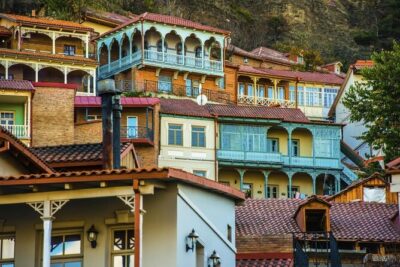
Old Tbilisi Highlights walking tour with wine & 10 tastings
Read our review →
Old Tbilisi Tour: Private Walking Tour With Wine Tasting
Read our review →
Private Tbilisi Food Tour: 9 Tastings Walk in Bohemian District
Read our review →
Tbilisi Old Town Walking Tour with a Local Guide
Read our review →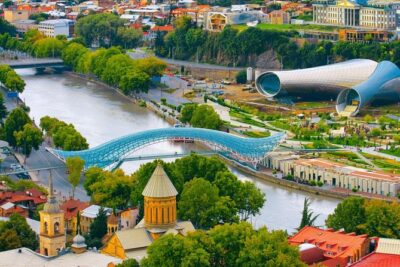
Discover Tbilisi: Hidden Gems and Iconic Sights Walking Tour
Read our review →
Browse the lists this tour appears in