
Reviewed · KATSKHI PILLAR TOURS
Chiatura. Soviet Past in the present. + Katskhi pillar
Chiatura’s old Soviet cable cars are the heart of this trip. They were built to carry magnesium miners across a steep Georgian town, and some remain in use. Add the stark Katskhi Pillar and the quiet Mgvimevi Monastery, and you get a day that feels far removed from Tbilisi’s polished center.
I like the private format, which gives you room to ask about Georgian life and mining history. I also like the mix of working industry, abandoned factories, mountain views, and medieval stonework. The drawback is the long day, up to 10 hours, with only about two hours in Chiatura itself, and lunch is on your own.
In This Review
- Key points to know before you book
- Why Chiatura is the real reason to go
- Reaching Chiatura from Tbilisi
- Inside Chiatura’s Soviet mining town
- Katskhi Pillar and its impossible setting
- Mgvimevi Monastery through steps and a tunnel
- What the private format adds
- Is $150 a fair price?
- Who will enjoy this day trip most?
- Practical details for a smoother day
- Should you book the Chiatura and Katskhi Pillar tour?
- FAQ
- How long does the tour take?
- Where does the tour begin?
- Is the tour private?
- Is the tour offered in English?
- What is included in the price?
- Is lunch included?
- How much does the tour cost?
- Are entrance tickets included?
- How physically demanding is the tour?
- Can I cancel for a full refund?
Key points to know before you book
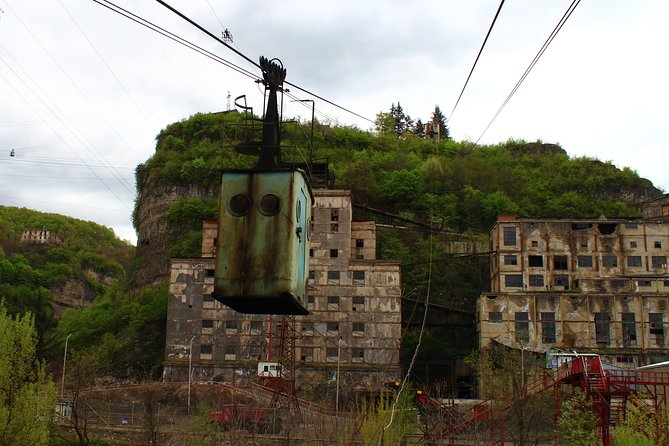
- Soviet cable cars in Chiatura: See the unusual transport system built for miners, with old industrial sites nearby.
- Katskhi Pillar: Stop at a 40-meter limestone monolith topped by a monastery.
- Mgvimevi Monastery: Walk up steps and through a tunnel to reach a 13th-century religious site.
- Private guiding: Your group travels alone, with English-language help from guides such as David or Irakli.
- Included comfort: Hotel pickup and drop-off, air conditioning, bottled water, snacks, WiFi, and transport are covered.
- Long but flexible day: The trip takes about 8 to 10 hours and can begin from cities beyond Tbilisi by arrangement.
Why Chiatura is the real reason to go
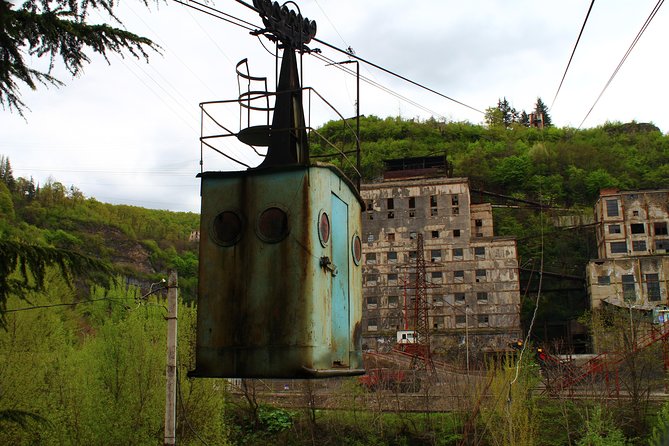
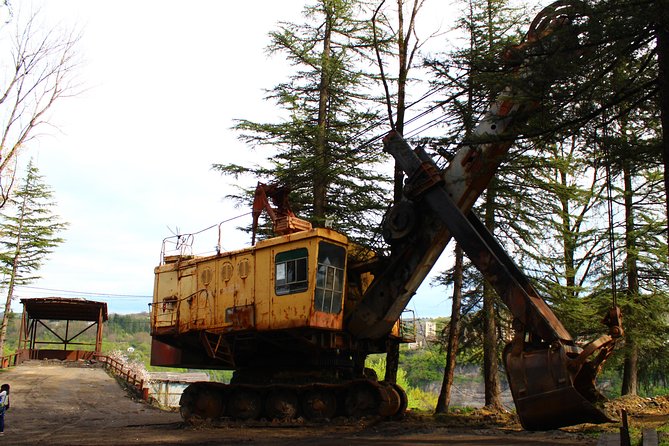
Chiatura is not a dressed-up historic town. It is a working place shaped by mining, steep hills, concrete structures, and Soviet engineering. That gives the visit a rough edge that you will not find on a standard Georgian sightseeing loop.
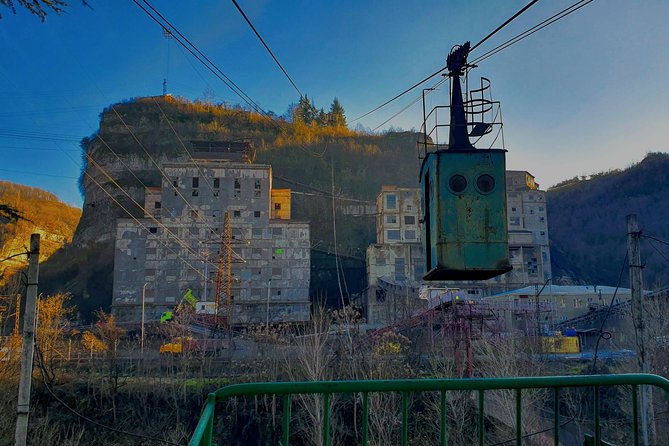
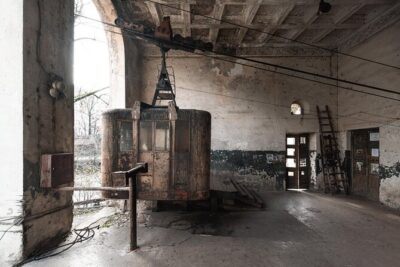
The town’s cable cars are the main attraction. They were designed to move magnesium miners quickly between parts of Chiatura, where the terrain made ordinary roads slow and difficult. Their cabins, towers, and lines give the town a striking visual character, especially when set against the surrounding hills.
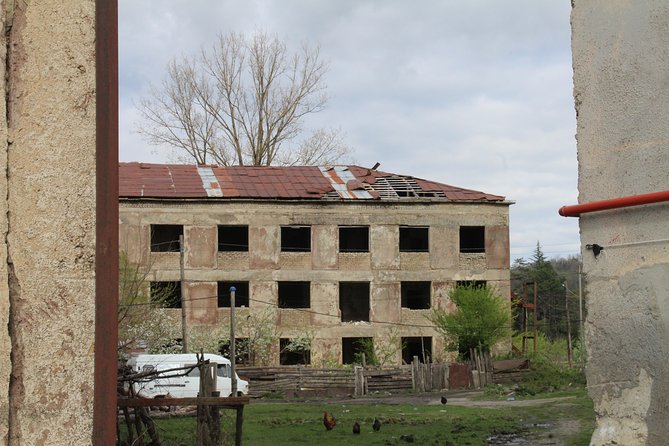
Some of the old industrial facilities are abandoned, while the cable car system continues to serve miners. That contrast is what makes Chiatura worth the drive. You are not just looking at a preserved monument. You are seeing a place where Soviet-era infrastructure remains part of present-day life.
Your guide can add meaning to what you see. David, one of the named guides for this experience, has been praised for his conversations about Georgia’s past and mining history. Irakli is also available and can shape the day around your interests, which matters here because Chiatura can be difficult to understand if you only see the buildings without their story.
You should bring a camera, but keep your expectations sensible. This is not a museum visit with polished displays and detailed signs. It is an outdoor look at industrial remains, old transport, and a town whose identity is tied to mining.
More katskhi pillar tours in Tbilisi:
- Soviet past – Private day tour to Chiatura, Katskhi pillar and Chronicles
★ 5.0 · 29 reviews - Soviet Story – Private day trip to Chiatura, Stalin’s museum and Katskhi pillar
★ 4.5 · 15 reviews - Chiatura and Katskhi Pillar One Day Urbex Tour
★ 5.0 · 14 reviews
Reaching Chiatura from Tbilisi
The trip is planned as a full-day outing from Tbilisi, lasting around eight to ten hours. That includes the road time, the visits to all three stops, and the return journey, so you should not treat it as a quick side trip.
The private vehicle is air-conditioned, and pickup and drop-off at your hotel are included. WiFi is available on board, along with bottled water and snacks. Those small comforts matter on a long road day, especially since lunch is not included.
The private setup is one of the strongest reasons to consider this tour. You do not have to fit your questions into a large group schedule, and you can talk with the guide about Georgian history, local life, or the details of the mining town. The experience is offered in English.
Pickup can also be arranged from other cities. The available information does not specify extra charges or exact driving times for those departures, so you should confirm the details before booking.
Inside Chiatura’s Soviet mining town
You have about two hours in Chiatura, with admission included. The focus is on the Soviet-era cable cars, old factory sites, the town itself, and views over the surrounding area.
The cable cars are more than an odd photo stop. They show how Soviet planners adapted transport to a steep mining town. Rather than building long roads around every slope, they used overhead routes to connect workers with the mines and industrial areas.
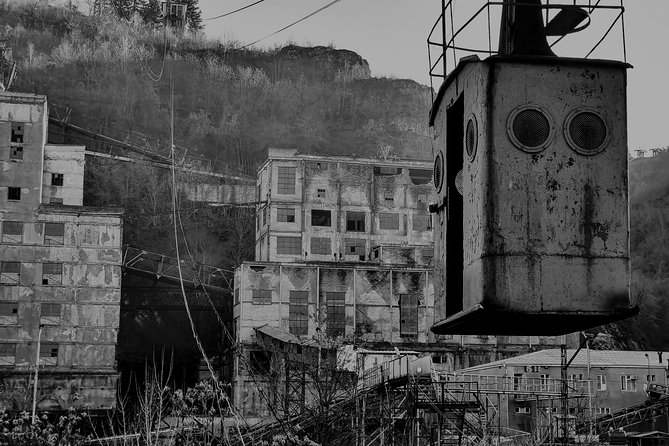
The sight can feel stark. Old machinery, concrete structures, and weathered cable car stations tell a story of industry that has changed but not vanished. Some parts of the system are abandoned, while other cable cars still operate for magnesium miners. That mixture of use and decay gives the visit its strongest sense of place.
A private guide is especially useful here. Without context, you might see only old cabins and factory ruins. With David or Irakli, you can ask how the mining industry shaped the town and how the Soviet period still appears in modern Georgia.
The two-hour visit is enough to get a clear impression, but it is not a full study of Chiatura. If industrial history is your main interest, you may wish the stop were longer. The tour balances Chiatura with two very different sights, so the schedule gives you an introduction rather than an exhaustive exploration.
The setting also helps. Chiatura’s natural surroundings soften the hard industrial forms, with hills and wide views around the town. You get a strong visual contrast between nature, mining, and Soviet construction.
Katskhi Pillar and its impossible setting
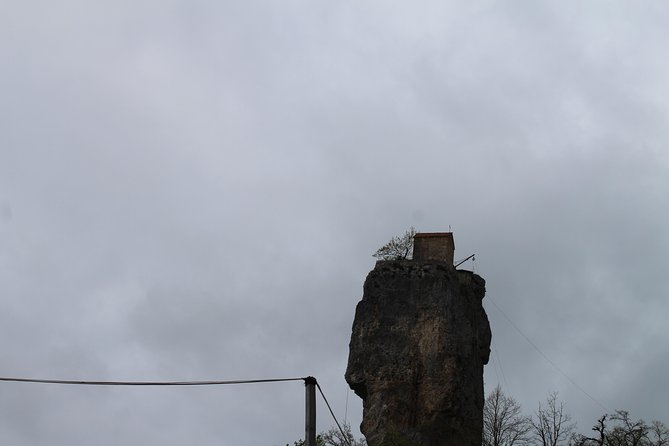
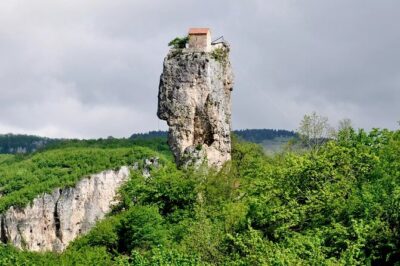
The next major stop is Katskhi Pillar, a natural limestone monolith rising about 40 meters above the ground. A monastery sits on top, creating one of Georgia’s most unusual religious sites.
You spend around 30 minutes here, and admission is free. That is enough time to take in the pillar, photograph it, and consider the oddity of a monastery placed so high above the surrounding area.
The stop works well after Chiatura because the mood changes completely. Chiatura is about industry and human systems. Katskhi Pillar is about rock, height, and religious retreat. The two sights have little in common, yet together they show the range of western Georgia beyond the capital.
Do not expect a long visit inside the monastery on the pillar. The information provided describes the natural monolith and the monastery but does not promise access to the top. Plan to view it from below and ask your guide about what you can see during your visit.
Thirty minutes may feel short if you enjoy photography or want more time around the site. Still, the pillar is a focused stop, and the brief visit keeps the day moving toward Mgvimevi Monastery.
Same mountains, a completely different kind of day:
- Day Trip to Kakheti Wine Region Including 9 Wine Tastings
★ 5.0 · 2,774 reviews - Highlights of Caucasus Mountains-Jinvali,Ananuri,Gudauri,Kazbegi(Group tour)
★ 5.0 · 2,682 reviews - Day Trip to Kazbegi and Gudauri
★ 5.0 · 2,009 reviews - Day Trip to Mtskheta Gori and Uplistsikhe
★ 5.0 · 1,801 reviews
Mgvimevi Monastery through steps and a tunnel
Mgvimevi Monastery brings the day back to Georgia’s medieval religious tradition. It dates from the 13th century and is known for stone carvings, frescoes, and its dramatic setting.
The visit lasts about 20 minutes. To reach the monastery, you go up steps and through a tunnel, so this is not a stop where you simply step out of the vehicle and look around. The tour requires a moderate level of physical fitness.
That short climb is part of the appeal. The approach makes the monastery feel connected to the rock around it rather than placed on an ordinary street. Once there, you can look at the carved stone and frescoes before returning to the vehicle.
Twenty minutes is enough for a compact introduction, but it will not allow a slow study of every detail. If religious art is your priority, tell the guide early so you can use the available time well.
You should also wear practical shoes. The tour information specifically notes steps and a tunnel, so anyone with mobility limits should consider whether the route will be comfortable.
What the private format adds
This is a private tour, so only your group takes part. That makes a real difference on a day built around subjects that invite questions.
You can ask David about Georgia’s mining past, or talk with Irakli about present-day Georgian life. The strongest part of this format is not simply having a vehicle to yourself. It is the chance to make the explanation fit your interests.
If you want more history, you can focus on the Soviet period and Chiatura’s mines. If you prefer culture and religion, you can spend more of your questions on Katskhi Pillar and Mgvimevi Monastery. The listed stop times may still shape the schedule, but the conversation need not feel fixed.
Private travel also helps with the long day. You are not joining a large group of strangers, and you can enjoy the road in a quieter setting. The tradeoff is price. At $150 per person, this is not the cheapest way to see western Georgia, especially for one person.
For two or more people, the value improves because the private vehicle and guide cost are tied to the experience rather than a public bus seat. Group discounts are offered, though the exact discount is not specified. Ask for the current rate before booking.
Is $150 a fair price?
The $150 price includes all fees and taxes, private transportation, an air-conditioned vehicle, WiFi, hotel pickup and drop-off, bottled water, and snacks. Lunch is not included, so you need to plan for that separately.
The fair question is not simply how much each stop costs. Admission is free at Chiatura, Katskhi Pillar, and Mgvimevi Monastery. You are paying mainly for the private vehicle, a full day on the road, and an English-speaking guide who can explain places that are not built for easy independent sightseeing.
For a solo visitor, $150 is a significant outlay. You may find better value if you are comfortable arranging transport and researching the sites yourself, though the information provided does not give public transport details or independent access guidance.
For a couple, family, or small group, the calculation is more attractive, particularly if a group discount applies. The guide’s time and the private transport become easier to justify when shared among several people.
The tour is best value for someone who wants context, not just transport. If you only need a driver to take you to a viewpoint, the price may feel high. If you want to discuss Georgia’s history while seeing a mining town, Soviet cable cars, and medieval religious sites in one day, the package makes more sense.
Who will enjoy this day trip most?
I would choose this tour if you have already seen Tbilisi’s main sights and want a less polished side of Georgia. It suits people interested in Soviet history, industrial sites, unusual transport, religious architecture, and rural scenery.
It also works well for photographers. Chiatura offers strong contrasts between old factories, cable car structures, hills, and open views. Katskhi Pillar gives you a single dramatic subject, while Mgvimevi adds carved stone and frescoes.
You should have a moderate level of physical fitness. Mgvimevi requires steps and a tunnel, and the long duration may be tiring even though the vehicle is air-conditioned.
This may not be your best choice if you want a relaxed day with long meals, shopping, or many hours at one site. Lunch is not included, and the day covers three stops over a substantial distance.
It is also not ideal if your main interest is a formal Soviet museum. Chiatura offers an outdoor look at Soviet industry and present-day mining, not a conventional exhibition with a full set of displays.
Practical details for a smoother day
Wear shoes that can handle steps and uneven ground. This is especially important at Mgvimevi Monastery, where the route includes steps and a tunnel.
Bring a camera and keep some space in your day for conversation. The strongest part of the experience is the combination of unusual places and a guide who can explain them, so do not treat the transfer as dead time.
Plan for lunch because it is not included. Snacks and bottled water are provided, but they do not replace a proper meal.
Ask about your guide when you book. David and Irakli are named guides connected with the experience, and both offer the personal conversation that makes a private trip more useful.
The tour accepts mobile tickets, provides confirmation at booking, and allows service animals. It is also near public transportation, though hotel pickup and drop-off are included and will usually be the simpler option.
Free cancellation is available if you cancel at least 24 hours before the start time. Cancellations or changes made less than 24 hours before the start time are not accepted for a refund.
Should you book the Chiatura and Katskhi Pillar tour?
Book it if you want a full day built around places that feel specific to Georgia: a mining town with Soviet cable cars, a monastery on a 40-meter rock pillar, and a medieval church reached by steps and a tunnel.
I especially recommend it for couples, small groups, and curious independent-minded visitors who value a private guide. The conversations with David or Irakli can turn a set of unusual sights into a clearer picture of Georgia’s past and present.
Think twice if you dislike long road days, need a slow pace, or want lunch and entrance attractions bundled into the price. For everyone else, this is a strong offbeat outing from Tbilisi, with a clear focus and a memorable mix of industry, nature, and faith.
FAQ
How long does the tour take?
The tour lasts approximately 8 to 10 hours.
Where does the tour begin?
The standard departure location is Tbilisi, with hotel pickup offered. The tour can also start from other cities by arrangement.
Is the tour private?
Yes. Only your group participates in the activity.
Is the tour offered in English?
Yes. English-language guiding is available.
What is included in the price?
The price includes all fees and taxes, private transportation, an air-conditioned vehicle, WiFi on board, hotel pickup and drop-off, bottled water, and snacks.
Is lunch included?
No. Lunch is not included.
How much does the tour cost?
The listed price is $150 per person. Group discounts are offered, but the exact discount is not specified.
Are entrance tickets included?
The listed stops have free admission, and all fees and taxes are included.
How physically demanding is the tour?
A moderate level of physical fitness is recommended. The visit to Mgvimevi Monastery includes steps and a tunnel.
Can I cancel for a full refund?
Yes, if you cancel at least 24 hours before the experience start time. Cancellations or changes made less than 24 hours before the start time are not accepted for a refund.
Just added around Tbilisi
- Private Adorable City Tour of Tbilisi★ 5.0 · 3 reviews
- Old tbilisi walking tour & wine tasting★ 5.0 · 9 reviews
- Tbilisi Airport to Gudauri, Bakuriani, Batumi, Tbilisi★ 5.0 · 3 reviews
- Your unique photo session in Tblisi, Georgia★ 3.5 · 4 reviews
- full day Kazbegi-Gudauri-jvari -from Tbilisi★ 5.0 · 6 reviews
- Wine promenade in hospitable Tbilisi★ 5.0 · 17 reviews
- Vardzia. Lake Paravani, Khertvisi & Lomisa castle, Rabati★ 4.5 · 12 reviews
- Wine Tasting Tour in Georgia’s Cradle of Wine★ 5.0 · 12 reviews
Katskhi Pillar Tours, compared.
Chiatura Tour with Katskhi Pillar & Cable Car Experience
Read our review →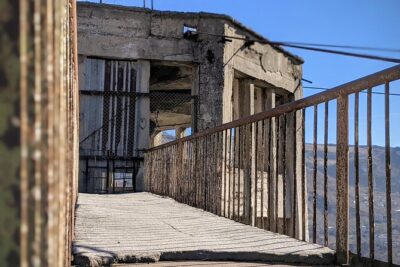
Soviet past – Private day tour to Chiatura, Katskhi pillar and Chronicles
Read our review →
Soviet Story – Private day trip to Chiatura, Stalin’s museum and Katskhi pillar
Read our review →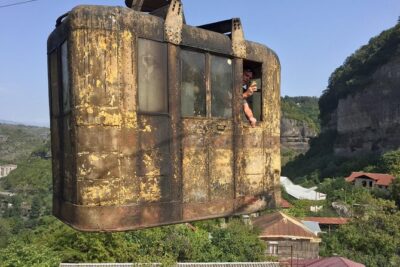
Day Tour to Georgian sky venice, Soviet city Chiatura
Read our review →
Soviet tour of Georgia – Gori, Tskaltubo, Chiatura, Enguri Dam.
Read our review →Browse the lists this tour appears in