
Reviewed · WALKING TOURS
Alternative walking tour New Tiflis and backstreets
Tbilisi’s alternative side comes into focus on this walk from Liberty Square to Marjanishvili. You’ll browse the curious stalls of Dry Bridge Market, follow handsome 19th-century streets, pause among roses, and see how an old Soviet factory became the creative Fabrika complex. This is not an Old Town tour, which is exactly its appeal.
I like the small maximum of 10 people and the way the route mixes architecture with ordinary city life. I also like that guides such as Oksana bring in art, history, and practical recommendations rather than simply pointing at buildings. The main trade-off is simple: you’ll walk about 3 kilometers over three hours, often beside traffic, so comfortable shoes and a tolerance for city noise matter.
In This Review
- Key points to know before booking
- Why this route is different from a standard Tbilisi walk
- Meeting at Liberty Square
- Orbeliani Square and its flower market
- Dry Bridge Market: antiques, Soviet objects, and bargaining atmosphere
- Agmashenebeli Avenue and New Tiflis architecture
- Roses Park and a quieter look at city life
- Fabrika and Tbilisi’s creative energy
- St. Peter and St. Paul Church
- Kote Marjanishvili Theatre and the final square
- What the pace and group size mean
- Is $30 a fair price?
- Should you book the New Tiflis walk?
- FAQ
- Is this an Old Town walking tour?
- Where does the tour begin?
- Where does the tour end?
- How long is the walking tour?
- What language is the tour offered in?
- How many people can join the tour?
- Is wine included?
- What happens if the weather is poor?
Key points to know before booking
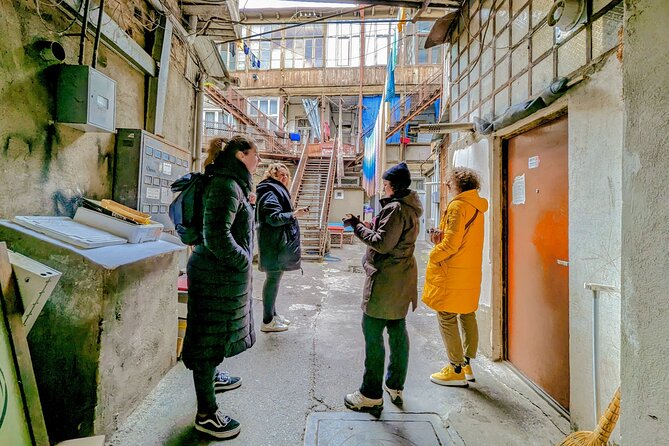
- A different side of Tbilisi: The route leaves the classic Old Town behind for New Tiflis, backstreets, markets, theatres, and local gathering places.
- Dry Bridge Market is a highlight: You can browse Soviet-era objects, vintage goods, handmade pieces, jewelry, clothing, and antiques.
- Small group size: The tour accepts a maximum of 10 people, giving you a better chance to ask questions and stay connected with the guide.
- Oksana is a highly praised guide: Her tours cover Tbilisi’s history, art, daily life, and useful recommendations.
- Wine is included: A complementary wine tasting adds a distinctly Georgian touch to the walk.
- The finish is convenient: The tour ends by Marjanishvili Metro, close to restaurants, cafés, shops, and onward transport.
Why this route is different from a standard Tbilisi walk
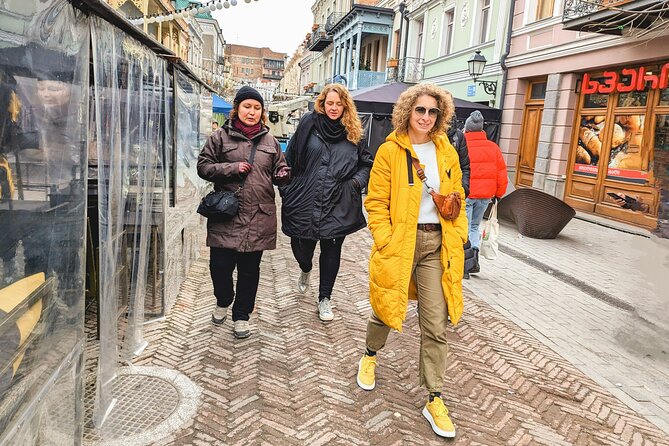
Many first visits to Tbilisi begin around the old baths, Narikala Fortress, and the winding lanes of the historic center. This tour takes another path. It begins at Liberty Square, then works west and north through areas that show the city’s later architecture, creative culture, and everyday rhythm.
That difference matters. You won’t spend the full three hours checking off grand monuments. Instead, you’ll see flower sellers, flea-market tables, painted walls, theatres, apartment facades, and a public park tucked into the city streets. The route gives you a broader picture of Tbilisi, a city where imperial-era buildings, Soviet remnants, religious landmarks, and new creative spaces sit close together.
The tour lasts about three hours and is offered in English. At $30 per person, I see it as good value if you want interpretation along the way. You are paying for a guide who can connect the stops and explain what you are seeing, not for entrance tickets. Every listed stop is free to enter, and the walk includes a complementary wine tasting.
A few more Tbilisi trips to weigh up
- Tbilisi Walking Tour Including Cable Car and Traditional Bakery
★ 5.0 · 1,310 reviews - Tbilisi:Evening Walking & Talking Tour with Wine & Boat Ride
★ 5.0 · 572 reviews - Old Tbilisi Highlights walking tour with wine & 10 tastings
★ 5.0 · 276 reviews
Meeting at Liberty Square
Your guide meets you at the entrance of the Burberry shop at Liberty Square. The square is also called Tavisuplebis Moedani, and it is one of the easiest places in central Tbilisi to reach, thanks to its Metro station and central location.
Allow extra time to find the exact meeting point. The guide waits for up to 10 minutes after the scheduled start, then the group must leave. That is a firm rule worth taking seriously, especially if you are arriving by taxi or navigating Tbilisi for the first time.
Liberty Square itself gives you a quick introduction to the country’s political and civic life. The central statue shows St. George defeating the dragon, a symbol linked with Georgia’s struggle for freedom and independence. The Georgian National Museum and City Hall are nearby, and the square often serves as a setting for public celebrations and demonstrations.
You spend about 10 minutes here, so this is an orientation stop rather than a long sightseeing visit. Think of it as a useful starting point before the tour moves into quieter streets.
Orbeliani Square and its flower market
The next stop, Orbeliani Square, shifts the mood from a major urban crossroads to a more relaxed public space. The square is known for its cafés, restaurants, and flower market, where colorful blooms and fragrant herbs add a pleasant sensory break to the route.
You’ll also see Orbeliani Palace, a grand historic building used as the official residence of the President of Georgia. The tour views the palace from outside, so do not expect an interior visit. The value here is the guide’s explanation of the building and its place in the city, paired with time to look closely at the architecture.
The stop lasts about 25 minutes. If you want photographs, this is one of the better early chances. The flower market gives you something more human and immediate than another formal facade, and it helps show how public spaces in Tbilisi are used.
Dry Bridge Market: antiques, Soviet objects, and bargaining atmosphere
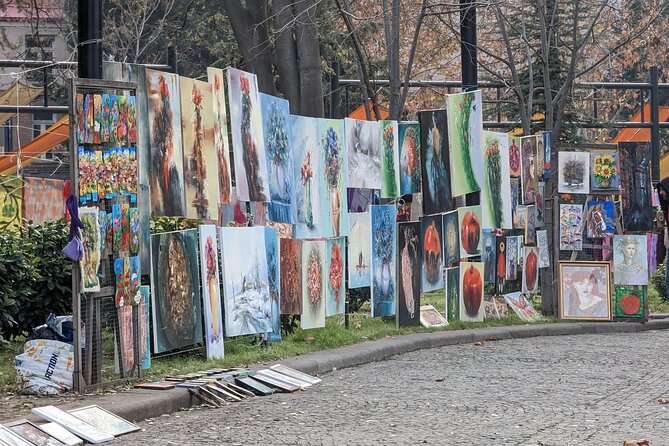
Dry Bridge Market receives about 30 minutes, and it is likely to be the most unpredictable stop. Stalls offer antique furniture, vintage clothes, jewelry, Soviet-era memorabilia, and many other objects whose value may be practical, decorative, or purely nostalgic.
Some vendors are artists and craftspeople who sell handmade work alongside older goods. That mix gives the market an informal, creative character. You may find something you want to buy, but shopping is not the only reason to visit. The objects provide clues to Georgia’s recent past and the many cultural influences that have passed through Tbilisi.
I would keep your expectations flexible. Thirty minutes is enough for a look around, but not enough for a careful survey of every stall. If you see something appealing, ask about it promptly. The guide can help explain the setting and may add context about the objects, but the tour is not presented as a dedicated shopping excursion.
This is also one place where the small group helps. A group of 10 or fewer can move through the market without becoming too cumbersome. Stay aware of your belongings and keep the pace set by the guide.
Same mountains, a completely different kind of day:
- Day Trip to Kakheti Wine Region Including 9 Wine Tastings
★ 5.0 · 2,774 reviews - Highlights of Caucasus Mountains-Jinvali,Ananuri,Gudauri,Kazbegi(Group tour)
★ 5.0 · 2,682 reviews - Day Trip to Kazbegi and Gudauri
★ 5.0 · 2,009 reviews - Day Trip to Mtskheta Gori and Uplistsikhe
★ 5.0 · 1,801 reviews
Agmashenebeli Avenue and New Tiflis architecture
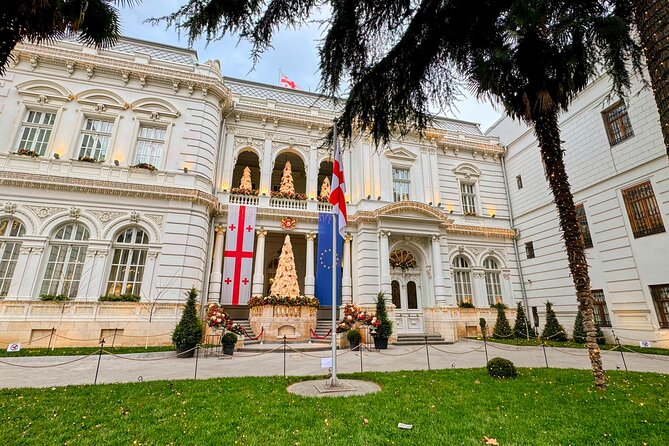
Agmashenebeli Avenue is the architectural centerpiece of the walk. Its late 19th-century and early 20th-century buildings show Art Nouveau and Neo-Renaissance details, with decorated facades that reward a slower pace and a raised gaze.
This stretch helps explain why New Tiflis feels different from the old lanes around the baths. The buildings are broader and more formal, and the street gives you a sense of the city’s expansion during the modernizing period. Look for ornate details around windows, doors, and upper stories, where the architecture can be easy to miss if you concentrate only on street level.
The avenue is associated with the Marjanishvili Theatre, and the Tbilisi Opera and Ballet Theatre is at its northern end. The walking tour does not list interior visits or performance tickets, so you’ll be seeing these places from outside while the guide explains their cultural role.
You spend about 25 minutes here. That is enough for a focused introduction, though architecture lovers may wish they had more time to stop and photograph every facade. The tour’s broader route means you will keep moving.
Roses Park and a quieter look at city life

Roses Park offers a pause from the avenues and market stalls. It sits in the backstreets and contains more than 200 varieties of roses. In summer, when the flowers are in bloom, you can walk through the garden with the scent of roses in the air.
The park is scheduled for about 20 minutes. That may sound modest, but it fits the purpose of the stop. You are not visiting a major formal garden for a long afternoon. You are taking a short, pleasant walk through a local green space and getting a glimpse of a less polished, more ordinary part of Tbilisi.
This stop also gives your feet a brief change of pace. The tour is still a walking route, but a garden offers a welcome contrast after streets, storefronts, and traffic. If you visit outside the summer flowering period, the park may be less impressive, so keep that seasonal point in mind.
Fabrika and Tbilisi’s creative energy
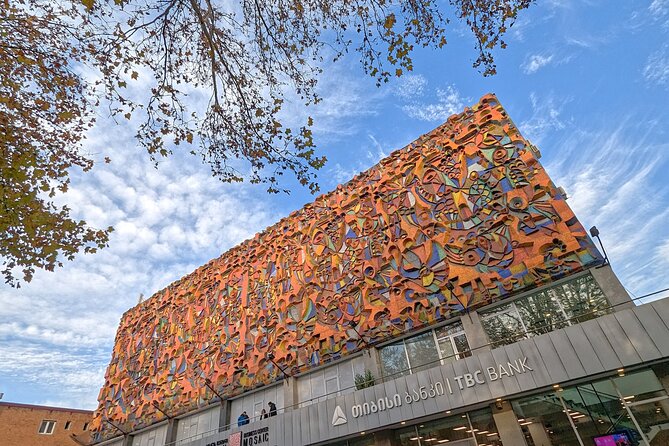
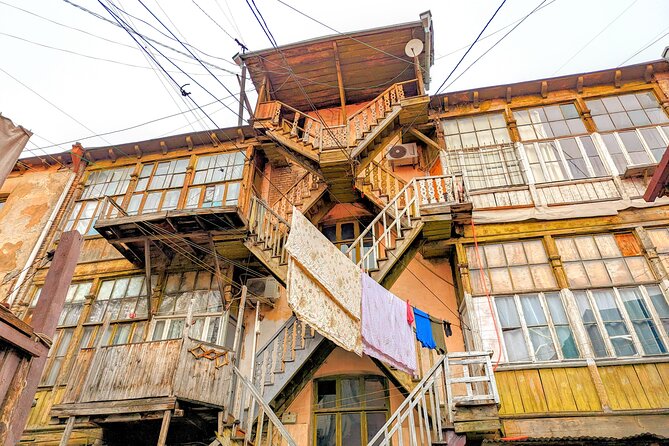
Fabrika is one of the most memorable stops because of its change of use. The building began as a Soviet sewing factory and now operates as a multi-use space for culture, art, and entertainment.
The tour spends about 25 minutes around Fabrika. You’ll see colorful street art on the building and in the surrounding area, reflecting Tbilisi’s strong public-art scene. The murals are not an isolated attraction. They are part of a wider change in the city, where older industrial and urban spaces have been adapted for new creative purposes.
I like this stop because it connects architecture with present-day city life. An old factory tells you about the Soviet period, while its current use points toward Tbilisi’s newer artistic and social identity. You are not just looking at a renovated building. You are seeing how a city reuses what it already has.
The area can be active and noisy, and the tour does not promise a private or quiet visit. That is part of the setting. If you prefer only historic monuments, Fabrika may feel less essential. If you want to understand contemporary Tbilisi, it earns its place on the route.
St. Peter and St. Paul Church
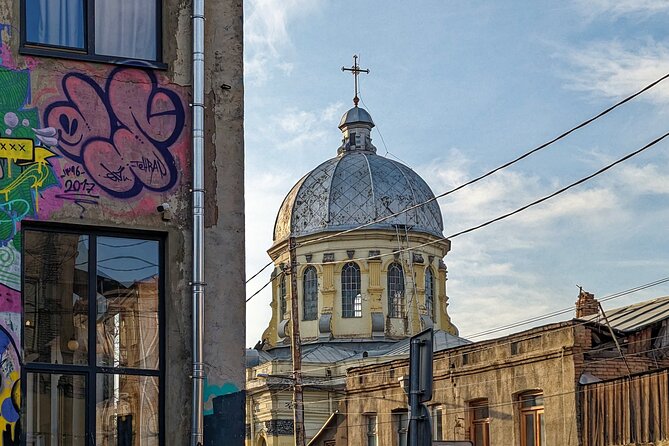
The Roman Catholic Church of St. Peter and St. Paul provides a different architectural and religious note. Built between 1870 and 1877, the church was commissioned through the Georgian Catholic community and designed by Albert Zaltsman. Its strong Baroque character sets it apart from the nearby secular buildings.
You’ll have about 15 minutes here. The yellow facade is divided by pilasters and arches in a deeper yellow tone, while a rose window above the entrance adds a distinctive detail. The window includes floral decoration and a dove, and the church underwent changes after 2000.
Pope John Paul II celebrated Mass here during his visit to Georgia in October 1999, adding a modern chapter to the church’s story. The stop is brief, but it gives the walk a useful reminder that Tbilisi has long been home to several religious communities.
As with the other religious and cultural sites on the route, the focus is on viewing and explanation. The supplied details do not promise a guided interior visit, so dress and behave respectfully if the church is open and you enter.
Kote Marjanishvili Theatre and the final square
The Kote Marjanishvili State Drama Theatre is another short stop, lasting about 15 minutes. It is one of Georgia’s major theatres and is often considered second only to the Rustaveli Theatre in national importance.
Kote Marjanishvili founded the theatre in Kutaisi in 1928. It moved to Tbilisi in 1930 and has occupied its current building since then. The structure is an Art Nouveau building, renovated and reopened in 2006 with a production of Bertolt Brecht’s The Threepenny Opera.
The theatre hosts plays, musicals, and operas throughout the year. The tour does not include a performance, but your guide can put the building into the wider story of Georgian theatre and public culture. If you are interested in attending a show during your stay, this is a useful place to ask for practical suggestions.
The walk ends at Marjanishvili Square, after another 15 minutes. The square is lined with cafés, restaurants, and shops, making it an easy place to continue your evening. Marjanishvili Metro station is close by, and its high-relief bust of Kote Marjanishvili is worth noticing as you leave.
What the pace and group size mean
The route covers around 3 kilometers at a relaxed pace, but three hours on city streets still requires reasonable stamina. There are pauses at each stop, yet you should expect to remain on your feet for most of the experience.
The maximum group size is 10 people. That is a useful limit for a walking tour through a market and backstreets. It should also make it easier to hear the guide and ask questions. The guide service is in English, and previous comments specifically praise Oksana for explaining history, art, daily life, and local recommendations.
The tour is not suited to anyone with significant mobility problems, a recent injury, or trouble walking long distances. Some sections include traffic noise and busy streets, so you should also consider how comfortable you are in an active urban setting.
Wear non-slip shoes. Tbilisi weather can be cold, windy, and rainy in winter, while summer midday hours can be hot. Bring sun protection and water in warm weather, and dress warmly in the colder months. The experience requires good weather and may be moved or canceled if conditions are poor.
Is $30 a fair price?
At $30, this tour sits in a reasonable range for a three-hour guided city walk, especially with a maximum of 10 people and a wine tasting included. Since the stops themselves are free, the price mainly pays for the guide’s time, route planning, interpretation, and ability to connect places that you could visit separately.
The value is strongest if you are new to Tbilisi and want help reading the city. Dry Bridge Market, Fabrika, Agmashenebeli Avenue, and the backstreets are easy to visit on your own, but a guide can give them order and meaning. You also avoid spending your first day working out how the areas fit together.
The value is weaker if you want museum admission, major landmark interiors, or a long stop at each site. This is a moving city walk, not a ticketed attraction tour. You should book it for context and access to a less familiar side of Tbilisi, not for a collection of entrance tickets.
Should you book the New Tiflis walk?
Book this tour if you have already seen, or plan to see separately, Tbilisi’s main Old Town sights and want a wider view of the capital. It suits curious first-time visitors, architecture fans, street-art followers, and anyone who enjoys markets and everyday neighborhoods more than formal sightseeing.
I would also recommend it early in your stay. The guide’s advice on food, art, and daily life can help shape the rest of your visit, and the final stop puts you near places where you can continue exploring on your own.
Skip it if you dislike walking, traffic noise, outdoor markets, or short visits to several sites. You should also choose another activity if you need step-free, low-effort sightseeing. For the right kind of visitor, though, this is a thoughtful three-hour introduction to New Tiflis, with Oksana and the other guides adding the local context that turns a pleasant walk into a useful one.
FAQ
Is this an Old Town walking tour?
No. The route focuses on New Tiflis, backstreets, markets, theatres, street art, and less touristy neighborhoods rather than the classic Old Town sights.
Where does the tour begin?
It begins at the entrance of the Burberry shop at Liberty Square, also called Tavisuplebis Moedani, in Tbilisi.
Where does the tour end?
The tour ends at Marjanishvili Square, near Marjanishvili Metro station on Kote Marjanishvili Street.
How long is the walking tour?
The experience lasts approximately three hours and covers about 3 kilometers at a relaxed pace.
What language is the tour offered in?
The tour is offered in English.
How many people can join the tour?
The maximum group size is 10 travelers.
Is wine included?
Yes. A complementary wine tasting is included in the tour.
What happens if the weather is poor?
The experience requires good weather. If it is canceled because of poor weather, you will be offered another date or a full refund. Free cancellation is also available up to 24 hours before the start time.
Just added around Tbilisi
- Private Adorable City Tour of Tbilisi★ 5.0 · 3 reviews
- Old tbilisi walking tour & wine tasting★ 5.0 · 9 reviews
- Tbilisi Airport to Gudauri, Bakuriani, Batumi, Tbilisi★ 5.0 · 3 reviews
- Your unique photo session in Tblisi, Georgia★ 3.5 · 4 reviews
- full day Kazbegi-Gudauri-jvari -from Tbilisi★ 5.0 · 6 reviews
- Wine promenade in hospitable Tbilisi★ 5.0 · 17 reviews
- Vardzia. Lake Paravani, Khertvisi & Lomisa castle, Rabati★ 4.5 · 12 reviews
- Wine Tasting Tour in Georgia’s Cradle of Wine★ 5.0 · 12 reviews
Walking Tours, compared.
Tbilisi Walking Tour Including Cable Car and Traditional Bakery
Read our review →
Evening Walking & Talking Tour with Wine & Boat Ride
Read our review →
Old Tbilisi Highlights walking tour with wine & 10 tastings
Read our review →
Old Tbilisi Tour: Private Walking Tour With Wine Tasting
Read our review →
Private Tbilisi Food Tour: 9 Tastings Walk in Bohemian District
Read our review →
Tbilisi Old Town Walking Tour with a Local Guide
Read our review →
Discover Tbilisi: Hidden Gems and Iconic Sights Walking Tour
Read our review →
Browse the lists this tour appears in