
Reviewed · WALKING TOURS
3-Hour Private Guided Walking Tour in Tbilisi
Tbilisi’s old town is best understood on foot, and this private route strings together its most useful first-day sights. You move from the playful Gabriadze Clocktower and Georgia’s oldest church to the futuristic Peace Bridge, hilltop views, sulfur baths, and Sioni Cathedral. It gives you a clear sense of how the city mixes old, new, Georgian, Jewish, and Soviet influences in a compact area.
I like the private format, since your group can ask questions and request extra stops without following a large crowd. I also like the route’s variety: Luka explains architecture, religion, legends, and local customs rather than showing you churches one after another. The main consideration is timing. Although the experience is described as about three and a half hours, the sightseeing takes roughly three hours and the walking between the start and finish adds about an hour, so you should allow close to four hours.
In This Review
- Key points to know before you book
- Why this walk works as a first look at Tbilisi
- Starting at Freedom Square and meeting the Clocktower
- Anchiskhati Basilica, Tbilisi’s oldest surviving church
- Crossing the Bridge of Peace into Rike Park
- Metekhi Cathedral and the best old-town view
- Riding the cable car toward Narikala
- Mother of Kartli and the city from above
- Abanotubani, where the city legend begins
- Tamada, wine culture, and a multicultural old town
- Finishing at Sioni Cathedral
- How the timing and walking really work
- What the $25 price includes
- Who should book this Tbilisi walk
- Should you book it?
- FAQ
- Where does the Tbilisi walking tour start?
- Where does the tour end?
- How long does the tour take?
- How far do you walk?
- Is this a private tour?
- Is the tour offered in English?
- Is the cable car included in the price?
- Can you enter Narikala Fortress?
- What should you wear for the churches?
Key points to know before you book
- Luka leads an English-language private walk: You receive a personal introduction to Tbilisi rather than a fixed group presentation.
- The route covers about 4 kilometers: Expect steady city walking, hills, stairs, and time outdoors.
- You see major old-town sights without separate entry charges: The cable car ride is included, while the churches, viewpoints, statues, and public sites are free.
- Narikala Fortress is closed for reconstruction: The cable car and views remain part of the route, but you should not expect a normal fortress visit.
- The route ends at Sioni Cathedral: This is useful if you want to continue exploring the old town on your own afterward.
- Church clothing rules matter: Do not wear shorts, and bring a scarf or hat for head covering.
Why this walk works as a first look at Tbilisi

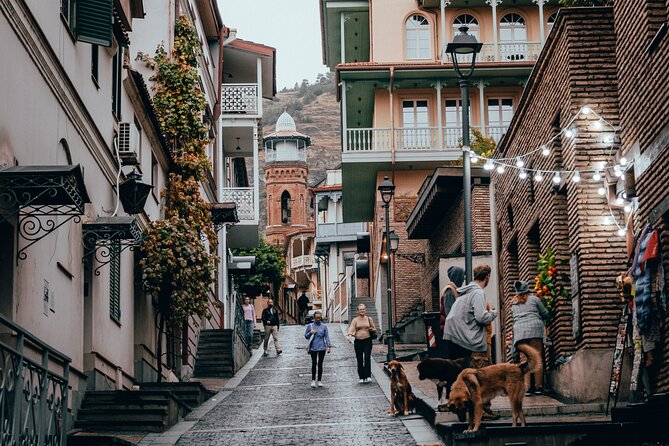
I find Tbilisi easier to appreciate once you understand its unusual layout. The old town sits around the Mtkvari River, with steep hills rising above it and layers of churches, balconies, bathhouses, bridges, and modern buildings packed into a small area.
This walk gives you that structure. You begin at Freedom Square, move through the older streets, cross the river on the Bridge of Peace, climb toward Metekhi and Narikala, then descend into Abanotubani and finish at Sioni Cathedral.
That path is more useful than a simple checklist of monuments. You see how the city changes from one block to the next. The Gabriadze Theater feels whimsical and handcrafted. Anchiskhati feels solemn and ancient. The Peace Bridge is sleek and modern. The sulfur bath district brings you back to the legend of Tbilisi’s founding.
Because the tour is private, you can ask Luka to slow down, explain a detail, or adjust the emphasis. The available feedback specifically praises his broad grasp of history, culture, and architecture, along with his willingness to accommodate requests. That matters in a city where a short walk can raise questions about religion, invasions, Soviet design, Georgian customs, and local legends.
A few more Tbilisi trips to weigh up
- Tbilisi Walking Tour Including Cable Car and Traditional Bakery
★ 5.0 · 1,310 reviews - Tbilisi:Evening Walking & Talking Tour with Wine & Boat Ride
★ 5.0 · 572 reviews - Old Tbilisi Highlights walking tour with wine & 10 tastings
★ 5.0 · 276 reviews
Starting at Freedom Square and meeting the Clocktower
The tour begins at Freedom Square, a central and easy-to-recognize location in Tbilisi. From there, you walk toward the old town rather than starting inside a church or museum.
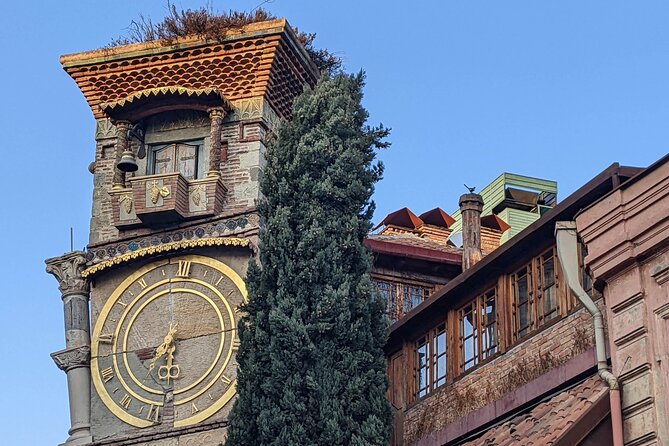
Your first stop is the Rezo Gabriadze Marionette Theater and its famous Clocktower. The visit is brief, listed at about five minutes, but it makes a good opening because the building immediately shows Tbilisi’s artistic side.
The theater and tower are known for their original design. The tower looks intentionally irregular, almost like a whimsical object dropped into the middle of the old streets. It is a quick photo stop, not a full theater performance, so you should keep your expectations clear.
I like this beginning because it avoids starting with a dry block of dates. You first encounter a place with personality, then move into the city’s older religious and civic layers.
Anchiskhati Basilica, Tbilisi’s oldest surviving church
A short walk brings you to Anchiskhati Basilica, built originally in the sixth century. It is described as the oldest church still standing in Tbilisi and one of the old town’s most important religious and cultural sites.
You spend about 15 minutes here. That is enough for an exterior look and, when access allows, a respectful visit inside. Since this is an active religious site, your clothing matters. Men and women should avoid shorts, and women should bring a scarf or hat to cover the head.
Anchiskhati gives the tour a strong historical anchor. Its age helps you picture Tbilisi before later renovations, modern bridges, and Soviet-era changes altered the city. At the same time, the stop is not designed as a long church study. If you want extended time for quiet viewing or detailed religious art, you may need to ask Luka early in the walk.
Crossing the Bridge of Peace into Rike Park
The Bridge of Peace is one of Tbilisi’s most debated modern landmarks. Opened in 2010, its glass and steel design looks very different from the surrounding old town.
You spend about 10 minutes at the bridge, then cross it and continue through Rike Park toward Metekhi Church. The contrast is the point. One moment you are among old masonry and narrow streets; the next, you are on a modern pedestrian bridge with broad views along the river.
The bridge initially produced mixed reactions in Georgian society because its design did not match the older buildings nearby. Today, it is one of the city’s most popular sights. I find it useful to see it with a guide because Luka can place the structure in Tbilisi’s wider effort to combine historic identity with new architecture.
Rike Park also provides a change of pace. You are no longer threading through the tightest old-town lanes, and the route opens toward the river and the hills. This section is outdoors and exposed, so comfortable shoes and practical clothing will serve you better than formal city wear.
Same mountains, a completely different kind of day:
- Day Trip to Kakheti Wine Region Including 9 Wine Tastings
★ 5.0 · 2,774 reviews - Highlights of Caucasus Mountains-Jinvali,Ananuri,Gudauri,Kazbegi(Group tour)
★ 5.0 · 2,682 reviews - Day Trip to Kazbegi and Gudauri
★ 5.0 · 2,009 reviews - Day Trip to Mtskheta Gori and Uplistsikhe
★ 5.0 · 1,801 reviews
Metekhi Cathedral and the best old-town view
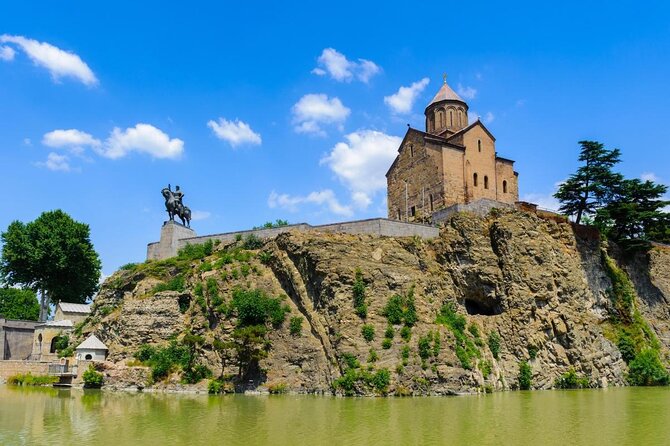
Metekhi Cathedral is one of the tour’s strongest stops, especially if you want a broad view rather than another close look at an old building. The cathedral yard offers a good outlook over Tbilisi’s old town and the river area.
The courtyard also contains a statue of Vakhtang Gorgasali, the legendary king traditionally connected with the founding of Tbilisi. This gives Luka a natural opening to explain the city’s origin story and why the location matters.
The stop is listed at about 30 minutes, which is longer than most of the earlier sights. That makes sense. You need time to look across the city, hear the story of the king, and take in the relationship between the hilltop church, river, and old buildings below.
The climb and uneven walking may be tiring for anyone with limited mobility. The tour asks for moderate physical fitness, and that is worth taking seriously. You cover about 4 kilometers, with some uphill movement and city surfaces that may not feel smooth.
Riding the cable car toward Narikala
From Rike Park, you reach the lower station of the Rike to Narikala cable car. The ride is included in the tour price, so this is the one listed transport element that does not require a separate ticket.
The cable car gives you a quick change in height and a different view of Tbilisi. Instead of looking across the city from street level, you rise above it and see the old town, river, and surrounding hills from a broader angle.
There is an important limitation here: Narikala Fortress is closed because of reconstruction. You should not book this experience expecting a full fortress visit or access to every part of the site.
The cable car section still has value because of the views and because it connects the lower city with the Mother of Kartli monument. If entering Narikala is your main reason for booking, wait until the reconstruction is finished or confirm the current access arrangements before reserving.
Mother of Kartli and the city from above
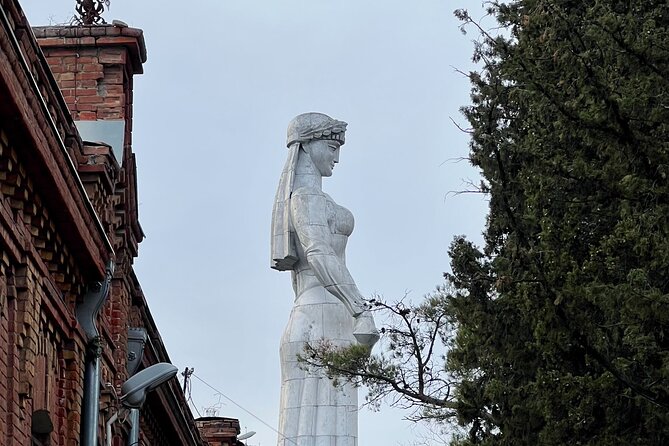
The Mother of Kartli monument is one of Tbilisi’s best-known symbols. The large female figure represents Georgia and carries a clear Soviet-era spirit in both scale and style.
The stop lasts about 15 minutes. You get time for the monument, the surrounding views, and Luka’s explanation of what the statue says about Georgian identity. The supplied description connects the monument with Georgian character, which makes this more than a quick photo opportunity.
This part of the route also helps you understand Tbilisi’s physical setting. The old town is not a flat district. Hills and steep edges shape the views, the streets, and the way people move through the city.
Since Narikala is closed for reconstruction, the monument and viewpoint carry extra weight. They keep the upper section worthwhile, but you should think of this as a city-view stop rather than a fortress tour.
Abanotubani, where the city legend begins
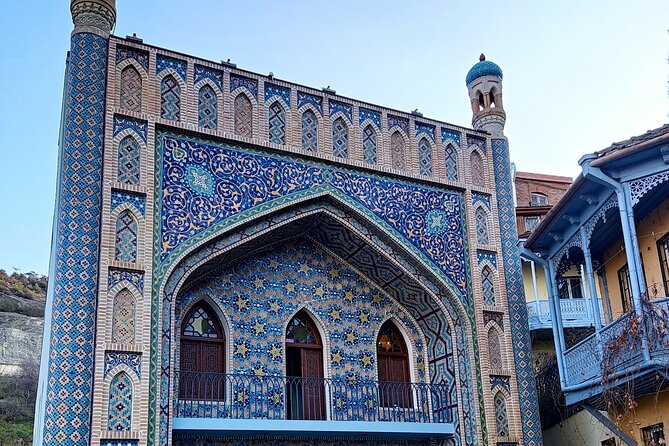
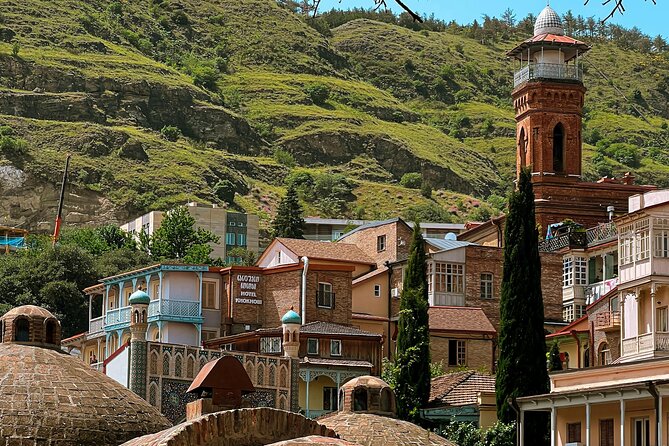
You then descend to Abanotubani, Tbilisi’s sulfur bath district. The name refers to the bathhouses, and the area is closely tied to the legend of the city’s founding.
You spend about 20 minutes here. That is enough to look at the district, understand why hot springs shaped the city’s early identity, and hear the story that gives Tbilisi much of its character.
This is one of the places where a guide adds real value. Without context, the bath district can look like a row of domed buildings. With an explanation of the founding legend and the role of the baths, the area becomes a key piece of the city’s identity.
The tour does not include a bath session. If you want to use one of the sulfur baths, treat that as a separate plan and allow additional time beyond the walk.
Tamada, wine culture, and a multicultural old town
The Tamada statue is a very short stop, listed at about five minutes. Tamada means toastmaster, a central figure in Georgian feasting and drinking traditions.
The monument’s original version was found near Vani in western Georgia and dates to the seventh century BC. That detail connects a modern street statue with a much older Georgian tradition of communal meals, formal toasts, and storytelling.
After this point, the route touches on Tbilisi’s Jewish community and the city’s long multicultural identity. Before 1991, about 50,000 Jews lived in Tbilisi. The community is now much smaller, but the friendship between Georgian and Israeli people remains strong.
This section is easy to miss if you only focus on headline sights. It gives the walk social depth without requiring a separate museum visit. You see that Tbilisi is not defined only by churches, fortresses, and views. Its character also comes from the people and communities that have shared the city.
Finishing at Sioni Cathedral
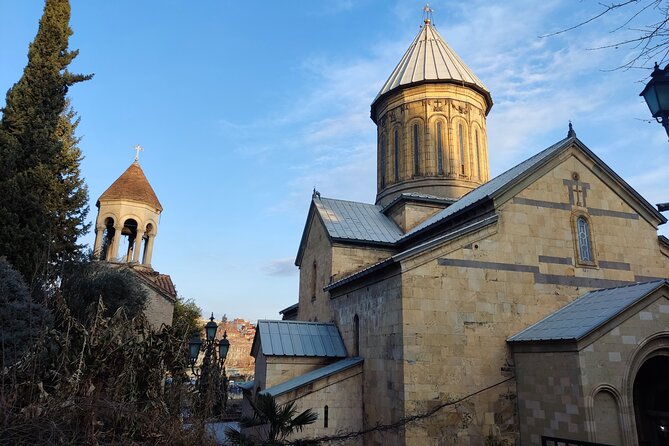
The final major stop is Sioni Cathedral, officially the Cathedral of the Dormition of Tbilisi. You spend about 30 minutes here, making it one of the longest visits on the route.
Sioni was once the city’s main cathedral. It has endured repeated invasions and destruction and remains in the center of the old town. The cathedral preserves St. Nino’s Cross, one of the most important religious relics for Georgians.
The ending works well because it gathers together many themes from the walk: Georgia’s Christian tradition, the survival of religious buildings through difficult periods, and the way old churches remain part of daily city life.
The tour ends at 3 Sioni Street, not back at Freedom Square. That is convenient if you plan to keep walking through the old town, find lunch, or continue toward other central sights. It is less convenient if you need to return to your starting point immediately, so leave extra time for your own onward plans.
How the timing and walking really work
The timing needs careful reading. The experience is described as approximately three hours and 30 minutes, but the detailed notes say that the main sightseeing takes around three hours and that about one hour is used walking from the starting point to the ending point.
In practical terms, plan for close to four hours. The total walking distance is around 4 kilometers, and the route includes the cable car, uphill sections, church visits, viewpoints, and time spent moving between stops.
The stop times are not a promise that every visit will last exactly that long. They are a useful guide to the route’s rhythm. You get several short photo and orientation stops, balanced by longer visits at Metekhi and Sioni.
Wear shoes suitable for steady walking. The tour is not presented as strenuous, but a moderate fitness level is expected. Public transportation is nearby, and service animals are allowed.
What the $25 price includes
At $25 per person, this is a strong value for a private half-day introduction, particularly if you are traveling with a small group and can use the group discount. Your price covers the English-speaking guide and the cable car ride. The churches, statues, bridge, parks, viewpoints, and other listed stops do not require admission fees.
The value is not in paid attractions. It comes from the route design and the guide’s interpretation. You get a connected explanation of Tbilisi instead of paying separate entry fees at a series of sites.
A private tour also makes the price easier to judge. For one person, $25 buys a focused introduction with a guide. For a group, discounts may improve the value further, while the private format lets your party share one guide rather than splitting up.
The price does not cover a sulfur bath visit or a fortress interior visit. Narikala is closed for reconstruction, and the tour does not promise a meal or any other extra activity. If you understand those limits, the cost is straightforward and reasonable.
Who should book this Tbilisi walk
I would choose this tour if you have limited time in Tbilisi and want the old town explained in a logical order. It works especially well as a first morning or first afternoon activity, since it introduces the main sights and leaves you at Sioni Cathedral with a useful mental map.
It also suits you if you prefer direct questions and a flexible private setting. Luka can explain the parts that interest you most, whether that is architecture, religion, Georgian customs, or the city’s many layers of identity.
You may want a different experience if you prefer long museum visits, a slow photography walk, or a full visit inside Narikala Fortress. The route is active and fairly broad, so it favors variety over extended time at any one monument.
Dress for church visits, allow four hours, and keep your schedule open enough to enjoy the views instead of rushing from one stop to the next. Free cancellation is available when you cancel at least 24 hours before the local start time. Changes or cancellations inside that window are not refunded, and a minimum number of participants is required for the experience to operate.
Should you book it?
Book this private Tbilisi walk if you want a well-rounded introduction for $25 per person, with an English-speaking guide, a cable car ride, strong hilltop views, and the city’s key old-town sights in one route.
The best reasons are the mix of places and the personal guidance from Luka. The main cautions are the roughly 4-kilometer walk, the church dress code, the unclear three-and-a-half-hour versus four-hour timing, and Narikala’s closure.
If those points fit your plans, this is a practical first look at Tbilisi that gives you both famous sights and useful cultural context.
FAQ
Where does the Tbilisi walking tour start?
The tour starts at Freedom Square in Tbilisi, Georgia.
Where does the tour end?
The tour ends at Sioni Cathedral, also called the Cathedral of the Dormition of Tbilisi, at 3 Sioni Street.
How long does the tour take?
The experience is listed as approximately three hours and 30 minutes, but the detailed information explains that sightseeing takes about three hours and walking between the start and finish adds about one hour. You should allow close to four hours in total.
How far do you walk?
The total walking distance is around 4 kilometers.
Is this a private tour?
Yes. Only your group participates in the activity.
Is the tour offered in English?
Yes. The tour is offered in English.
Is the cable car included in the price?
Yes. The Rike to Narikala cable car ride is included.
Can you enter Narikala Fortress?
Narikala Fortress is closed because of reconstruction. The route still includes the cable car and the nearby Mother of Kartli monument and city views.
What should you wear for the churches?
Shorts are not permitted for men or women. Women should bring a scarf or hat to cover their heads.
Just added around Tbilisi
- Private Adorable City Tour of Tbilisi★ 5.0 · 3 reviews
- Old tbilisi walking tour & wine tasting★ 5.0 · 9 reviews
- Tbilisi Airport to Gudauri, Bakuriani, Batumi, Tbilisi★ 5.0 · 3 reviews
- Your unique photo session in Tblisi, Georgia★ 3.5 · 4 reviews
- full day Kazbegi-Gudauri-jvari -from Tbilisi★ 5.0 · 6 reviews
- Wine promenade in hospitable Tbilisi★ 5.0 · 17 reviews
- Vardzia. Lake Paravani, Khertvisi & Lomisa castle, Rabati★ 4.5 · 12 reviews
- Wine Tasting Tour in Georgia’s Cradle of Wine★ 5.0 · 12 reviews
Walking Tours, compared.
Tbilisi Walking Tour Including Cable Car and Traditional Bakery
Read our review →
Evening Walking & Talking Tour with Wine & Boat Ride
Read our review →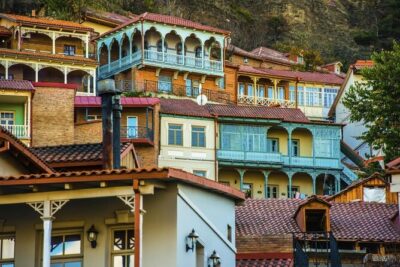
Old Tbilisi Highlights walking tour with wine & 10 tastings
Read our review →
Old Tbilisi Tour: Private Walking Tour With Wine Tasting
Read our review →
Private Tbilisi Food Tour: 9 Tastings Walk in Bohemian District
Read our review →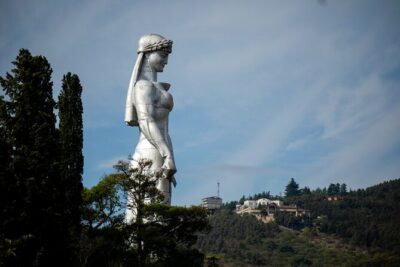
Tbilisi Old Town Walking Tour with a Local Guide
Read our review →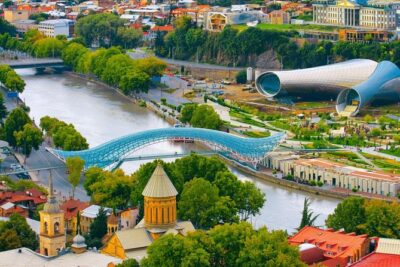
Discover Tbilisi: Hidden Gems and Iconic Sights Walking Tour
Read our review →
Browse the lists this tour appears in