Reviewed · TOURS
Tsalka Canyon Tour from Tbilisi with Poka Nunnery, Gorelovka and Asureti
Tsalka Canyon is only part of what makes this long day from Tbilisi worthwhile. The route crosses high Javakheti, visits a nunnery known for handmade cheese and sweets, and reveals Georgia’s German and Doukhobor past. The canyon’s waterfalls and 240-meter glass bridge provide the big finish.
I like the way this tour reaches places most short Georgia excursions skip, especially Poka Nunnery and the village of Gorelovka. I also like having a private, air-conditioned vehicle and an English-speaking guide such as Giorgi, who can shape the day around your interests. The drawback is the distance: twelve hours is a full day, and the canyon requires a roughly 30-minute hike.
In This Review
- Key points to know before you book
- Why this 12-hour route is different
- Manglisi Sioni and Georgia’s early Christian story
- Paravani Lake at 2,073 meters
- Poka Nunnery and its working kitchen
- Gorelovka and the Doukhobor story
- Dashbashi Canyon, waterfalls and the glass bridge
- Asureti’s German houses, church and wine tradition
- Lunch, wine and the value of a private guide
- Timing, fitness and what to wear
- Should you book this Tsalka Canyon tour?
- FAQ
- Where does the Tsalka Canyon tour start?
- How long does the experience last?
- Is this a private tour?
- Is the tour offered in English?
- Does the tour include lunch?
- What is the price?
- How much walking is required at Tsalka Canyon?
- Can children enter Tsalka Canyon?
- What happens if bad weather closes Tsalka Canyon?
- What clothing is required at the churches?
- Can I cancel the tour?
Key points to know before you book
- Tsalka Canyon’s 240-meter glass bridge crosses above the gorge, with a diamond-shaped café in the middle.
- Poka Nunnery produces food and crafts, including cheese, confectionery, candles and cloisonne enamel.
- Paravani Lake sits at 2,073 meters, and can be frozen from mid-autumn to mid-spring.
- Gorelovka introduces Doukhobor culture, a Russian Christian movement that rejected priests, icons and formal church rituals.
- Asureti preserves German colonial traces, including oak balconies, a Lutheran church, a cemetery and old wine facilities.
- The tour is private, with pickup, an English-speaking guide and an air-conditioned transfer for your group.
Why this 12-hour route is different
Many day trips from Tbilisi aim for one headline sight. This one works more like a cross-section of southern Georgia. You get a medieval church, a mountain lake, an active religious community, a small ethnographic museum, a dramatic canyon and a village shaped by German settlers.
That variety is the main reason to choose it. The stops are not all equally dramatic, but together they explain how Georgia became a meeting point for Georgian, Russian, German and religious communities. You spend less time in the usual tourist circuit and more time seeing how people lived in remote parts of the country.
The route also gives you a useful balance of indoor and outdoor stops. Manglisi, Poka and the village museums provide cultural context. Paravani Lake and Dashbashi Canyon supply open-air scenery. Still, you should expect a lot of road time. This is not a relaxed half-day outing, and the 8:00 a.m. start is sensible if you want to fit everything in.
Other Tbilisi days people book alongside this one:
- Day Trip to Kakheti Wine Region Including 9 Wine Tastings
★ 5.0 · 2,774 reviews - Highlights of Caucasus Mountains-Jinvali,Ananuri,Gudauri,Kazbegi(Group tour)
★ 5.0 · 2,682 reviews - Day Trip to Kazbegi and Gudauri
★ 5.0 · 2,009 reviews
Manglisi Sioni and Georgia’s early Christian story
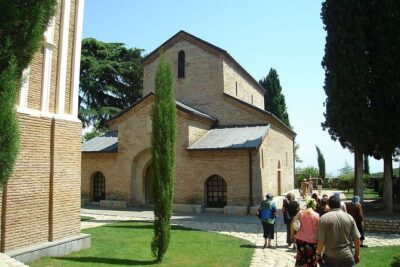
The first stop is Manglisi Sioni Cathedral, where you have about 30 minutes and admission is included. The church dates to the sixth or seventh century, although the Christian story connected with the site reaches back to the fourth century.
According to the tradition presented here, Christianity became Georgia’s state religion during the reign of King Mirian. Byzantine Emperor Constantine sent Bishop John to help build churches in Georgia and gave the king treasures that included pieces associated with the Holy Cross. Bishop John stopped at Manglisi before reaching Mtskheta and began work on a church here.
You do not need to be a church historian to appreciate the stop. Manglisi gives the rest of the day a useful starting point: this is a region where faith, political power and travel routes have been tied together for many centuries. The visit is short, so your guide matters. Giorgi has been praised for explaining Georgian history and culture clearly, and a private tour gives you a chance to ask questions rather than simply follow a group through the site.
Dress rules are important. Women need a head scarf and a dress inside Georgian Orthodox churches, while men cannot enter in short trousers. Scarves and cover-up clothing are available near church entrances, but I would still dress modestly from the start. It saves time and avoids an awkward scramble at the door.
Paravani Lake at 2,073 meters
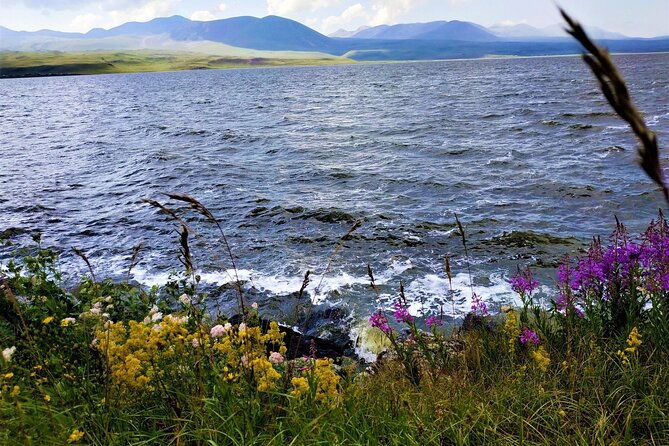
After Manglisi, the route reaches Paravani Lake, the largest lake in Georgia by area according to the supplied tour information. It covers about 38 square kilometers and reaches a depth of roughly three meters. The lake sits at 2,073 meters, so the air and weather can feel very different from Tbilisi.
The stop lasts about 15 minutes. That is enough for a look, photographs and a short pause, but not enough for a long walk around the shore. From mid-autumn to mid-spring, ice covers the lake. That seasonal change gives the stop two distinct moods: an open high-altitude lake in warmer months, or a stark frozen expanse in colder weather.
You should bring layers, even if Tbilisi feels warm when you leave. The tour requires good weather overall, and conditions at this elevation can affect comfort. Paravani is less about a planned activity than about seeing the scale and isolation of the Javakheti region during the drive.
Poka Nunnery and its working kitchen
Poka Nunnery of St. Nino is one of the most distinctive stops on the route. You have around 30 minutes to visit the nunnery and learn about St. Nino’s connection with the area.
St. Nino is said to have stayed here for two days after entering Georgia across the Javakheti mountains. She then followed the Mtkvari River toward Mtskheta, where she preached Christianity. The nunnery also has a wider role in the local community. For years, it served as the only Georgian-speaking island in an otherwise unfamiliar linguistic and cultural setting.
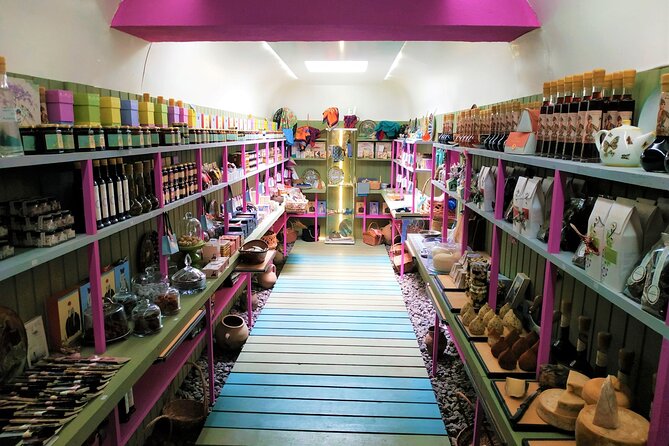
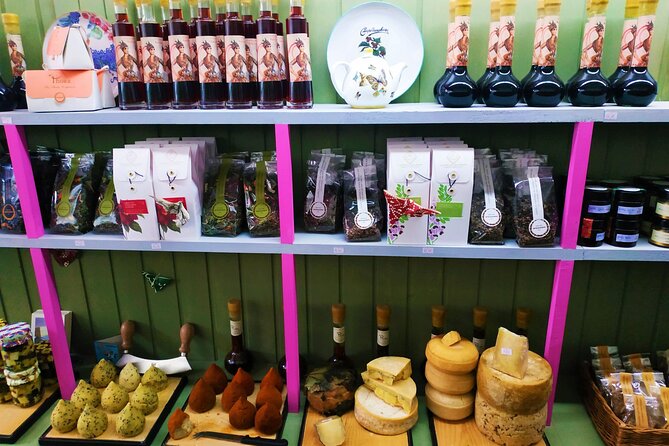
What makes Poka especially appealing is that it is not presented only as an old religious building. The nuns produce cheese, candles, cloisonne enamel and confectionery. These are practical, tangible signs of the nunnery’s work. If products are available during your visit, they make more meaningful souvenirs than generic shop items, and the confectionery is particularly easy to carry home.
The time here is brief, so you will not see every aspect of the community in depth. Still, Poka gives you a clearer sense of living religious work than a church visit alone. It is also one of the best places on the route to connect Georgian faith with local production and daily life.
Same mountains, a completely different kind of day:
- Day Trip to Mtskheta Gori and Uplistsikhe
★ 5.0 · 1,801 reviews - Tbilisi Walking Tour Including Cable Car and Traditional Bakery
★ 5.0 · 1,310 reviews - Day Trip to Armenia Including Homemade Lunch
★ 5.0 · 1,162 reviews - Kakheti Wine Region: Signagi and Bodbe Tour with 10 Wine Tastings
★ 5.0 · 1,019 reviews
Gorelovka and the Doukhobor story
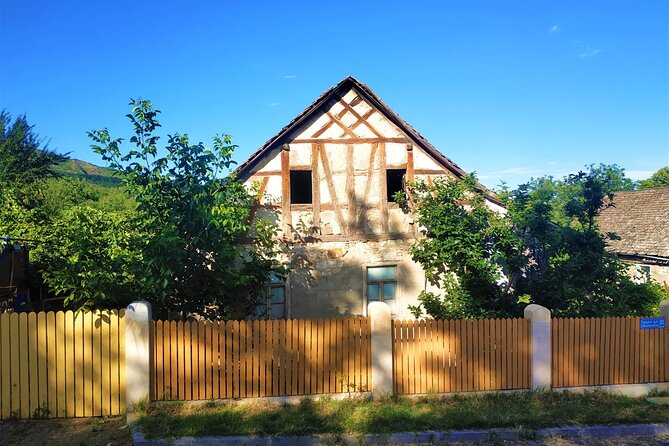
Gorelovka provides a sharp change of subject. The village was founded by Doukhobors, a Russian-origin Christian spiritual group relocated to Georgia during the reign of Emperor Nicholas I. Between 1841 and 1845, about 5,000 Doukhobors were resettled in Georgia.
Their beliefs set them apart from the Russian Orthodox establishment. They rejected secular government, priests, icons and formal church rituals. They followed few customs beyond marriage, and women held an equal place in the family. The village’s small ethnographic museum helps put those ideas into a local setting.
You have around 30 minutes here, and admission is free. Do not expect a large museum complex. The value is in the subject itself and in the chance to understand a community that developed its own religious and social rules far from its original home.
Gorelovka is a good reason to book a private tour rather than simply hire a car and rush between scenic points. The village’s story is easy to miss if you do not know what you are looking at. Ask your guide to explain how the Doukhobors differed from other Christian groups and how much of their community life remains visible today.
Dashbashi Canyon, waterfalls and the glass bridge
The main outdoor stop is Tsalka Canyon, also called Dashbashi Canyon. Allow about two hours here. Admission is included, but the visit requires some effort: reaching the canyon involves a hike of about 30 minutes, and the full complex includes an approximately 1,800-meter path down toward the canyon river.
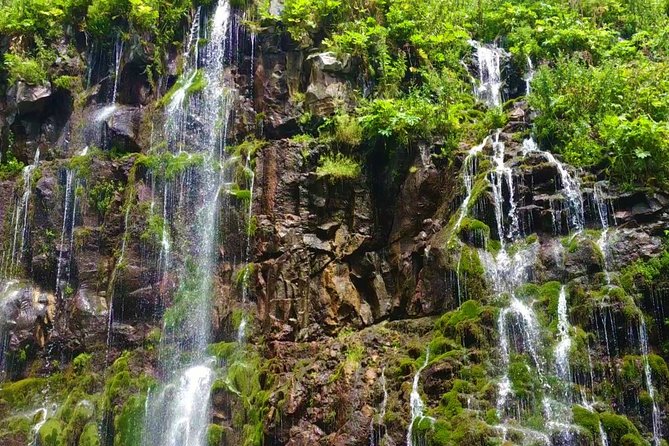
The reward is a series of cascading waterfalls. The water can take on an emerald color and split into dozens of smaller falls as it moves through the gorge. The setting is most enjoyable when you allow time to stop for views rather than treating the path as a race to the bridge.
The signature structure is a 240-meter glass bridge stretched across the canyon. A diamond-shaped café sits in the middle. The bridge is designed for views as much as for crossing, but people who dislike heights should think carefully before booking. The canyon also requires a moderate level of fitness, and the tour states that anyone entering the canyon must be taller than 1.2 meters.
Weather can change the plan. Tsalka Canyon closes in bad weather, so this is not a guaranteed stop in unsafe conditions. If poor weather cancels the experience, you can choose another date or receive a full refund, subject to the stated cancellation terms.
This is the point where comfortable transport matters. After walking the canyon paths, you can return to an air-conditioned vehicle instead of dealing with a long drive in a cramped car. The tour is private, so your group does not need to match another party’s pace at every photo stop, although the total schedule still has to fit the full route.
Asureti’s German houses, church and wine tradition
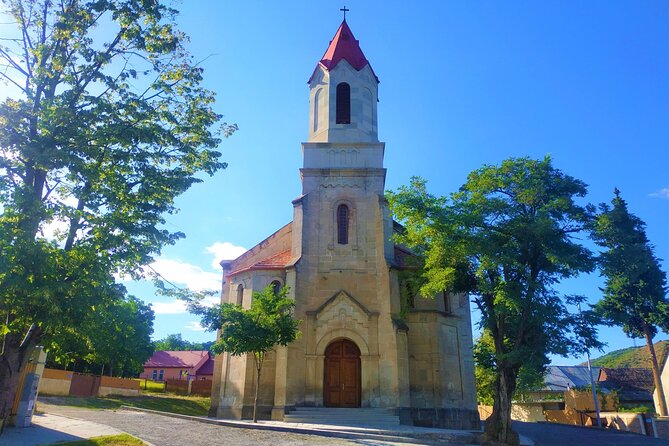
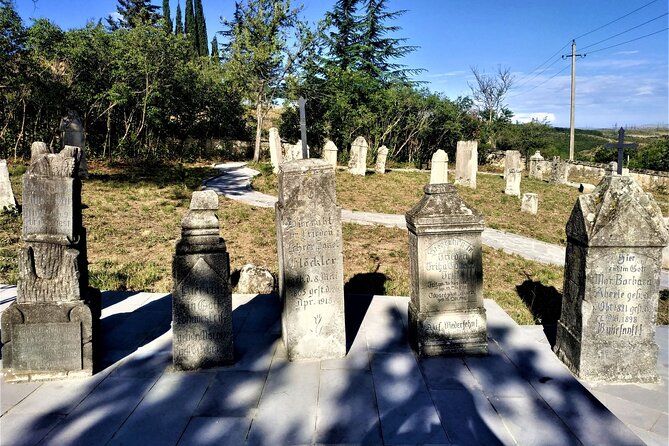
The final cultural stop is Asureti, a village founded in 1817 by around 7,000 German colonists. The German community remained for nearly 125 years, until Stalin deported Germans from Georgia to Central Asia in 1941. Only those married to Georgians were allowed to stay.
Asureti still shows traces of that settlement. Houses were built without cement or nails, and oak balconies, a sulfur bath, a wine cellar and other older structures remain part of the village story. You also visit a Lutheran church built in 1871 and a cemetery.
The village has an interesting wine connection. An old Georgian grape variety called Shala was found in the forest by a German farmer named Shalma. That detail neatly captures the exchange between German settlers and Georgian traditions. Asureti is not simply a preserved German village. It is a place where migration, forced relocation, architecture and winemaking overlap.
You have about 30 minutes here, with no admission charge. That is enough for an introduction, but not a long architectural tour. If you care most about buildings, ask your guide to point out the features made without cement and nails, as well as the Lutheran and Georgian influences.
Lunch, wine and the value of a private guide
The standard tour does not include lunch, but the vehicle stops at a restaurant. You can also choose a lunch and wine option. This distinction matters when comparing the $197.50 price.
The supplied information does not specify the exact restaurant or meal in the standard package. A previous booking was taken to a welcoming family-run restaurant serving organic, local products, and the meal was singled out as one of the day’s highlights. You should confirm what is included in your chosen booking before setting out.
At this price, the tour is not the cheapest way to reach Tsalka Canyon. You are paying for a private vehicle, pickup, an English-speaking guide, a full day on a long route and several included admissions. The value improves if you are traveling with others, since only your group participates and group discounts may be available.
Giorgi has been praised for punctual pickup, a clean tour van, good photo stops and explanations covering local culture, history and music. That personal touch matters on a route with several lesser-known stops. One especially practical sign of his care: after a piece of luggage was accidentally left in the vehicle, he drove back to the hotel the next day to return it.
That is not a formal tour feature, but it tells you what kind of guide relationship you might get. You are not simply being dropped at a canyon and collected later. The guide is part of the experience, especially at Manglisi, Gorelovka and Asureti, where context makes the visit worthwhile.
Timing, fitness and what to wear
The pickup time is 8:00 a.m., and the entire experience lasts about 12 hours. The schedule includes six stops, long transfers and a canyon walk, so comfortable shoes are essential. At Dashbashi, you should be ready for around 30 minutes of hiking before reaching the main canyon area.
A moderate fitness level is required. The height restriction at Tsalka Canyon is 1.2 meters, and bad weather can close the site. You should also prepare for changing temperatures because Paravani Lake is high above sea level.
Wear clothing suitable for Orthodox churches. Women need a head scarf and a dress, and men should avoid short trousers. Coverings can be found at church entrances, but bringing your own scarf and wearing longer trousers is more convenient.
The mobile ticket, pickup option and English-language format make the booking simple. Since this is a private activity, it suits people who want their own group rather than a large coach tour. It is less suitable if you want a slow morning, extensive time at each museum or an itinerary built around one single sight.
Should you book this Tsalka Canyon tour?
Book it if you want a full day that combines waterfalls with Georgian religious history and the stories of immigrant communities. The strongest parts are Poka Nunnery, the unusual Doukhobor stop at Gorelovka, and the contrast between German Asureti and the surrounding Georgian villages.
The tour is also a good match if you value a private guide and do not want to arrange a complicated route yourself. Giorgi’s reported attention to timing, explanations, photographs and even lost luggage adds practical value.
Think twice if you dislike long drives, high places or moderate hiking. Tsalka Canyon is weather-dependent, and the bridge may not suit anyone uncomfortable with heights. If you accept those limits, the $197.50 cost can be fair for a private 12-hour day, especially when shared by a small group and paired with the lunch and wine option.
You can cancel for a full refund up to 24 hours before the start time. Changes made inside that window are not accepted, and cancellations caused by poor weather are handled with a new date or full refund.
FAQ
Where does the Tsalka Canyon tour start?
The tour starts from Tbilisi, with pickup offered. The stated start time is 8:00 a.m.
How long does the experience last?
The tour lasts approximately 12 hours.
Is this a private tour?
Yes. Only your group participates in the activity.
Is the tour offered in English?
Yes. English-language guiding is offered.
Does the tour include lunch?
The standard tour does not include lunch, but the group stops at a restaurant. A lunch and wine option is available.
What is the price?
The stated price is $197.50 per person. Group discounts may be available.
How much walking is required at Tsalka Canyon?
You need to hike for around 30 minutes to reach the canyon. The canyon complex also includes an approximately 1,800-meter path.
Can children enter Tsalka Canyon?
The height of anyone entering the canyon must exceed 1.2 meters.
What happens if bad weather closes Tsalka Canyon?
The canyon may close in bad weather. If the experience is canceled for that reason, you will be offered a different date or a full refund.
What clothing is required at the churches?
Women need head scarves and dresses in Georgian Orthodox churches. Men cannot enter in short trousers. Scarves and dresses may be available near church entrances.
Can I cancel the tour?
You can cancel up to 24 hours before the experience starts for a full refund. Cancellations or changes made less than 24 hours before the start time are not accepted for a refund.
Just added around Tbilisi
- Private Adorable City Tour of Tbilisi★ 5.0 · 3 reviews
- Old tbilisi walking tour & wine tasting★ 5.0 · 9 reviews
- Tbilisi Airport to Gudauri, Bakuriani, Batumi, Tbilisi★ 5.0 · 3 reviews
- Your unique photo session in Tblisi, Georgia★ 3.5 · 4 reviews
- full day Kazbegi-Gudauri-jvari -from Tbilisi★ 5.0 · 6 reviews
- Wine promenade in hospitable Tbilisi★ 5.0 · 17 reviews
- Vardzia. Lake Paravani, Khertvisi & Lomisa castle, Rabati★ 4.5 · 12 reviews
- Wine Tasting Tour in Georgia’s Cradle of Wine★ 5.0 · 12 reviews
Tours, compared.

Highlights of Caucasus Mountains-Jinvali,Ananuri,Gudauri,Kazbegi(Group tour)
Read our review →
Tbilisi Walking Tour Including Cable Car and Traditional Bakery
Read our review →
Kakheti Wine Region: Signagi and Bodbe Tour with 10 Wine Tastings
Read our review →
Evening Walking & Talking Tour with Wine & Boat Ride
Read our review →
Kutaisi Canyons and Caves from Tbilisi Full Day Tour
Read our review →
Kazbegi and Gudauri Full Day Private Tour from Tbilisi
Read our review →
Diamond bridge and Dashbashi canyon day excursion from Tbilisi
Read our review →