
Reviewed · WINE TOURS
Tbilisi Walking Tour with Cable Car, Wine Tasting & Bread Bite
The best part of this Tbilisi tour is how much of the city you can understand in four hours. You move from the riverfront and old churches to a hilltop fortress, then down to sulfur springs, narrow lanes, wine, and fresh Georgian bread. It gives you both the grand views and the small local details.
I like the private format, since your guide can manage the pace, explain the city’s tangled past, and pause when the hills or stairs call for a rest. I also like the mix of cable-car views, wine tasting, and bread, which keeps this from feeling like a checklist of monuments.
The main drawback is the pace. Ten stops in about four hours means most visits are brief, and Tbilisi’s Old Town includes uneven ground, steps, and uphill sections. Wear good shoes and treat this as an introduction, not a slow, in-depth visit to every site.
In This Review
- Key points to know before booking
- Why this four-hour route works in Tbilisi
- Metekhi Cathedral and the first view of Old Tbilisi
- Riding the cable car to Mother of Georgia
- Narikala Fortress above the river
- Sulfur baths, Love Lock Bridge, and Leghvtakhevi Waterfall
- Jvaris Mama and Sioni Cathedral
- The Gabriadze clock tower and Anchiskhati Basilica
- The Bridge of Peace and the modern riverfront
- Wine, bread, and the value of the price
- Morning or afternoon, and what to wear
- Who should book this Tbilisi tour?
- Should you book it?
- FAQ
- How long does the Tbilisi walking tour last?
- Is this a private tour?
- Is the tour offered in English?
- Is hotel pickup available?
- Is the cable car ride included?
- Is Georgian wine tasting included?
- What should I wear to the churches?
- Can I cancel for a full refund?
Key points to know before booking
- Mother of Georgia by cable car: Ride above the old city for broad views of the Mtkvari River, rooftops, and surrounding hills.
- A private English-language tour: Only your group participates, with pickup offered and an air-conditioned vehicle available for the driving portions.
- Georgian wine and bread included: Wine tasting costs nothing extra, and the bread bite adds a simple taste of local food.
- A strong Old Town route: Metekhi Cathedral, Narikala Fortress, sulfur baths, churches, the marionette clock tower, and the Bridge of Peace all fit into one outing.
- Church clothing matters: Women need a head scarf and dress, while men cannot enter in short trousers. Coverings are available near church entrances.
- Flexible departure choice: You can choose a morning or afternoon start, useful for fitting the tour around other plans.
Why this four-hour route works in Tbilisi
Tbilisi is easier to understand when you see its layers in sequence. The city grew along the Mtkvari River and spent centuries at a crossroads between Europe and Asia. Persian, Russian, Georgian, Soviet, and modern influences all left marks on the streets and buildings.
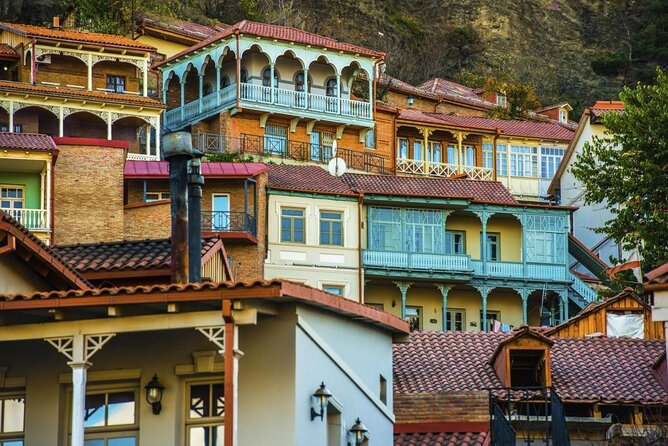
This route begins with the oldest central neighborhoods, climbs for the city views, then returns to the lower Old Town. You see grand religious buildings, remnants of military power, bathhouses fed by hot springs, playful modern architecture, and working streets where the city still feels lived in.
The tour lasts about four hours. That is enough time to get your bearings and see the main sights, but not enough for long museum visits or an extended stop inside every church. I would use it on your first day in Tbilisi, then return later to the places that catch your interest.
The private setup is useful here. A larger group can lose time on stairs, church entrances, and photo stops. With only your own party, the guide can keep the schedule moving or allow a little breathing room. George, the guide named in the tour feedback, was especially praised for balancing time with rest breaks, a detail that matters on this hilly route.
A few more Tbilisi trips to weigh up
- Day Trip to Kakheti Wine Region Including 9 Wine Tastings
★ 5.0 · 2,774 reviews - Kakheti Wine Region: Signagi and Bodbe Tour with 10 Wine Tastings
★ 5.0 · 1,019 reviews - Tbilisi:Mtskheta,Jvari,Bazaar,wine tasting,Chronicles of Georgia
★ 5.0 · 730 reviews
Metekhi Cathedral and the first view of Old Tbilisi
Metekhi Cathedral sits above the Mtkvari River and makes a fitting first major stop. The church was built under King Demetrius II in the late 13th century, though the site has seen damage and rebuilding over the centuries.
Its past also reflects Tbilisi’s rougher chapters. During Russian rule, the church lost its religious use and became a military base. The nearby citadel was demolished in the 19th century, and a jail occupied the area until the Soviet period.
Outside, you will see the statue of King Vakhtang Gorgasali, erected in 1961. The king is linked to the founding of Tbilisi in the fifth century, and the statue looks across the river toward the old city.
Allow about 20 minutes here. The setting is the real prize. From this side of the river, you get an early sense of how Tbilisi is arranged, with cliffs, domes, balconies, and hills packed into a compact area.
Riding the cable car to Mother of Georgia
The cable car is one of the tour’s most practical pleasures. It saves you from walking the entire climb and gives you a moving view of Old Tbilisi as the cabins rise above the rooftops.
The ride takes you toward the Mother of Georgia monument, a 20-meter aluminum figure created in 1958 for Tbilisi’s 1,500th anniversary. She holds a bowl of wine in one hand for friends and a sword in the other for enemies. It is a simple image, but a useful one for understanding how Georgia presents its national character.
The cable car ride is included, so you do not need to budget an extra fare for this part. At the top, you can look across the Mtkvari River and the dense center of Tbilisi. The view helps explain why the city feels both compact and steep.
You have about 20 minutes for this stop. That is enough for photographs and a short explanation, but the timing will feel tight if you want to linger. Bring a camera, but also watch your footing when moving between the cable-car area and the fortress paths.
Narikala Fortress above the river
Narikala Fortress gives you the widest old-city view on the route. The first fortifications date to the fourth century, when it was a Sasanian citadel. King David the Builder expanded it in the 11th and 12th centuries, and the Mongols later gave it the name Narin Qala, meaning Little Fortress.
Much of what remains comes from the 16th and 17th centuries. An earthquake damaged the fortress in 1827, so you should expect weathered walls and open sections rather than a perfectly preserved castle.
The site is free to enter, and you have roughly 20 minutes. That works well for a quick circuit and photographs. It is less suitable if you want a long historical inspection of the fortifications.
The paths can be uneven. Comfortable shoes are not just a polite suggestion here. The combination of fortress ground, steps, and later walking in the Old Town makes sturdy footwear one of the best choices you can make for this experience.
Same mountains, a completely different kind of day:
- Highlights of Caucasus Mountains-Jinvali,Ananuri,Gudauri,Kazbegi(Group tour)
★ 5.0 · 2,682 reviews - Day Trip to Kazbegi and Gudauri
★ 5.0 · 2,009 reviews - Day Trip to Mtskheta Gori and Uplistsikhe
★ 5.0 · 1,801 reviews - Tbilisi Walking Tour Including Cable Car and Traditional Bakery
★ 5.0 · 1,310 reviews
Sulfur baths, Love Lock Bridge, and Leghvtakhevi Waterfall
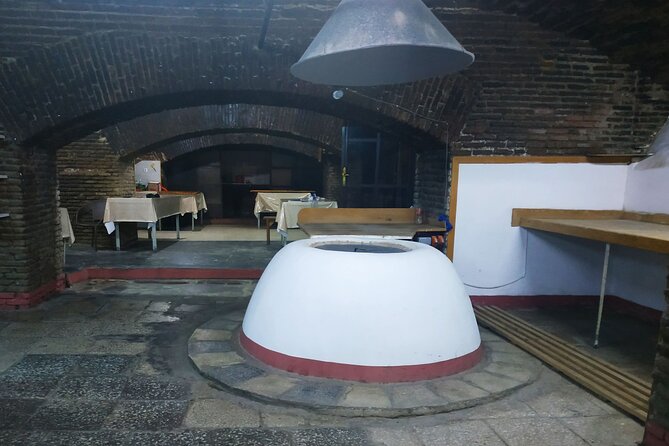
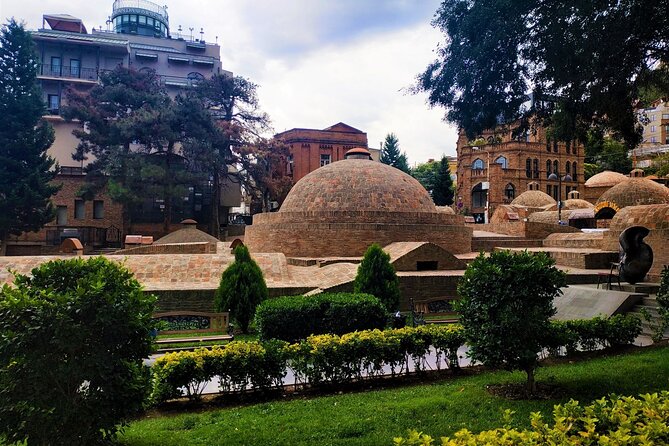
From Narikala, the route heads down toward Tbilisi’s sulfur bath district. The springs rise from the ground at about 40 to 50 degrees Celsius and contain sulfur. Tbilisi’s name is linked to warm springs, so this is not just another pretty corner of the city. It helps explain why the settlement developed here.
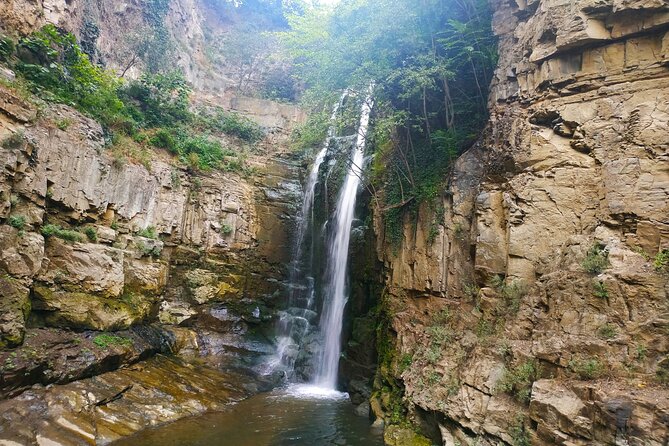
The tour does not include a bath session. Instead, you see the bath area and continue to the Leghvtakhevi Waterfall, which flows from the direction of Tbilisi’s botanical garden. The waterfall is a pleasant change after the stone fortress and church interiors.
You will also pass the Love Lock Bridge. It is a quick photo stop rather than a major historical site, but it adds a lighter moment to the route.
This section takes about 20 minutes. Depending on the weather and footing, the walk can be damp or slippery near the water. Take care on steps, and do not expect time for a full bath visit or a long walk through the botanical garden.
Jvaris Mama and Sioni Cathedral
The next church stops are short, but they add useful context to Georgia’s religious tradition. Jvaris Mama, or Father of the Cross Church, is linked to an older fifth-century church built by King Vakhtang Gorgasali. Local tradition also connects the area with Saint Nino.
The current building dates mainly from the 16th century and was restored in the 1990s. Until 1921, it belonged to the Jerusalem Patriarchate and supported the Georgian cross church in Jerusalem. That connection gives the small church importance beyond its size.
You have about 10 minutes here. That means you will likely receive an overview and a look inside, not a long architectural study.
Sioni Cathedral also receives around 10 minutes. It takes its name from Mount Zion in Jerusalem and was first built in the sixth or seventh century. Invaders damaged it repeatedly, and the building changed through several periods of reconstruction.
King David the Builder rebuilt the cathedral in 1112, and many basic elements of the present structure date from that period. Sioni served as Georgia’s main Orthodox cathedral until the Holy Trinity Cathedral opened in 2004.
These churches require proper clothing. Women need a head scarf and a dress, while men should wear long trousers. Scarves and coverings can be found near the entrances, but I would still dress appropriately before the tour so you are not rushed or distracted.
The Gabriadze clock tower and Anchiskhati Basilica
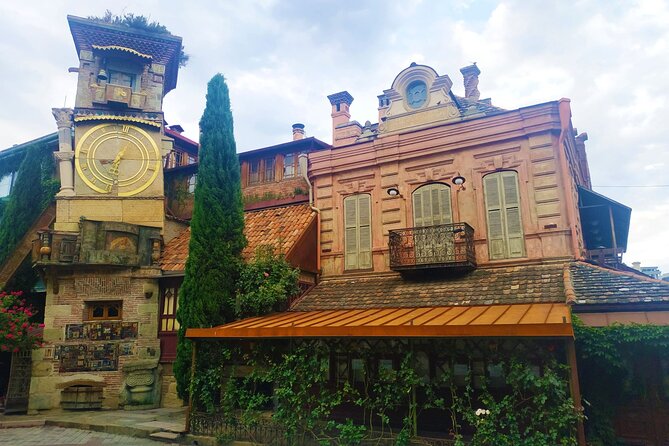
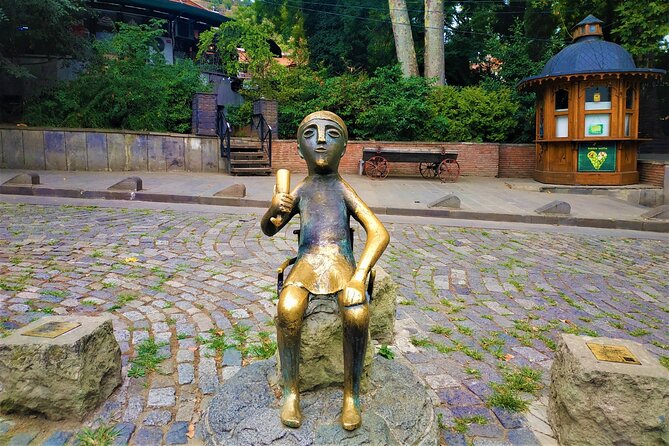
The Rezo Gabriadze Marionette Theater brings a touch of whimsy to the middle of the historic center. Rezo Gabriadze was a theater and film director, writer, painter, and sculptor who founded the theater in 1981.
The clock tower was added in 2011. On the hour, a window opens and an angel strikes a bell. A small display below presents a cycle of life, from meeting and marriage to birth and death. Your stop lasts about 10 minutes, so ask your guide about the timing if seeing the clock performance matters to you.
Nearby, Anchiskhati Basilica is one of the most important early buildings on the route. Built in the sixth century by King Dachi, it is the oldest surviving church in Tbilisi.
The basilica was originally dedicated to the Virgin Mary. It took its current name in 1675, when a treasured icon from Ancha was moved to Tbilisi to protect it from Ottoman attack. The icon is now held at the Art Museum of Georgia.
The brick bell tower dates to 1675, while the dome was added in the 1870s. During the Soviet period, the building served as an art studio, and restoration began in the 1950s. Most of the interior paintings date from the 19th century, except for the 17th-century altarpiece.
Anchiskhati is also linked with Georgian polyphonic singing through its choir. The tour does not promise a concert, so think of this as a brief architectural and cultural stop rather than a music performance.
The Bridge of Peace and the modern riverfront
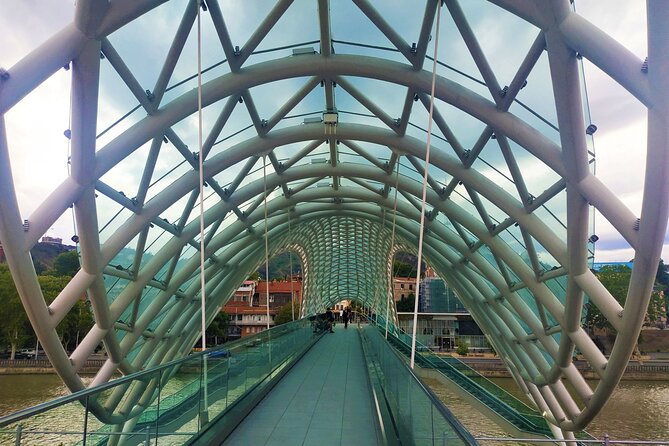
The Bridge of Peace gives the route a clear modern finish. Opened in 2010, the 150-meter bridge was designed by Italian architect Michele De Lucchi, who also designed the Presidential Palace and the Ministry of Internal Affairs of Georgia.
Its curved glass-and-steel form crosses the Mtkvari beside the older city. The design has a marine-animal quality, making it feel quite different from the churches, fortress walls, and traditional balconies seen earlier.
You have about 10 minutes here. It is a good place for final photographs and a reminder that Tbilisi is not only an old city. Modern public buildings and bold projects now sit beside historic neighborhoods.
A boat trip on the Mtkvari may be available after the walking tour for an additional charge. It is not part of the $77.50 tour price, so ask about the cost before committing.
Wine, bread, and the value of the price
At $77.50 per person, this is not the cheapest way to walk through Tbilisi. The price makes more sense if you value a private guide, pickup, an air-conditioned vehicle for the driving portions, the cable car ride, and a planned route through many of the city’s key sights.
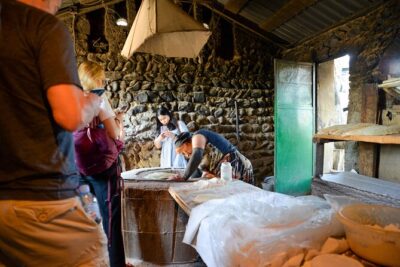
Georgian wine tasting is included at no extra cost. That is an important part of the experience, since wine is closely tied to Georgian culture and hospitality. The bread bite adds another small but welcome food moment. Neither turns the tour into a full food tour, but both make the day feel more connected to local life.
The private format also changes the value. If you are traveling as a couple, family, or small group, the per-person cost may feel easier to justify because you are not sharing the guide with strangers. Group discounts are offered, so larger parties should check the final rate when booking.
You should not book this expecting a slow meal, a winery visit outside the city, or long time at the fortress. You are paying for coverage, context, and convenience. For a first look at Tbilisi, that can be a sound trade.
Morning or afternoon, and what to wear
Morning and afternoon departures are available. A morning start may suit you if you want the rest of the day free for museums, markets, or a longer meal. An afternoon start can work well if you prefer a slower morning or have just arrived in the city.
The tour requires good weather. If poor weather causes cancellation, you can receive a different date or a full refund. You can also cancel for a full refund up to 24 hours before the start time. Changes made less than 24 hours ahead are not accepted, and the same-day cutoff follows local time.
Pickup is offered, and the tour is near public transportation. Since the activity combines vehicle travel with walking, you get a break from the hills, but you still need to manage stairs and uneven surfaces.
Most people can take part, but this is not a flat, effortless stroll. Good walking shoes, modest church clothing, water, and protection from the sun will make the four hours much easier.
Who should book this Tbilisi tour?
I would recommend it to first-time visitors who want a clear introduction without spending a full day on a single museum or neighborhood. It also suits people who prefer a private guide and want the freedom to ask questions or request short rest breaks.
It works well for families and small groups because the guide can adjust the pace. Couples who want a mix of views, churches, local tastes, and photographs will also get plenty from it.
I would be more cautious if you have limited mobility, dislike stairs, or want extended time at each monument. The route is packed, and several stops last only 10 or 20 minutes. Independent walkers who enjoy setting their own pace may prefer to visit the Old Town in smaller pieces.
Should you book it?
Book this tour if you want to cover Tbilisi’s main historic sights in one well-planned half-day, with a private English-speaking guide, a cable-car ride, wine, and bread included. The strongest features are the panoramic route, the variety of stops, and the chance to slow down when your own group needs it.
Skip it if your priority is a long fortress visit, a full sulfur bath, a detailed church study, or a full food-and-wine program. For most first visits, though, this is a useful and enjoyable way to get your bearings, especially if you remember that it is a fast overview rather than a deep historical tour.
FAQ
How long does the Tbilisi walking tour last?
The tour lasts approximately four hours.
Is this a private tour?
Yes. Only your group participates in the activity.
Is the tour offered in English?
Yes. The tour is offered in English.
Is hotel pickup available?
Pickup is offered. The experience is also near public transportation.
Is the cable car ride included?
Yes. The aerial tramway ride is included in the tour price.
Is Georgian wine tasting included?
Yes. You can sample Georgian wine at no extra cost. The experience also includes a taste of local bread.
What should I wear to the churches?
Women need to wear head scarves and dresses. Men cannot enter in short trousers. Scarves and dresses are available near church entrances.
Can I cancel for a full refund?
Yes. You must cancel at least 24 hours before the experience start time for a full refund. If poor weather causes cancellation, you will be offered another date or a full refund.
More Walking Tours in Tbilisi
- Tbilisi:Evening Walking & Talking Tour with Wine & Boat Ride
★ 5.0 · 572 reviews - Old Tbilisi Highlights walking tour with wine & 10 tastings
★ 5.0 · 276 reviews - Old Tbilisi Tour: Private Walking Tour With Wine Tasting
★ 5.0 · 273 reviews - Private Tbilisi Food Tour: 9 Tastings Walk in Bohemian District
★ 5.0 · 227 reviews
Just added around Tbilisi
- Private Adorable City Tour of Tbilisi★ 5.0 · 3 reviews
- Old tbilisi walking tour & wine tasting★ 5.0 · 9 reviews
- Tbilisi Airport to Gudauri, Bakuriani, Batumi, Tbilisi★ 5.0 · 3 reviews
- Your unique photo session in Tblisi, Georgia★ 3.5 · 4 reviews
- full day Kazbegi-Gudauri-jvari -from Tbilisi★ 5.0 · 6 reviews
- Wine promenade in hospitable Tbilisi★ 5.0 · 17 reviews
- Vardzia. Lake Paravani, Khertvisi & Lomisa castle, Rabati★ 4.5 · 12 reviews
- Wine Tasting Tour in Georgia’s Cradle of Wine★ 5.0 · 12 reviews
Wine Tours, compared.
Day Trip to Kakheti Wine Region Including 9 Wine Tastings
Read our review →
Kakheti Wine Region: Signagi and Bodbe Tour with 10 Wine Tastings
Read our review →
Mtskheta,Jvari,Bazaar,wine tasting,Chronicles of Georgia
Read our review →
Evening Walking & Talking Tour with Wine & Boat Ride
Read our review →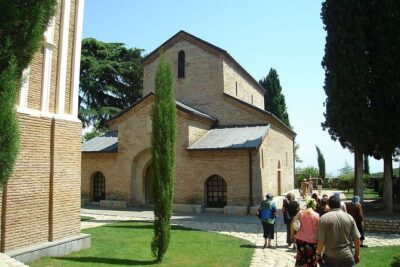
City of Love Sighnaghi, Bodbe. KTW. Wine House Group tour
Read our review →
Bodbe, Sighnaghi, Telavi Wine Tour from Tbilisi
Read our review →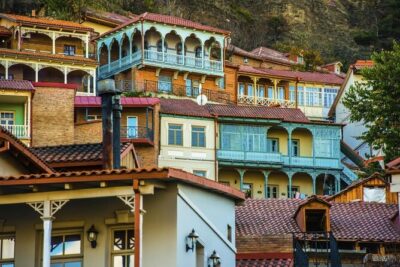
Old Tbilisi Highlights walking tour with wine & 10 tastings
Read our review →
Old Tbilisi Tour: Private Walking Tour With Wine Tasting
Read our review →Browse the lists this tour appears in