
Reviewed · WINE TOURS
Rustavi Back in a USSR + wine tasting + Off-road to David Gareji& Natlismtsemeli
David Gareja is the headline here: a sixth-century cave monastery set among stark, open country near Georgia’s border with Azerbaijan. Then the route shifts sharply to Soviet-era Rustavi, an old industrial city with a very different story. That contrast gives this outing more range than a simple monastery trip.
I like the private transport with Wi-Fi, especially when rougher roads and a five-to-seven-hour day are involved. I also like the mix of places: two cave monasteries, Rustavi International Modopark, old factory-town history, off-road scenery, and included wine tasting. The main consideration is the road itself. Poor weather can cancel the outing, and the off-road element may feel tiring if you want a smooth, easy ride.
In This Review
- Key points to know before you book
- Two very different sides of Georgia in one outing
- Reaching David Gareja from Tbilisi
- Natlismtsemeli and its original frescoes
- The off-road route is part of the experience
- Rustavi, Georgia’s old industrial city
- Wine tasting and the value of the private format
- What the guide adds to the day
- Who will get the most from this tour
- Practical points before leaving Tbilisi
- Should you book the David Gareja and Rustavi tour?
- FAQ
- How much does the tour cost?
- How long does the experience last?
- Is pickup from Tbilisi offered?
- Is this a private tour?
- Which main places are included?
- Are admission tickets included?
- Is wine or alcohol included?
- Is Wi-Fi available during transportation?
- What happens if bad weather cancels the tour?
Key points to know before you book
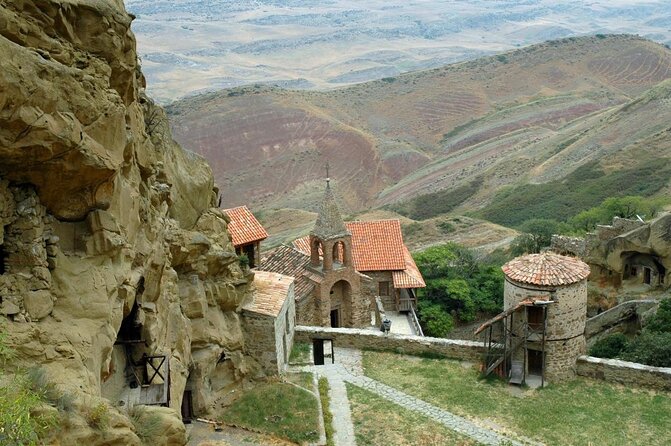
- David Gareja combines a sixth-century cave monastery with wide-open views and strong photo opportunities.
- Natlismtsemeli adds original frescoes and a monastery tower in a quieter 30-minute stop.
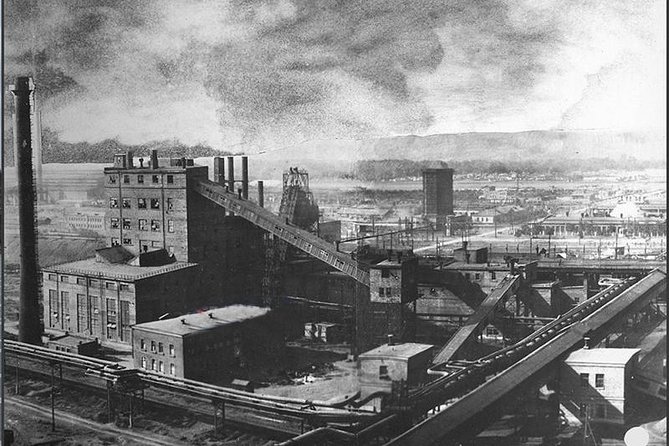
- Rustavi offers a look at Georgia’s industrial past during the Stalin era, not just another old-town walk.
- The off-road return route is part of the appeal, with wild scenery and a less polished feel.
- Wine tasting and alcoholic drinks are included, while admission to the monasteries is free.
- This is a private activity, so only your own group takes part.
Two very different sides of Georgia in one outing
This experience works because it refuses to stay in one historical period. In the morning, you are looking at stone cells cut into the hills and religious buildings dating from the sixth century. Later, you are dealing with the planned industrial character of Rustavi, a city shaped by the Soviet period.
That change is useful. If you only visit David Gareja, you get striking scenery and religious history. Adding Rustavi gives you a look at the working, industrial side of Georgia, a part of the country that is easy to miss when most sightseeing centers on churches, wine villages, and old Tbilisi.
You also get a wine tasting, though the available details do not specify the winery, the number of pours, or how much time is set aside for it. Treat that part as a pleasant addition rather than the central reason to book. The monasteries and the off-road route are the main event.
A few more Tbilisi trips to weigh up
- Day Trip to Kakheti Wine Region Including 9 Wine Tastings
★ 5.0 · 2,774 reviews - Kakheti Wine Region: Signagi and Bodbe Tour with 10 Wine Tastings
★ 5.0 · 1,019 reviews - Tbilisi:Mtskheta,Jvari,Bazaar,wine tasting,Chronicles of Georgia
★ 5.0 · 730 reviews
Reaching David Gareja from Tbilisi
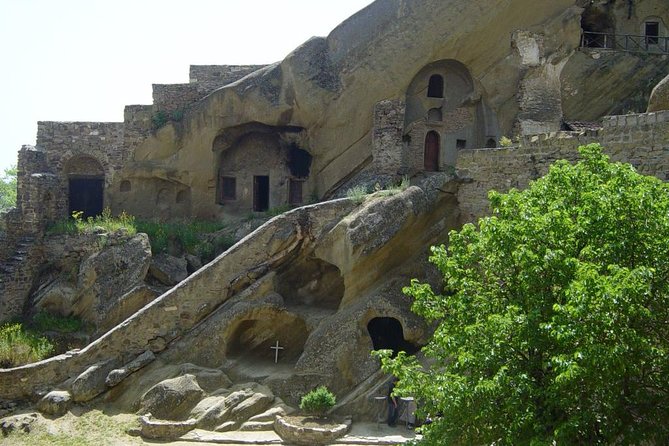
The first major stop is David Gareja Monastery, reached by private transport from Tbilisi. The tour allows about one hour here, which gives you time to take in the setting, see the cave-monastery complex, and listen to the guide’s explanation of its past.
The monastery dates from the sixth century and is described as a UNESCO World Heritage site. Its appeal is not limited to the stone buildings. The surrounding country is open, dry-looking, and wild, with broad views that make the site feel far removed from the capital.
Bring a camera, but do not reduce the stop to a photo break. The value of a guide is the context: the tour is designed to explain the historical stories connected with each location. Since the stop lasts only about an hour, stay aware of the meeting time and do not spend every minute framing pictures.
Admission is free, which keeps the cost focused on transport, guiding, the private format, and the included drinks. The information provided does not promise a long guided walk or access to every part of the complex, so expect a focused visit rather than a full-day archaeological study.
The setting can also affect the day. This is a weather-dependent experience, and that makes sense for an outing built around open country and an off-road route. If conditions are poor, the operator offers another date or a full refund.
Natlismtsemeli and its original frescoes
Natlismtsemeli Monastery is a shorter stop, with about 30 minutes set aside. It is another sixth-century cave monastery, but its details give it a different character from David Gareja.
The key features here are the original frescoes and the monastery tower. Those are the things to focus on when time is limited. A half-hour is enough for a compact visit, but it is not enough for a slow, detailed exploration of every corner.
I would pay close attention to the guide during this stop. Without explanation, a brief visit to another old monastery can blur into the first one. The frescoes and tower give Natlismtsemeli its own identity, and the historical context helps you understand why two nearby religious sites are both included.
The provided information does not state the condition of the road to the monastery, the amount of walking required, or any dress rules. You should be ready for a site visit that may involve uneven outdoor ground, but avoid assuming a specific walking distance or access arrangement that has not been provided.
The off-road route is part of the experience
The drive is not simply a way to move between scheduled stops. The tour specifically includes off-road travel, and the strongest description of the experience centers on the wild natural scenery and an alternate route taken on the way back.
That makes the transport a real feature for people who enjoy changing views and a little roughness in the day. You may find the return journey more memorable than a standard highway transfer, particularly if you like photography and places that feel less polished.
The trade-off is comfort. Off-road driving can be bumpy, and the tour’s five-to-seven-hour duration is approximate. The total time may depend on road conditions, the pace of your group, and how the day is arranged. If you need a perfectly predictable schedule, this is worth keeping in mind.
The private vehicle helps. Only your group participates, so you are not tied to a large bus schedule or forced to wait for strangers at every stop. Wi-Fi is available in the vehicle, another small but useful touch during a long transfer. It does not remove the bumps, but it makes the ride more practical.
Same mountains, a completely different kind of day:
- Highlights of Caucasus Mountains-Jinvali,Ananuri,Gudauri,Kazbegi(Group tour)
★ 5.0 · 2,682 reviews - Day Trip to Kazbegi and Gudauri
★ 5.0 · 2,009 reviews - Day Trip to Mtskheta Gori and Uplistsikhe
★ 5.0 · 1,801 reviews - Tbilisi Walking Tour Including Cable Car and Traditional Bakery
★ 5.0 · 1,310 reviews
Rustavi, Georgia’s old industrial city
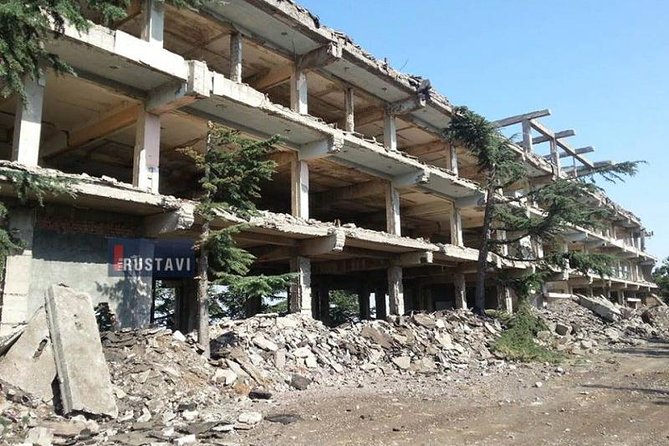
Rustavi changes the mood completely. The city is described as an old industrial town from the Stalin era, so do not expect another picturesque medieval center. The interest lies in its planned, Soviet-era character and the chance to see a different chapter of Georgian life.
About two hours are allocated to Rustavi. That is considerably longer than the Natlismtsemeli stop, suggesting that the city portion is meant to be a substantial part of the day rather than a quick photo stop.
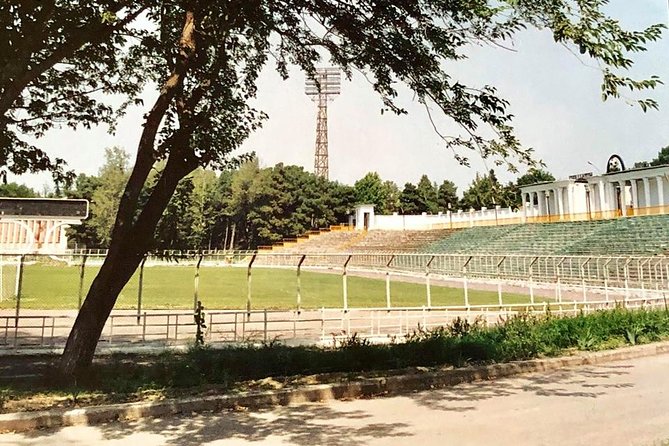
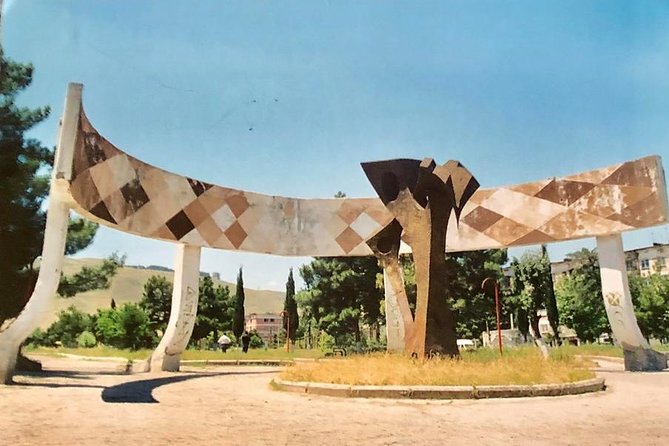
The tour highlights Rustavi International Modopark as one of the important Rustavi sites. The supplied details do not explain the park’s exact exhibits, layout, or admission arrangements, so your guide’s explanation will be especially useful here. The broader point is clear: Rustavi adds a modern industrial layer to a day otherwise dominated by ancient religious sites.
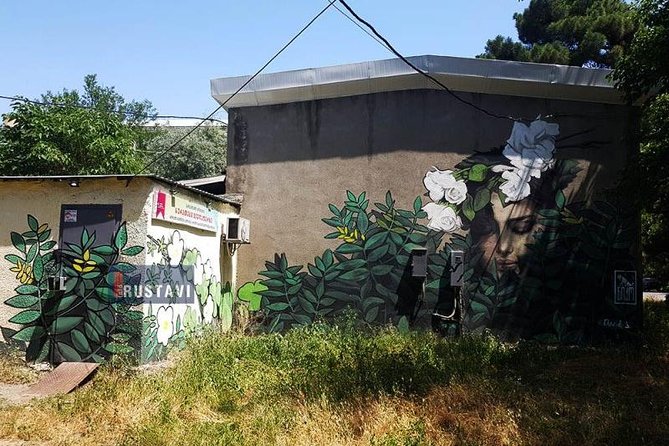
I like this contrast because it prevents the outing from becoming a string of similar stone monasteries. You get the chance to compare rural religious monuments with a city shaped by industry and Soviet planning. For photographers, Rustavi also offers a different set of subjects: broad urban views, industrial-era character, and the visual contrast between old city planning and open country.
Wine tasting and the value of the private format
Alcoholic drinks are included, along with wine tasting. That adds a social, distinctly Georgian note to a day that could otherwise feel heavily focused on history and driving.
The exact tasting format is not specified. You are not told how many wines are served, where the tasting takes place, or whether food accompanies it. Keep your expectations sensible, and see it as part of the overall package rather than a dedicated wine-country tour.
At $133.34 per person, the price is easiest to judge by looking at what you are buying as a package. You receive private transportation, a guide, the monastery visits, the Rustavi portion, off-road travel, vehicle Wi-Fi, and alcoholic drinks. Admission to the monasteries is free, so the cost is not mainly about entry tickets.
The value is stronger for a small group that would otherwise need to arrange a private vehicle and guide independently. A solo visitor may find the price harder to justify, while two or more people can spread the cost of the private activity. Group discounts are offered, though the amount is not specified.
You should also remember that the tour lasts about five to seven hours, not a fixed five hours. That range matters if you have evening plans in Tbilisi. Give yourself room after the tour rather than booking a tight dinner reservation or another timed activity.
What the guide adds to the day
The guide is there to explain the stories and context at each stop. That matters most at David Gareja, Natlismtsemeli, and Rustavi, where the visual details alone do not tell the full story.
At the monasteries, listen for the differences between the two sites. At Rustavi, ask about the city’s industrial and Stalin-era development. The available details do not provide a guide’s name, so you cannot choose a named guide in advance based on the information here.
The private format should make questions easier. You are with your own group, rather than trying to hear commentary from the back of a full coach. That can make a real difference at places where the guide’s explanation gives meaning to what you are seeing.
One especially useful feature is the guide’s choice of route. The strongest praise for the experience focuses on taking an amazing road back through wild natural beauty. That suggests you should treat the journey home as part of the sightseeing, not as dead time between the final stop and Tbilisi.
Who will get the most from this tour
I would recommend this for you if you like history but do not want every stop to look the same. The combination of sixth-century cave monasteries, original frescoes, a tower, Soviet-era urban history, off-road travel, and wine tasting gives the day a broad range.
It also suits photographers. David Gareja offers dramatic views, while Rustavi provides industrial and urban subjects. The exact photo conditions will depend on weather, but the route clearly includes several settings rather than one repeated view.
This is a good fit for a private group that values flexibility and a direct transfer. Families, couples, and friends can take part together, and service animals are allowed. Most people can participate, and the tour is near public transportation, though pickup is offered, making the start simpler.
I would think twice if you want a relaxed wine day, a polished luxury transfer, or a tightly timed schedule. The outing is built around several different interests and includes off-road travel. That variety is its strength, but it also means the day may feel active and somewhat unpredictable.
Practical points before leaving Tbilisi
Confirmation is provided at booking, and pickup is offered. Since the activity takes place outside the city and includes multiple stops, confirm the pickup details carefully when you reserve.
Wear clothing and shoes suitable for outdoor monastery visits. The supplied information does not give a dress code or a specific walking distance, so practical clothing is the safest choice. Bring your camera, and consider carrying water for the road and open-air stops, since the package details do not specify refreshments beyond the alcoholic drinks.
The monasteries have free admission. The price is $133.34 per person, with group discounts available. Because only your group participates, the final value improves as more people share the private transport.
Free cancellation is available if you cancel at least 24 hours before the local start time. Changes or cancellations made less than 24 hours before the start are not accepted for a refund. Bad weather is handled differently: you can choose another date or receive a full refund if the operator cancels.
Should you book the David Gareja and Rustavi tour?
Book it if you want a varied private day outside Tbilisi, especially if ancient monasteries, photography, Soviet history, wine, and rougher roads all sound appealing. The best feature is the unusual combination. David Gareja gives you the memorable religious setting, Natlismtsemeli adds frescoes and a tower, and Rustavi prevents the day from becoming repetitive.
The $133.34 price makes the most sense for a small group that values private transport and a guide. I would not choose it for a dedicated wine holiday or for a completely smooth ride. But if you want strong scenery, historical contrast, included drinks, and an off-road route with no strangers in your vehicle, this is a well-rounded choice.
FAQ
How much does the tour cost?
The listed price is $133.34 per person. Group discounts are available, though the discount amount is not specified.
How long does the experience last?
The tour lasts approximately five to seven hours.
Is pickup from Tbilisi offered?
Yes. Pickup is offered for this experience.
Is this a private tour?
Yes. Only your group will participate in the activity.
Which main places are included?
The route includes David Gareja Monastery, Natlismtsemeli Monastery, and Rustavi. Rustavi International Modopark is also highlighted as part of the Rustavi visit.
Are admission tickets included?
Admission to David Gareja Monastery and Natlismtsemeli Monastery is free.
Is wine or alcohol included?
Yes. Alcoholic beverages are included, and the experience includes wine tasting.
Is Wi-Fi available during transportation?
Yes. Wi-Fi is available in the vehicle.
What happens if bad weather cancels the tour?
If the experience is canceled because of poor weather, you will be offered a different date or a full refund.
Just added around Tbilisi
- Private Adorable City Tour of Tbilisi★ 5.0 · 3 reviews
- Old tbilisi walking tour & wine tasting★ 5.0 · 9 reviews
- Tbilisi Airport to Gudauri, Bakuriani, Batumi, Tbilisi★ 5.0 · 3 reviews
- Your unique photo session in Tblisi, Georgia★ 3.5 · 4 reviews
- full day Kazbegi-Gudauri-jvari -from Tbilisi★ 5.0 · 6 reviews
- Vardzia. Lake Paravani, Khertvisi & Lomisa castle, Rabati★ 4.5 · 12 reviews
- Wine promenade in hospitable Tbilisi★ 5.0 · 17 reviews
- Wine Tasting Tour in Georgia’s Cradle of Wine★ 5.0 · 12 reviews
Wine Tours, compared.
Day Trip to Kakheti Wine Region Including 9 Wine Tastings
Read our review →
Kakheti Wine Region: Signagi and Bodbe Tour with 10 Wine Tastings
Read our review →
Mtskheta,Jvari,Bazaar,wine tasting,Chronicles of Georgia
Read our review →
Evening Walking & Talking Tour with Wine & Boat Ride
Read our review →
City of Love Sighnaghi, Bodbe. KTW. Wine House Group tour
Read our review →
Bodbe, Sighnaghi, Telavi Wine Tour from Tbilisi
Read our review →
Old Tbilisi Highlights walking tour with wine & 10 tastings
Read our review →
Old Tbilisi Tour: Private Walking Tour With Wine Tasting
Read our review →Browse the lists this tour appears in