Reviewed · TBILISI TOURS
Old Town and Beyond: A Tbilisi Silk Road Feast with Culinary Backstreets
Tbilisi’s best introduction may be a meal with a city walk attached. This seven-hour outing threads through the Old Town and nearby streets, stopping for Azeri tea, monastery-made treats, wine, shkmeruli, khinkali, and cheese. You get food that locals care about, not just a parade of standard tourist samples.
I like the small maximum of seven people, which gives the guide room to explain dishes and answer questions. I also like the mix of eating and sightseeing: Anchiskhati Basilica, Sioni Cathedral, Freedom Square, the Rezo Gabriadze Marionette Theater, and Metekhi Cathedral give the food a clear setting. The main drawback is the length and quantity of food. At seven hours, with several substantial tastings, you should arrive hungry and ready to walk.
In This Review
- Why this Tbilisi food walk earns attention
- Starting near Tbilisi’s sulfur baths
- Sioni Cathedral and monastery-made sweets
- Freedom Square and small-producer Georgian wine
- Anchiskhati Basilica, Tbilisi’s old core
- Shkmeruli near the marionette theater
- Parliament and freshly made khinkali
- Metekhi Cathedral and an artisan cheese tasting
- What the seven-hour length means
- Guide quality and the small-group advantage
- Is $125 a fair price?
- Who should book this Tbilisi feast?
- Should you book the Silk Road Feast?
- FAQ
- How long does the Tbilisi Silk Road Feast last?
- Where does the tour begin?
- Where does the tour end?
- What food and drinks are included?
- How large is the group?
- Is the tour offered in English?
- Can I cancel for a full refund?
Why this Tbilisi food walk earns attention
- Seven distinct food stops: The day moves from an underground tea house to wine, chicken, dumplings, and cheese.
- A small group of up to seven: This is a more personal format than a large coach-style food tour.
- Food tied to place and history: Churches, Silk Road routes, old streets, and local producers all form part of the story.
- Guides with different strengths: Maka, Crystal, and Kristo are praised for linking Georgian dishes with culture and history.
- A full seven-hour schedule: You receive a broad meal, a city walk, and time to ask questions.
- A useful starting point: The tour begins near the sulfur baths and ends at ღvino Underground near Freedom Square.
Starting near Tbilisi’s sulfur baths
Meet at Waterfall Square, at 21 to 23 Abano Street, at 10:00 a.m. This puts you in one of Tbilisi’s most atmospheric corners, close to the old sulfur-bath district and the narrow lanes of the historic center.
The first stop is an underground Azeri tea house in Old Town. It lasts about 30 minutes and sets the tone nicely. You are not simply handed a local dish in a restaurant; you begin with a drink and a place connected to the city’s mixed cultural past.
Tbilisi has long sat at a crossroads between empires, trade routes, religions, and food traditions. The Azeri tea house helps make that point without a lecture hall. You can expect the guide to use the setting to explain how the Silk Road shaped the city’s eating and drinking habits.
The underground location may mean steps or uneven surfaces, so wear shoes that can handle old-town paving. The exact tea service is not spelled out, so do not book this expecting a fixed menu from the first minute. Think of it as a gentle opening before the larger tastings begin.
Other Tbilisi days people book alongside this one:
- Day Trip to Kakheti Wine Region Including 9 Wine Tastings
★ 5.0 · 2,774 reviews - Highlights of Caucasus Mountains-Jinvali,Ananuri,Gudauri,Kazbegi(Group tour)
★ 5.0 · 2,682 reviews - Day Trip to Kazbegi and Gudauri
★ 5.0 · 2,009 reviews
Sioni Cathedral and monastery-made sweets
From Old Town, the walk continues to Sioni Cathedral. The church itself is a major landmark, but the food stop is just as important: a church-run shop sells products made directly by Orthodox monasteries.
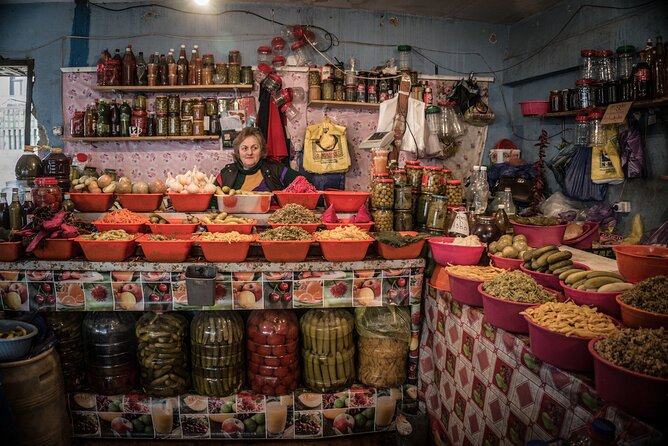
This is one of the more unusual parts of the day. Georgian monasteries have long supported small-scale production, and the shop gives you a way to taste that tradition. The treats are described as especially impressive, though the exact selection can vary. That is useful to remember if you need to plan around a particular ingredient.
The visit lasts about an hour, allowing time for both the church area and the tasting. Your guide can explain why religious communities became associated with artisanal food production and how these products fit into Georgian life.
I like this stop because it broadens the meaning of Georgian cuisine. The country’s food is not only about restaurant dishes such as khinkali and chicken. It also includes preserved foods, sweets, wine, and other products made in homes, monasteries, and small workshops.
Sioni Cathedral is a functioning religious site, so dress and behavior should be respectful. The tour description does not specify interior access rules, so your guide will be the best source of direction on the day.
Freedom Square and small-producer Georgian wine
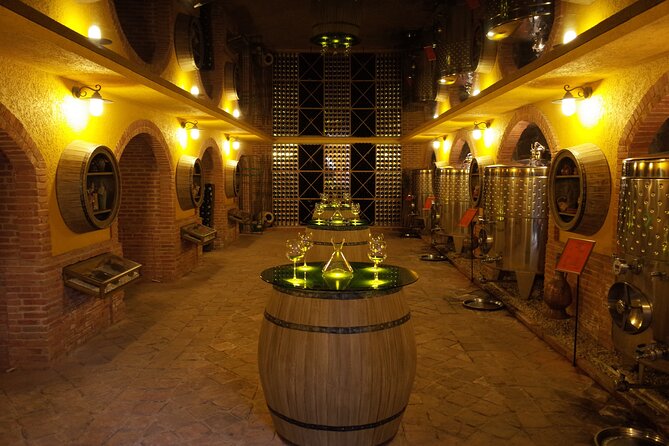
The walk then heads toward the back streets near Freedom Square for a tasting at an unusual wine bar. This portion lasts about an hour and focuses on wines from Georgia’s finest small-scale producers.
That focus matters. Georgia is famous for its ancient winemaking culture, but a useful tasting should do more than pour familiar labels. Small producers can show you different approaches, grapes, and styles, and the guide can explain what makes Georgian wine distinct.
The tasting is placed in the middle of the day rather than saved entirely for the final toast. That gives you time to discuss the wine while the city walk continues around you. It also means you should pace yourself, especially because additional food and wine appear later.
The tour is offered in English, and the small group size should make it easier to ask basic questions about flavor, production, or Georgian drinking customs. You do not need to be a wine expert. The point is to give you a starting point for ordering and shopping during the rest of your stay.
One practical note: the tour costs $125 per person, and wine is part of the value. If you do not drink alcohol, the price may feel less attractive unless the provider offers alternatives. No substitute is specified, so ask before booking if that matters to you.
Anchiskhati Basilica, Tbilisi’s old core
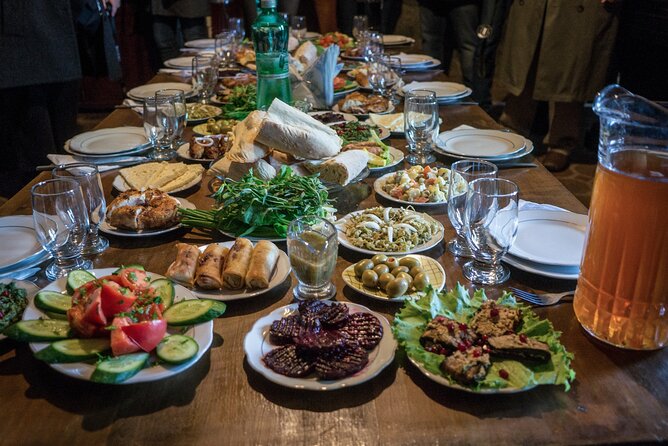
Anchiskhati Basilica receives about 45 minutes. It is presented as the oldest church in Tbilisi and is an architectural and cultural treasure.
Even on a food-focused walk, this kind of stop is essential. The building gives you a sense of how old Tbilisi is, and it prevents the day from becoming a succession of tables. You can connect the city’s modern cafés and wine bars with a much older religious and trading center.
The church is near the Rezo Gabriadze Marionette Theater, one of Tbilisi’s best-known cultural landmarks. The tour does not promise a theater performance, but the area adds character to the route. You will see a different side of the city than the grand avenues and main squares alone can provide.
The schedule allows 45 minutes, which is enough for an explanation and a look around without turning the day into a formal architectural tour. If you want long interior visits at every church, this may feel brisk. If you want food and history in equal measure, the timing makes sense.
Same mountains, a completely different kind of day:
- Day Trip to Mtskheta Gori and Uplistsikhe
★ 5.0 · 1,801 reviews - Tbilisi Walking Tour Including Cable Car and Traditional Bakery
★ 5.0 · 1,310 reviews - Day Trip to Armenia Including Homemade Lunch
★ 5.0 · 1,162 reviews - Kakheti Wine Region: Signagi and Bodbe Tour with 10 Wine Tastings
★ 5.0 · 1,019 reviews
Shkmeruli near the marionette theater
Near the Rezo Gabriadze Marionette Theater, you sit down for shkmeruli. This is a sizzling chicken dish and a centerpiece of a Georgian feast. The stop lasts about 45 minutes.
Shkmeruli is the kind of dish that explains why arriving hungry matters. It is hot, substantial, and designed for the table rather than a quick bite. The tour places it after several earlier tastings, so you may already have a good appetite but should avoid filling up at the opening stops.
This is also where the walking route begins to feel like a real meal rather than a sampling circuit. You have had tea, sweets, and wine, and now you receive a dish with more weight and warmth.
The word sizzling suggests that the food arrives with some drama, but the precise restaurant setup is not specified. Keep your expectations focused on tasting a classic Georgian preparation in a useful neighborhood setting, not on a particular seating arrangement or menu.
Parliament and freshly made khinkali
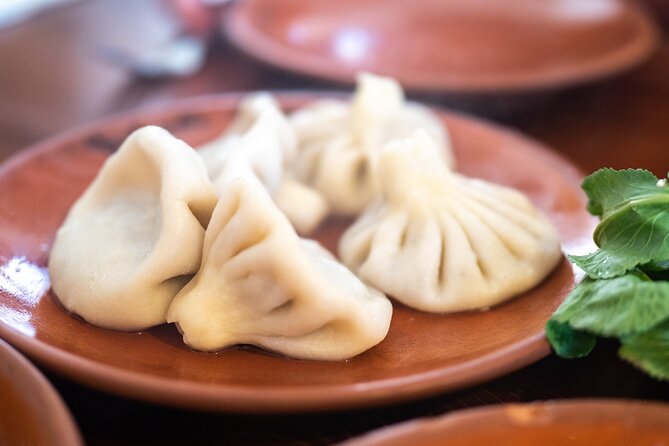
Near the Parliament of Georgia, the group visits a khinkali master and samples freshly made dumplings. This stop lasts about an hour and is one of the clearest food highlights of the route.
Khinkali is central to Georgian eating culture, and fresh dumplings are best understood with guidance. Your guide can explain the varieties and how they differ, a detail that matters because khinkali is not one single, uniform dish.
The stop also gives the group time to watch or discuss the craft behind the food. The material provided does not promise a cooking demonstration, so do not assume you will make your own dumplings. The certain part is the visit to an expert and the tasting of freshly made khinkali.
For many people, this will be the most memorable course. Dumplings are easy to recognize, but the local context makes them more than a quick sample. You learn how the dish fits Georgian meals and why different versions deserve attention.
Allow room in your appetite here. The earlier chicken course and the khinkali together can make the middle of the tour very filling. The schedule has an hour for the stop, so this is a good moment to slow down and enjoy the food rather than rush toward the next landmark.
Metekhi Cathedral and an artisan cheese tasting
The route passes Metekhi Cathedral on the way to an artisanal cheese shop. The cathedral stop itself is listed at about 30 minutes, followed by a cheese tasting.
Metekhi sits in a dramatic part of Tbilisi and is one of the city’s key churches. Its place on the route adds another view of the old city and helps show how religious buildings are woven into the urban fabric.
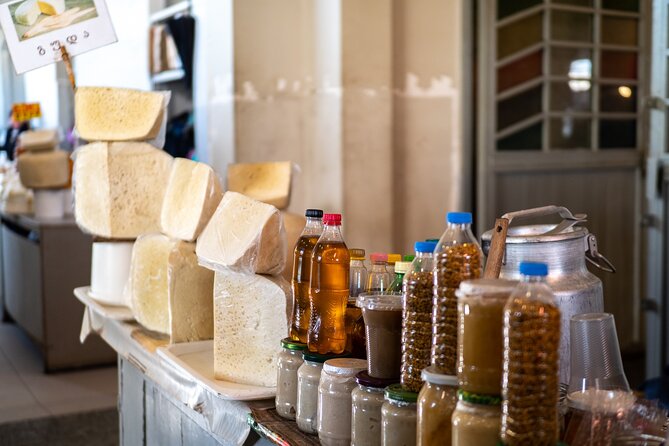
The cheese shop provides a fitting final food stop. After sweet monastery products, wine, chicken, and dumplings, cheese gives you a chance to compare another part of Georgian food production. The shop is described as artisanal, so the emphasis is on local craft rather than a generic supermarket selection.
The exact cheeses are not listed. That is normal for a small-producer stop, where availability can change. If you have allergies or dietary limits, ask the provider ahead of time rather than relying on the general description.
The route then ends at ღvino Underground, at 15 Galaktion Tabidze Street. The final location is convenient for continuing around central Tbilisi, though it is not the same place where you started. You should plan to make your own way back to your hotel or onward destination.
What the seven-hour length means
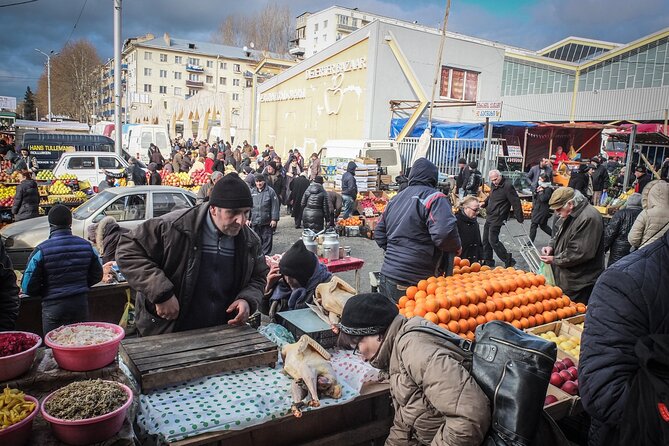
A seven-hour tour is a serious part of your day, not a quick two-hour introduction. It combines walking, church visits, seated courses, tastings, and explanations. The advertised stops add up to several hours, and the remaining time allows for moving between places and settling into meals.
The pace is described by the experience as a balance of walking, learning, and eating. That balance is one of its strongest features, but it also sets clear limits. You need to be comfortable spending much of the day on foot and sitting down for repeated tastings.
The route is in central Tbilisi and near public transportation. No private vehicle transfer is listed, so you should expect the experience to function as a walking tour between food stops.
Most people can participate, and service animals are allowed. Weather matters because the activity requires good conditions. If poor weather forces a cancellation, you can receive another date or a full refund.
Guide quality and the small-group advantage
The guide can make or break a food walk, and the strongest praise here centers on the human side of the experience. Maka is singled out for explaining both dishes and their different varieties, while also connecting food with Georgian history and culture. Crystal and Kristo are also named in the feedback, with particular praise for their enthusiasm and ability to change a participant’s mind about certain tastes.
Those details tell you what to expect from the guiding style. This is not just a route from one restaurant to the next. The guide is expected to explain why a dish matters, how it fits Georgian customs, and what the surrounding buildings mean.
The maximum group size is seven people. That is a real advantage for a food tour, since crowded tables and hurried explanations can take the fun out of tasting. A small group also gives you more freedom to ask about ingredients or request clarification.
The tradeoff is that small departures can depend on minimum numbers. If the minimum is not met, the provider may offer another date or experience, or a full refund. Confirmation is sent within 48 hours of booking, subject to availability, so do not treat a last-minute reservation as guaranteed until it is confirmed.
Is $125 a fair price?
At $125 per person, this is not a budget food crawl. The right comparison is not a single Georgian lunch. You are paying for roughly seven hours, an English-speaking guide, several food and drink stops, neighborhood walking, historic sights, and a maximum group of seven.
The value is strongest if you want one well-organized day that introduces both Georgian food and Tbilisi’s old center. You would need to arrange several meals, a wine tasting, and a history walk on your own to recreate the same range.
The price is less compelling if you mainly want a cheap way to eat khinkali, or if you prefer choosing every dish yourself. The tour has a set rhythm and includes wine, monastery products, and dishes you may not normally order. That is useful for curious eaters, but less ideal for strict diets or very selective appetites.
Reviews give the tour a 4.9 rating from 62 reviews, with 97 percent recommending it. Those numbers support the idea that the experience delivers what it promises, especially in guide quality, food variety, and the combination of history with eating. They do not remove the practical concerns about length, alcohol, or the large amount of food.
Free cancellation is available up to 24 hours before the 10:00 a.m. start for a full refund. Changes or cancellations inside that window are not accepted for a refund, so check the local cutoff time before making firm plans.
Who should book this Tbilisi feast?
I would recommend this for a first visit to Tbilisi, especially if you want help understanding what to eat and why it matters. It is also a good fit if you enjoy small groups, local shops, old churches, and a long lunch broken up by walking.
Food-focused couples should find the format especially useful. The route offers enough variety for you to compare Georgian traditions instead of repeating the same restaurant meal. It also works well for people who want a guide with a personal connection to local history and food culture.
You should think twice if you dislike long days, cannot manage a great deal of food, or do not drink wine. The schedule includes several substantial tastings, and no alcohol-free replacement is specified.
Wear comfortable shoes and eat little or no breakfast. The practical advice from the start is simple: come hungry, pace yourself, and leave room for the later courses. You can also use the guide’s recommendations to decide which foods deserve a second meal during your stay.
Should you book the Silk Road Feast?
Book it if you want Tbilisi explained through its table as well as its streets. The combination of Sioni Cathedral, Anchiskhati Basilica, Metekhi Cathedral, Freedom Square, monastery products, small-producer wine, shkmeruli, khinkali, and cheese gives you a broad first taste of the city.
The best reason to choose it is the connection between food and place. Guides such as Maka, Crystal, and Kristo are praised for making that connection clear, and the small group should keep the day personal.
Skip it if you want a short tasting, a low price, or complete control over every course. For everyone else, $125 buys a full day of eating, walking, and cultural context, with enough variety to make the tour useful beyond the final bite.
FAQ
How long does the Tbilisi Silk Road Feast last?
The experience lasts approximately seven hours, with a 10:00 a.m. start.
Where does the tour begin?
It begins at Waterfall Square, 21 to 23 Abano Street, in Tbilisi.
Where does the tour end?
It ends at ღvino Underground, 15 Galaktion Tabidze Street, Tbilisi.
What food and drinks are included?
The route includes Azeri tea, treats from Orthodox monasteries, Georgian wine, shkmeruli, freshly made khinkali, and artisanal cheese.
How large is the group?
The experience has a maximum of seven travelers.
Is the tour offered in English?
Yes. The tour is offered in English and uses a mobile ticket.
Can I cancel for a full refund?
Yes, if you cancel at least 24 hours before the experience start time. Cancellations or changes made less than 24 hours before the start are not refunded. If poor weather or insufficient numbers cancel the tour, you can receive another date or experience, or a full refund.
Just added around Tbilisi
- Private Adorable City Tour of Tbilisi★ 5.0 · 3 reviews
- Old tbilisi walking tour & wine tasting★ 5.0 · 9 reviews
- Tbilisi Airport to Gudauri, Bakuriani, Batumi, Tbilisi★ 5.0 · 3 reviews
- Your unique photo session in Tblisi, Georgia★ 3.5 · 4 reviews
- full day Kazbegi-Gudauri-jvari -from Tbilisi★ 5.0 · 6 reviews
- Wine promenade in hospitable Tbilisi★ 5.0 · 17 reviews
- Vardzia. Lake Paravani, Khertvisi & Lomisa castle, Rabati★ 4.5 · 12 reviews
- Wine Tasting Tour in Georgia’s Cradle of Wine★ 5.0 · 12 reviews
Tbilisi Tours, compared.
Day Trip to Kakheti Wine Region Including 9 Wine Tastings
Read our review →
Highlights of Caucasus Mountains-Jinvali,Ananuri,Gudauri,Kazbegi(Group tour)
Read our review →

Tbilisi Walking Tour Including Cable Car and Traditional Bakery
Read our review →

Kakheti Wine Region: Signagi and Bodbe Tour with 10 Wine Tastings
Read our review →