
Reviewed · MTSKHETA & JVARI TOURS
Mtskheta Tour with All UNESCO Sites & Ancient Ruins
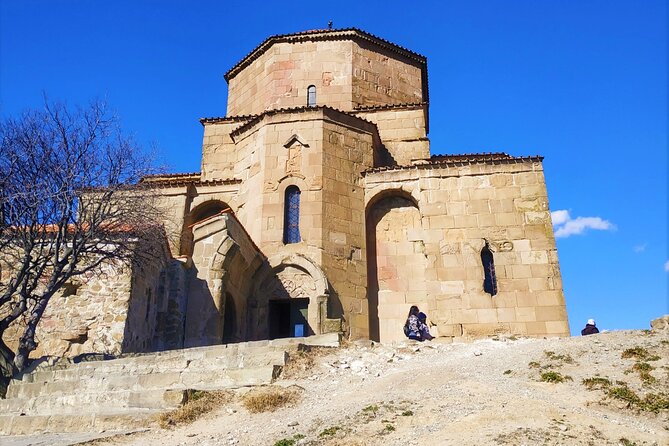
Mtskheta packs Georgia’s early Christian story into one memorable day. From the hilltop Jvari Monastery, you look across the meeting of rivers and down toward the ancient town, then move into churches where kings were buried and old religious traditions still shape daily life.
I like the private vehicle and hotel pickup, which remove the usual fuss of getting out of Tbilisi. I also like the guide-led storytelling, especially with Giorgi, who explains the monuments clearly and leaves time to take them in. The main drawback is the nine-hour length, with walking, stairs, and uneven ground in Mtskheta.
In This Review
- Key points
- Why Mtskheta makes such a strong day trip
- Jvari Monastery above the rivers
- Svetitskhoveli and the heart of Mtskheta
- Samtavro’s smaller, quieter setting
- Shio-Mgvime and the monk in the cave
- What the private format adds
- Lunch choices and the budget option
- Walking, clothing, and the rhythm of the day
- Who will get the most from this tour
- Is $127.50 a fair price?
- Cancellation and weather details
- Should you book the Mtskheta day trip?
- FAQ
- How long does the Mtskheta tour last?
- Is hotel pickup available?
- Is this a private tour?
- Which sites are included?
- Is lunch included?
- What should I wear to the churches?
Key points
- Four major religious sites: Visit Jvari, Svetitskhoveli, Samtavro, and Shio-Mgvime in one full day.
- A private tour: Your group travels alone, so the pace can feel less hurried than a large coach outing.
- Jvari’s hilltop setting: See a sixth-century church almost unchanged, high above Mtskheta.
- A guide who tells the story well: Giorgi is specifically named as a guide who explains history in an engaging way.
- Old-town walking included: Wear comfortable shoes for stairs, varied surfaces, and time on foot.
- Church dress rules matter: Women need a headscarf and dress, while men cannot wear short trousers inside Georgian Orthodox churches.
Why Mtskheta makes such a strong day trip
Mtskheta is one of the most important old capitals in Georgia, and this tour gives you a concentrated look at the monuments that define it. The town and its historic churches are tied to the arrival and growth of Christianity in Georgia, making this more than a quick sightseeing run.
The day begins at 9:00 am with pickup in Tbilisi. You then travel in a private air-conditioned vehicle, a useful arrangement for a nine-hour outing. You do not need to work out local transport, coordinate several departures, or wait for a full coach to load.
The order of the stops also works well. Jvari gives you the broad view first. Svetitskhoveli brings you into the heart of Mtskheta. Samtavro adds another important church within the town, and Shio-Mgvime takes you into a quieter monastic setting beyond the main center.
You should think of this as a full day of religious history, architecture, views, and walking. It is not designed as a short photo stop in Mtskheta. You get time at four sites, and the private format helps keep the day personal.
More mtskheta & jvari tours in Tbilisi:
- Day Trip to Mtskheta Gori and Uplistsikhe
★ 5.0 · 1,801 reviews - Tbilisi:Mtskheta,Jvari,Bazaar,wine tasting,Chronicles of Georgia
★ 5.0 · 730 reviews - Mtskheta-Gori-Uplistsikhe
★ 5.0 · 112 reviews
Jvari Monastery above the rivers
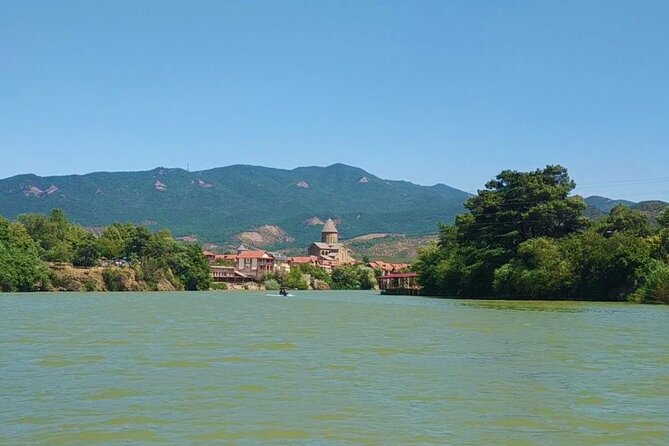
Jvari is the visual opening act, and it earns that position. The sixth-century Georgian Orthodox monastery sits on Jvari Mount at about 656 meters above sea level. From here, you get a wide view toward Mtskheta and the water below, including the meeting of the rivers that gives the setting much of its appeal.
The church is important for more than its view. Jvari survived with its form almost unchanged, which is unusual for an Early Medieval Georgian church. Its design became the model for the Jvari type of church architecture, used across Georgia and Armenia.
You have about 30 minutes here, with no admission charge. That is enough to look around the church, hear the main historical points, and spend a little time outside taking in the setting. The stop is brief, so you will want to stay focused rather than treat it as a long independent visit.
The connection between building and hill is part of the experience. Georgian church architecture often makes strong use of its surroundings, and Jvari shows this plainly. The stone church does not feel separate from the mountain. It seems placed to command the view while remaining closely tied to the land around it.
The practical point is footwear. You may not walk far at Jvari, but the day as a whole includes uneven ground and steps. Comfortable shoes will serve you better than anything chosen only for photographs.
Svetitskhoveli and the heart of Mtskheta
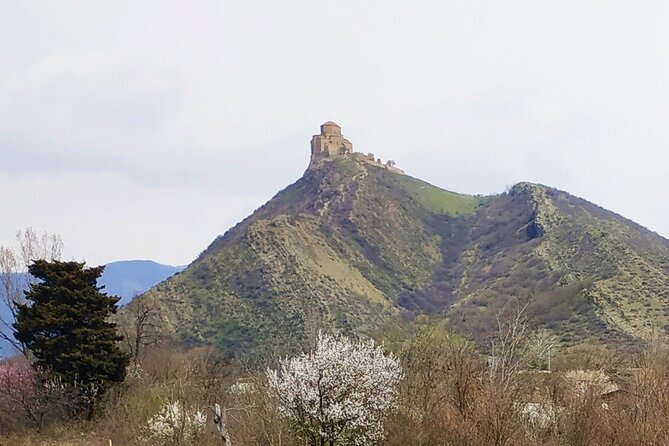
Svetitskhoveli Cathedral is the main event for many visitors. Its name means Cathedral of the Living Pillar, and the church is one of Georgia’s most revered places of worship. The site is connected with the claimed burial place of Christ’s mantle, a tradition that gives the cathedral a special place in Georgian religious life.
The present cross-in-square building was completed between 1010 and 1029 under the medieval architect Arsukisdze. The site itself reaches back to the early fourth century, so what you see is part of a much longer religious story.
Allow about one hour here. That is a sensible amount of time because the cathedral deserves more than a quick look at the exterior. Study the carved stonework, the arches, the interior space, and the surviving decorative details. The outside archature is a strong example of 11th-century Georgian design.
The building has also suffered damage and loss. Some priceless frescoes were whitewashed during the period of Russian Imperial rule, and not every historic detail has survived. That loss is worth remembering as you look around. This is not a perfectly preserved museum piece. It is a living church that has passed through political change, religious use, and centuries of wear.
Svetitskhoveli also served as a burial place for Georgian kings. That gives the cathedral a political role as well as a spiritual one. A good guide helps connect those layers without turning the visit into a list of dates.
This is where Giorgi’s style can make a difference. He is praised for telling the story in a way that keeps the history understandable, while still giving you room to breathe and look. That balance matters in a church with this much information. Too little explanation leaves you guessing. Too much can make the visit feel like a lecture.
Mtskheta’s old-town walking is part of the stop. Expect stairs and different types of ground. The cathedral itself is free to enter, but you should dress for an active day and follow local church customs.
Samtavro’s smaller, quieter setting
Samtavro Monastery offers a different scale from Svetitskhoveli. The monastery was founded in the fourth century by King Mirian III, when Saint Nino built a small church here. The main temple in its present form belongs stylistically to the first half of the 11th century.
The complex combines the Transfiguration Church with the Nunnery of St. Nino. It is protected by UNESCO, adding another important layer to a day already built around internationally recognized Georgian religious sites.
You spend about 30 minutes at Samtavro. That shorter visit suits the site. It gives you time to see the church and understand its connection with Saint Nino and the early Christian period without making the schedule feel overloaded.
I like this stop because it broadens the picture of Mtskheta. Svetitskhoveli can dominate the town’s story, but Samtavro shows that Mtskheta’s religious importance was not centered on one building alone. Several churches and monastic foundations helped shape the city.
Keep your clothing rules in mind here too. Women need a headscarf and dress in Georgian Orthodox churches, and men cannot wear short trousers. Scarves and dresses may be available near some entrances, but it is better not to depend on that. Carrying a scarf is an easy precaution.
Same mountains, a completely different kind of day:
- Day Trip to Kakheti Wine Region Including 9 Wine Tastings
★ 5.0 · 2,774 reviews - Highlights of Caucasus Mountains-Jinvali,Ananuri,Gudauri,Kazbegi(Group tour)
★ 5.0 · 2,682 reviews - Day Trip to Kazbegi and Gudauri
★ 5.0 · 2,009 reviews - Tbilisi Walking Tour Including Cable Car and Traditional Bakery
★ 5.0 · 1,310 reviews
Shio-Mgvime and the monk in the cave
Shio-Mgvime Monastery changes the mood again. It was founded in the sixth century by Shio, one of the Thirteen Assyrian Fathers who came to Georgia as Christian missionaries. Shio spent his final years as a hermit in a deep cave, and that story gives the monastery a strong sense of retreat and solitude.
The earliest building here is the Monastery of St. John the Baptist, a plain cruciform church dating from the 560s to 580s. Its design is strict rather than showy. An octagonal dome with a conical roof adds a distinctive feature, while the original stone iconostasis is now held at the Art Museum of Georgia.
The monastery was changed in the 11th and 18th centuries, but much of its early character remains. You get about an hour here, which allows time to look carefully at the church and the setting rather than rush through another short stop.
This visit is especially useful if you want more than the main monuments of Mtskheta. Jvari and Svetitskhoveli are the headline sites, but Shio-Mgvime gives you a better idea of monastic life and the austere side of Georgian religious architecture.
The trade-off is time. Four major sites in one day means you cannot explore every corner at leisure. Still, the private format gives your group a better chance of pausing when a story or view catches your attention.
What the private format adds
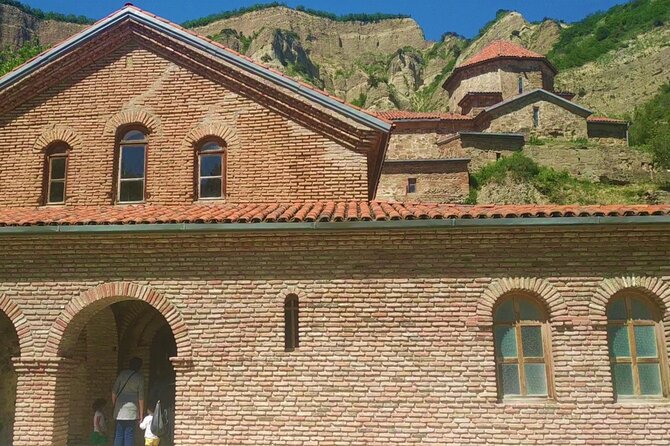
This is a private tour, so only your group participates. That detail matters more than it might at first seem. With a large group, every stop has to follow a fixed rhythm. Here, the day can feel more direct and personal.
The private air-conditioned vehicle is another practical benefit. Mtskheta is close enough to Tbilisi for a day trip, but the total outing lasts around nine hours. Having transport arranged from your hotel makes the morning easier and gives you a comfortable base between sites.
The experience is offered in English. Guide quality is central on a history-focused day, and Giorgi is the guide named in the tour information. His strength is storytelling, with explanations that help you understand what you are seeing rather than simply naming the buildings.
You should still set realistic expectations. A private tour does not mean every part of the day is relaxed. You visit four historic religious sites, walk through the old town, and deal with stairs and varied surfaces. The schedule is full by design.
Lunch choices and the budget option
Lunch depends on the option you book. The budget version does not include lunch, but it stops at a restaurant so you can eat during the day. A lunch option is also available, and you are asked to share dietary restrictions in advance so the meal can be arranged with that information in mind.
This is worth checking before you pay. The advertised price is $127.50 per person, and the value depends partly on whether lunch is included in your chosen version. A nine-hour private outing with hotel pickup, private transport, an English-speaking guide, and four major sites can make sense for couples, families, or small groups that prefer convenience.
It is less compelling if you mainly want a cheap transfer to Mtskheta and plan to explore alone. The price pays for the private setup and guiding, not just the drive. Group discounts may improve the value when several people share the experience.
The tour information does not list separate entrance fees for the four stops, and admission is shown as free. That keeps the cost easier to understand. Your main extra spending is likely to be lunch if it is not included and anything you choose to buy in Mtskheta.
Walking, clothing, and the rhythm of the day
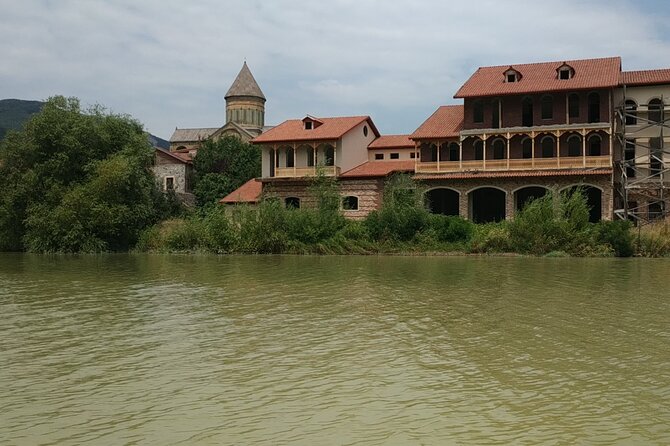
Plan for an active sightseeing day. The old town includes various terrain and stairs, and the route moves between hilltop, cathedral, monastery, and town settings. You should wear shoes that are comfortable for walking rather than relying on dress shoes or thin sandals.
Church etiquette is not optional. Women need headscarves and dresses, while men cannot wear short trousers inside Georgian Orthodox churches. Some churches may provide coverings near the entrance, but carrying suitable clothing yourself is the safer plan.
The tour suits most people who can manage this level of walking. The information says most participants can take part, but it does not promise a step-free route. If stairs or uneven surfaces are a concern for you, ask about the route before booking.
The pace receives attention in the tour’s description of the day. You are not meant to be rushed at every site, and the private arrangement supports that. Still, nine hours is a long outing. Build in some patience, especially if you want time for photographs, quiet thought, or shopping in Mtskheta.
Who will get the most from this tour
I would choose this outing if you want the major Mtskheta monuments explained in one day without managing transport yourself. It fits first-time visitors to Georgia who want a clear introduction to early Georgian Christianity and architecture.
It also suits anyone interested in sacred buildings rather than only scenic viewpoints. Jvari supplies the mountain panorama, but Svetitskhoveli, Samtavro, and Shio-Mgvime give the day its depth.
Families and small groups may appreciate the private vehicle and adjustable feel. Couples who prefer a guide focused on their questions should also find the format useful. The tour is offered only in English, so you need to be comfortable receiving explanations in that language.
You may want a different plan if you dislike churches, have very limited time, or want a fully unstructured day. This is not a casual stop in Mtskheta followed by a quick return to Tbilisi. It is a focused nine-hour cultural outing.
Is $127.50 a fair price?
For a private nine-hour tour, the price is reasonable when you value door-to-door convenience and a dedicated guide. You are covering four important sites, transport from Tbilisi, and the time required to explain them properly.
The value improves if you are traveling with a small group and can use a group discount. It also improves if arranging a car and guide separately would take effort or cost more. Since admission is free at the listed stops, you are paying mainly for service, transport, and organization.
The price is harder to justify if you are a solo budget visitor who is happy using public transport and reading about the churches independently. In that case, the private format is a luxury rather than a necessity.
Check the lunch selection carefully. The budget option stops for lunch but does not include it, while a lunch version is available. That small distinction can affect your final cost.
Cancellation and weather details
You can cancel for a full refund if you do so at least 24 hours before the 9:00 am start time. Changes or cancellations made inside that 24-hour window are not accepted for a refund.
The tour requires good weather. If poor weather causes cancellation, you are offered another date or a full refund. That policy is sensible for a day that includes Jvari’s hilltop viewpoint and walking between outdoor areas.
Should you book the Mtskheta day trip?
Book it if you want a well-organized, private introduction to Georgia’s old religious capital, with the four main sites tied together by a guide. Jvari’s view, Svetitskhoveli’s royal and religious importance, Samtavro’s early Christian links, and Shio-Mgvime’s monastic setting make a strong combination.
I would especially recommend it to small groups who value hotel pickup, air conditioning, and a guide who gives clear historical stories without rushing each stop. Bring proper church clothing, wear good shoes, and confirm the lunch option before booking.
Skip it if you want a short, low-cost outing or dislike a schedule built around churches and monasteries. For everyone else, the tour offers a practical way to see Mtskheta’s most important sites in one thoughtful day.
FAQ
How long does the Mtskheta tour last?
The tour lasts approximately nine hours and begins at 9:00 am.
Is hotel pickup available?
Yes. Hassle-free hotel pickup is included as an offered feature.
Is this a private tour?
Yes. Only your group participates in the activity.
Which sites are included?
The tour visits Jvari Church, Svetitskhoveli Cathedral, Samtavro Church, and Shio-Mgvime Monastery.
Is lunch included?
The budget tour option does not include lunch, but it stops at a restaurant for lunch. A tour option with lunch is also available, and dietary restrictions should be provided when booking that option.
What should I wear to the churches?
Women need to wear headscarves and dresses in Georgian Orthodox churches. Men cannot wear short trousers. Scarves and dresses may be available near some church entrances.
Just added around Tbilisi
- Private Adorable City Tour of Tbilisi★ 5.0 · 3 reviews
- Old tbilisi walking tour & wine tasting★ 5.0 · 9 reviews
- Tbilisi Airport to Gudauri, Bakuriani, Batumi, Tbilisi★ 5.0 · 3 reviews
- Your unique photo session in Tblisi, Georgia★ 3.5 · 4 reviews
- full day Kazbegi-Gudauri-jvari -from Tbilisi★ 5.0 · 6 reviews
- Vardzia. Lake Paravani, Khertvisi & Lomisa castle, Rabati★ 4.5 · 12 reviews
- Wine promenade in hospitable Tbilisi★ 5.0 · 17 reviews
- Wine Tasting Tour in Georgia’s Cradle of Wine★ 5.0 · 12 reviews
Mtskheta & Jvari Tours, compared.

Mtskheta,Jvari,Bazaar,wine tasting,Chronicles of Georgia
Read our review →
Mtskheta, Jvari, gori, uflistsikhe, history and panorama (group tours)
Read our review →
Ancient Georgia Group Tour: Mtskheta,Jvari, Gori, Uplistsikhe
Read our review →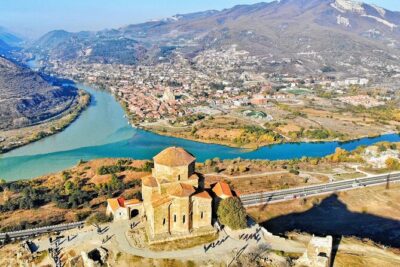
Ancient Mtskheta and Chronicle of Georgia half day tour
Read our review →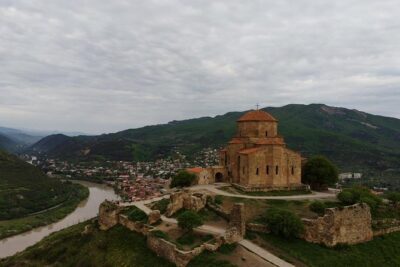
Private Day Trip to Gudauri and Kazbegi from Tbilisi via Jvari and Mtskheta
Read our review →
Browse the lists this tour appears in