
Reviewed · KUTAISI TOURS
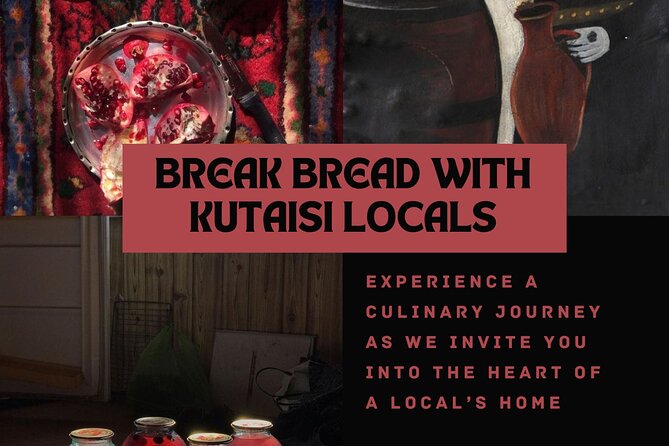
Break Bread with Kutaisi Locals
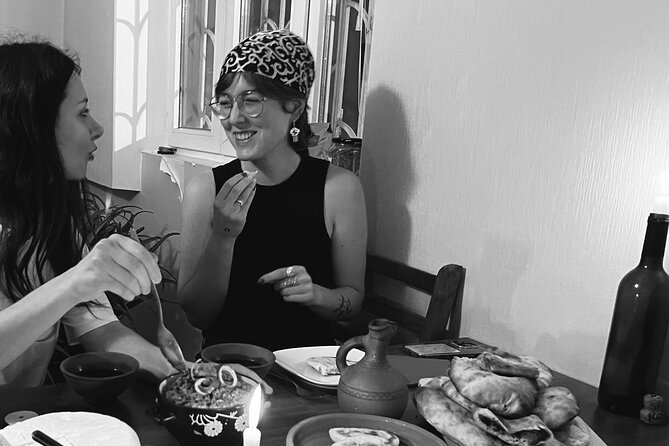
Kutaisi is best understood at a dinner table, not through a checklist of sights. This three-hour evening brings you into a local home or another small setting to share Georgian food, wine, stories, and conversation with people from the city. The meal is the main event, with dishes such as pkhali, badrijani, khachapuri, and chicken in walnut sauce.
I like the chance to eat food prepared for sharing rather than a quick restaurant plate, and I like the small maximum of 10 people. The changing location is the one point to watch: your exact dining place and menu depend on the group size, so this is less fixed than a standard restaurant booking.
In This Review
- Key points to know before booking
- A Georgian evening that begins with food
- Why a private-style meal suits Kutaisi
- Pkhali and the vegetable dishes
- Salad, mchadi, and the Georgian table
- Khachapuri, chicken in baje, and the main flavors
- Wine and conversation matter as much as the menu
- What the flexible location means for you
- Is $53.50 a fair price?
- Who should book this dinner?
- Practical details for a smooth evening
- Should you book Break Bread with Kutaisi Locals?
- FAQ
- Where does the experience start?
- What time does the dinner begin?
- How long does the activity last?
- Is the dining location fixed?
- Does the menu stay the same?
- How many people can join, and what language is offered?
Key points to know before booking
- Home-style Georgian dinner: Expect familiar local dishes prepared for a communal meal, including walnut-based spreads, cheese bread, bean-filled bread, and wine.
- Three hours at 7:00 pm: The evening starts at 7M8Q+P43 on Shota Rustaveli Avenue and returns there at the end.
- Small group limit: A maximum of 10 people gives the meal a better chance of feeling personal and conversational.
- Flexible setting and menu: The location and food selection can change according to the number of people booked.
- A people-first experience: The value comes from conversation and hospitality as much as from the food.
- Helpful, caring hosting: One account describes a host taking a sick diner to a pharmacy and later sending kidney stone remedy recipes.
A Georgian evening that begins with food
At 7:00 pm, you meet at 7M8Q+P43 on Shota Rustaveli Avenue in Kutaisi. From there, the evening takes you to the dining location, which can change depending on the size of your group.
That flexibility is worth understanding before you book. You are not buying a tightly scripted restaurant meal with a guaranteed address and a printed menu. You are signing up for a local dinner whose setting is chosen to give your group a more personal look at Georgian life.
The activity lasts about three hours and ends back at the meeting point. That makes it a useful evening plan in Kutaisi: long enough for several courses and conversation, but not so long that it takes over the entire night.
The experience is offered in English. Since the group can include no more than 10 people, you should have a better chance to speak with the host and other diners than you would at a large food event.
Other Kutaisi days people book alongside this one:
- CANYONS & CAVE Tour from Kutaisi – Okatse, Martvili & Prometheus
★ 4.5 · 307 reviews - Kutaisi:Chiatura Tour with Katskhi Pillar & Cable Car Experience
★ 5.0 · 95 reviews - Kutaisi: Martvili Canyon & Prometheus Cave, Georgian Lunch
★ 5.0 · 80 reviews
Why a private-style meal suits Kutaisi
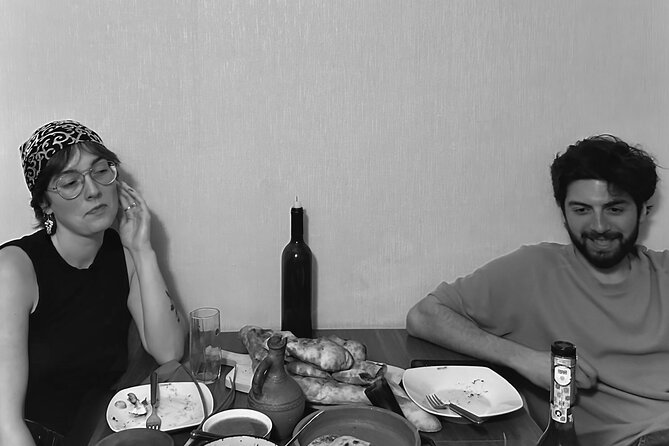
Kutaisi has an old, lived-in character. Its appeal is not only a church, a museum, or a viewpoint. It is also found in the way people welcome you, set out food, and keep a conversation moving over several hours.
A dinner in a local home gives you a different window onto the city. You are not simply tasting Georgian recipes. You are learning how food works as a social language. Plates are shared, bread has a central role, and wine helps keep the table relaxed.
I like this format for anyone who wants contact with local life without committing to a full cooking class. You do not need to spend the evening measuring ingredients or following a demonstration. Instead, you can concentrate on eating, asking questions, and noticing how the dishes fit together.
The strongest part of the experience may be the human attention. A host once helped a diner who felt unwell by taking her to a pharmacy and finding the needed medication. The host also checked in the next day and sent recipes for kidney stone remedies. That detail shows the kind of personal care this activity can offer, although you should not book it expecting medical help or the same situation to repeat.
Pkhali and the vegetable dishes
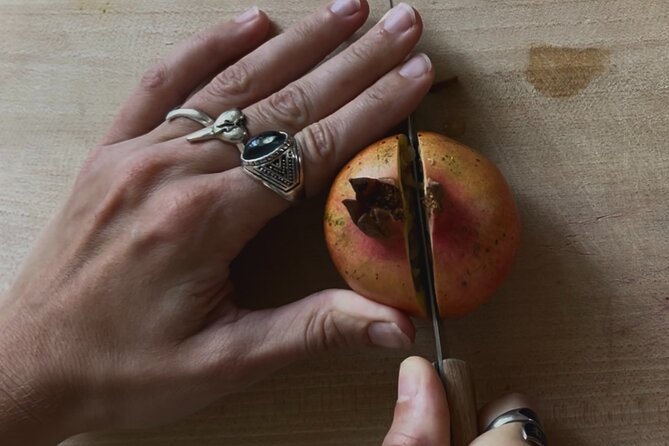
The meal may begin with pkhali, a Georgian preparation made from ground vegetables mixed with walnuts, garlic, onion, and herbs. Aubergine, spinach, red pepper, or beetroot can form the base, and pomegranate seeds are added for color and a sharp, fresh note.
Pkhali is a good introduction to Georgian food because it combines simple vegetables with a powerful walnut and herb mixture. The dish is usually eaten in small portions, making it suited to a table where several plates are shared.
Badrijani follows the same general idea of vegetable and walnut flavors. Fried eggplant is rolled around a filling of walnuts, spices, and herbs. The texture is softer and heavier than pkhali, with the fried eggplant giving the dish more weight.
I like that these dishes make vegetables important rather than treating them as decoration. If you prefer meat-free food, you may find several appealing choices on the table, though the menu can change with group size and the provided sample menu does not guarantee every dish will be served.
Salad, mchadi, and the Georgian table
A traditional salad of cucumber, tomato, red onion, parsley, and olive oil provides a cool break between the walnut-based dishes. It is a plain combination, but that is part of its value. After fried eggplant and seasoned vegetable spreads, crisp vegetables keep the meal from feeling too heavy.
Mchadi are small cornflour loaves made with milk and water. They are crisp and are traditionally eaten with sulguni cheese or lobio. Think of them as a sturdy partner for other foods, useful for scooping and combining flavors.
The sample menu also includes lobiani, a bread filled with beans. Like mchadi, it shows how important bread and beans are in Georgian home cooking. Lobiani is more substantial, so it can help turn a table of shared plates into a satisfying dinner.
You should expect the food to arrive as a series of plates or as a spread meant for the table. The supplied details do not set out a precise serving order, so the evening may feel more like a family meal than a formal tasting menu. For many people, that is the point. If you need exact portions or a strict sequence, this format may feel loose.
Same mountains, a completely different kind of day:
- BORJOMI, RABATI & VARDZIA – Group Tour from Kutaisi
★ 4.5 · 76 reviews - Kutaisi Walking Tour
★ 5.0 · 59 reviews - BAGRATI, GELATI & MOTSAMETA Group Tour from Kutaisi
★ 5.0 · 39 reviews - WINE & DINE Tour from Kutaisi
★ 5.0 · 34 reviews
Khachapuri, chicken in baje, and the main flavors
Imeruli khachapuri is one of the dishes many people will be watching for. It is a flatbread made from leavened dough and filled with cheese. The Imeretian style is generally enclosed, with the cheese inside the bread rather than sitting on top.
Khachapuri is filling, warm, and made for sharing. Cut into pieces, it gives everyone at the table a bite of salty cheese and soft bread. It also helps explain why Georgian food can feel generous even when the ingredients are straightforward.
Chicken in baje brings a different flavor. The chicken may be boiled or fried, then served with baje, a ground nut sauce. The sauce is one of the meal’s defining tastes: creamy in texture, nutty, and seasoned rather than built around a heavy dairy base.
If you enjoy walnuts, herbs, bread, and cheese, this menu should suit you well. If you have a serious nut allergy, you should ask about ingredients before booking or eating. Walnuts appear in pkhali, badrijani, and baje, so they are not a minor detail in this meal.
Wine and conversation matter as much as the menu
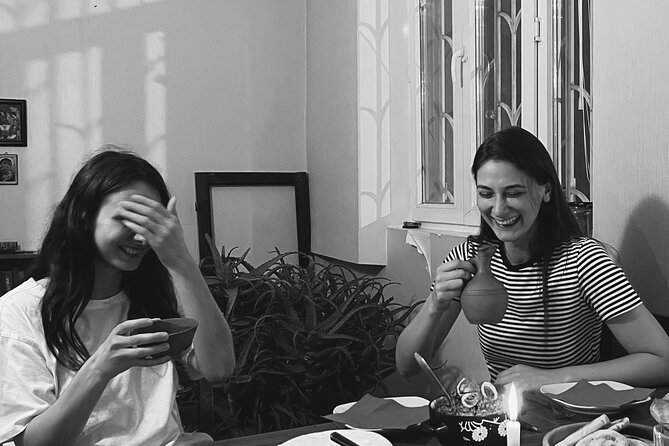
The experience includes Georgian food and wine, but the exact wine selection is not specified. You can expect wine to be part of the social rhythm rather than an advanced tasting session with technical notes and paired courses.
The meal is designed around conversation. You share stories and laughter with local people, which gives the evening its real purpose. Food provides the structure, but the exchange across the table is what separates this activity from ordering the same dishes at a restaurant.
I would approach the dinner with a few easy questions ready. Ask about the ingredients, the names of dishes, family food traditions, or how the menu changes through the year. The experience is offered in English, so you can communicate directly rather than relying entirely on translation.
The small group limit helps here. With up to 10 people, conversation can move around the table without becoming a performance for a large crowd. Still, the group size can affect the setting and menu, so the most intimate arrangement is not guaranteed.
What the flexible location means for you
The meeting point is fixed at Shota Rustaveli Avenue, but the dining location can change based on the number of people booked. The activity ends back at the same meeting point.
This arrangement has a clear benefit. The host can choose a place that works better for the group and may be able to create a more local setting than a permanent restaurant room. It also means you should pay attention to any directions supplied after booking and avoid assuming the meeting point is the dinner address.
The activity is near public transportation, which makes the start point easier to reach. No private transfer is listed, so you should plan to arrive at the meeting point on your own.
Because the location can change, this is not the best choice for someone who needs every detail fixed well in advance. It is better for someone comfortable with a little flexibility in exchange for a more personal evening.
Is $53.50 a fair price?
At $53.50 per person, the cost is higher than buying one Georgian meal at a casual restaurant. That comparison alone misses the main point. You are paying for a three-hour experience that includes food, wine, a local setting, and time with hosts rather than just a plate delivered to your table.
The value is strongest if you want cultural contact. A restaurant can introduce you to khachapuri or lobiani, but it may not give you the same chance to ask questions, hear personal stories, or share a meal in a home-like setting.
The price is less attractive if your only goal is to eat as cheaply as possible. You may also want to check your appetite and food preferences before booking, since the sample menu includes several filling breads and multiple walnut-based dishes.
For an evening in Kutaisi, the price can make sense as a combined dinner and local social experience. The group limit of 10 also supports the cost, since a smaller gathering gives you more opportunity to speak with the host.
Who should book this dinner?
I would recommend this experience to you if you enjoy meals that unfold slowly and socially. It suits solo visitors who want company, couples who want a more personal evening, and small groups interested in Georgian food beyond the best-known cheese bread.
It is also a good fit if you are curious about home cooking. Pkhali, badrijani, mchadi, baje, khachapuri, and lobiani show several sides of Georgian food: vegetables, walnuts, beans, cornflour, cheese, bread, and meat.
Families may also appreciate the relaxed format. Most people can participate, and service animals are allowed. The information provided does not set out specific child pricing, seating details, or dietary arrangements, so ask before booking if those points matter to you.
I would be more cautious if you dislike shared meals, need a guaranteed menu, or have strict dietary restrictions. The menu changes with group size, and walnuts appear in several sample dishes. Ask about substitutions rather than assuming they will be available.
Practical details for a smooth evening
Your confirmation is received at the time of booking, and the activity is available with a mobile ticket. You meet at 7:00 pm, so allow enough time to find the meeting point on Shota Rustaveli Avenue before the start.
The maximum group size is 10 people. The tour is offered in English, and most people can participate. It is near public transportation, which is useful for reaching the start point without arranging a private ride.
The cancellation policy is friendly if your plans change early. You can cancel at least 24 hours before the local start time for a full refund. Cancellations or changes made less than 24 hours before the start are not accepted for a refund.
I would treat the timing as a real commitment. A dinner built around conversation works best when everyone arrives on time, and a late arrival could be awkward when the group is already settling into the meal.
Should you book Break Bread with Kutaisi Locals?
Book it if you want to meet people through food and are happy with a flexible setting. The best reasons are the home-style menu, the small group limit, the chance to speak English with local hosts, and the caring personal touch shown by the host who helped an unwell diner.
Skip it if you only want a quick, predictable restaurant dinner or need a confirmed menu and address. For everyone else, $53.50 buys more than Georgian dishes. It buys a seat at a local table, an evening of conversation, and a direct way to understand Kutaisi through the food people share.
FAQ
Where does the experience start?
It starts at 7M8Q+P43 on Shota Rustaveli Avenue in Kutaisi, Georgia.
What time does the dinner begin?
The experience starts at 7:00 pm.
How long does the activity last?
The dinner lasts approximately three hours and ends back at the meeting point.
Is the dining location fixed?
No. The location may change based on the number of people in the group.
Does the menu stay the same?
No. The menu may change according to group size. Sample dishes include pkhali, salad, mchadi, badrijani, chicken in baje, Imeruli khachapuri, and lobiani.
How many people can join, and what language is offered?
The activity has a maximum of 10 people and is offered in English.
Just added around Kutaisi
- Day Tour to Georgian sky venice, Soviet city Chiatura★ 5.0 · 5 reviews
- Ski & Snow Tour to Bakuriani from Kutaisi with Borjomi Stop★ 5.0 · 5 reviews
- Tskaltubo-Prometheus Cave-Geguti★ 5.0 · 6 reviews
- Tskhaltubo Old Soviet Spa Tour★ 4.5 · 12 reviews
- Gelati, Prometheus, Sanatoriums and Wine tour★ 5.0 · 11 reviews
- Prometheus Cave & Martvili Canyon Tour from Kutaisi★ 5.0 · 11 reviews
- TBILISI, JVARI & MTSKHETA Tour from Kutaisi★ 4.5 · 19 reviews
- Kutaisi Airport to Tbilisi Private Transfer★ 5.0 · 3 reviews
Kutaisi Tours, compared.

CANYONS & CAVE Tour from Kutaisi – Okatse, Martvili & Prometheus
Read our review →
Chiatura Tour with Katskhi Pillar & Cable Car Experience
Read our review →
Martvili Canyon & Prometheus Cave, Georgian Lunch
Read our review →
BORJOMI, RABATI & VARDZIA – Group Tour from Kutaisi
Read our review →
BAGRATI, GELATI & MOTSAMETA Group Tour from Kutaisi
Read our review →

Svaneti Mountain Villages 4×4 Safari, tour from Kutaisi
Read our review →Browse the lists this tour appears in